
In This Guide
Malaysia as a Muslim-Friendly Destination
Malaysia stands as one of the world's premier destinations for Muslim travelers, consistently ranked as the top Muslim-friendly travel destination globally by the Global Muslim Travel Index (GMTI). With a Muslim-majority population exceeding 60%, the country offers an unparalleled infrastructure catering to the needs of Muslim visitors from around the world.
Why Malaysia Excels for Muslim Travelers:
The foundation of Malaysia's appeal lies in its seamless integration of Islamic values into everyday life. Unlike destinations where Muslim travelers must constantly search for halal options or prayer facilities, Malaysia provides these essentials as a natural part of its landscape. From the moment you land at Kuala Lumpur International Airport to your departure, you'll find that practicing your faith is effortless and supported at every turn.
Key Statistics That Matter:
Malaysia's Muslim-friendly credentials are backed by impressive numbers. Over 6,000 mosques dot the landscape from peninsula to East Malaysia. The JAKIM halal certification system is recognized worldwide as one of the most rigorous, ensuring that when you see the halal logo, you can eat with complete confidence. Prayer rooms (surau) exist in every shopping mall, most office buildings, all airports, and even petrol stations along highways.
The Multicultural Advantage:
What makes Malaysia unique is its multicultural harmony. While Islam is the official religion, the country celebrates diversity with significant Chinese, Indian, and indigenous communities. This creates a fascinating cultural tapestry where Islamic traditions blend with local customs, resulting in a distinctly Malaysian Islamic identity. You'll find mosques with architectural influences from across the Muslim world, halal versions of international cuisines, and a welcoming attitude toward visitors of all backgrounds.
Modern Infrastructure with Islamic Values:
Malaysia has successfully balanced modernization with Islamic principles. The country boasts world-class Islamic banking and finance systems, making financial transactions convenient for those who prefer Sharia-compliant options. Hotels increasingly offer Muslim-friendly services, from prayer mats and Qibla direction indicators to halal room service and alcohol-free minibars. The healthcare system includes options for modest medical care, and shopping centers provide ample modest fashion choices.
Government Support for Islamic Tourism:
The Malaysian government actively promotes Islamic tourism through Tourism Malaysia and the Islamic Tourism Centre. This official support means continuous improvement in facilities and services for Muslim travelers. Signage in Arabic is common in tourist areas, Islamic heritage sites are well-maintained, and major Islamic events like Ramadan and Hari Raya are celebrated publicly, offering visitors authentic cultural experiences.
Year-Round Destination:
Malaysia welcomes Muslim travelers throughout the year, with each season offering unique experiences. Ramadan brings the famous Bazaar Ramadan food markets and a special spiritual atmosphere. Hari Raya Aidilfitri showcases Malaysian hospitality through open houses. Even outside Islamic holidays, the everyday convenience of halal food, prayer facilities, and modest accommodation options makes Malaysia consistently comfortable for Muslim visitors.
Pro Tip: Download the Muslim Pro or HalalTrip app before arriving. While you'll rarely struggle to find what you need, these apps provide prayer times adjusted to your exact location, nearby mosque listings, and halal restaurant recommendations.
Halal Food Guide
Understanding Malaysia's Halal Ecosystem:
Malaysia takes halal seriously. The country's halal certification system, managed by JAKIM (Jabatan Kemajuan Islam Malaysia or Department of Islamic Development Malaysia), is recognized globally as one of the most stringent. This means Muslim travelers can eat with confidence, knowing that certified establishments meet rigorous Islamic dietary standards.
The JAKIM Halal Certification:
The JAKIM halal logo is your gold standard. Look for the distinctive circular logo featuring "HALAL" in both Arabic and Roman script, surrounded by a circular border with Malaysia's official halal certification mark. This certification involves comprehensive audits of ingredients, preparation methods, storage, and handling. Restaurants and food manufacturers must prove that no haram ingredients are used and that cross-contamination is prevented.
Understanding Certification Levels:
JAKIM certification applies to restaurants, food manufacturers, and even logistics companies. For restaurants, certification means the entire establishment is halal - you don't need to ask about individual dishes. For food products, look for the JAKIM logo on packaging. Some states have their own Islamic religious councils (JAIN, JAIS, JAKIM) that also issue halal certificates, all meeting the same national standards.
Where Halal is Guaranteed:
Malay restaurants are always halal by default, as Malay Muslims own and operate them. You'll recognize these by their Malay names, Malay staff, and typically Malay-language menus. Mamak restaurants (Indian-Muslim establishments) are another guaranteed halal option, famous for their roti canai, nasi kandar, and 24-hour operations. Most international fast-food chains in Malaysia maintain halal certification, including McDonald's, KFC, Pizza Hut, Subway, Burger King, Nando's, and many others.
Areas Requiring Caution:
While halal food is prevalent, some areas require attention. Chinese restaurants often use pork and lard in their cooking, so unless explicitly certified halal, these should be avoided. The same applies to Chinese-owned coffee shops (kopitiams) unless they display halal certification. In food courts and hawker centers, individual stalls may vary - look for the JAKIM logo or stick to obviously Malay-operated stalls.
Non-Halal Areas and Red Flags:
Certain dining areas are predominantly non-halal. In Kuala Lumpur, areas like Petaling Street (Chinatown) and parts of Bangsar have many non-halal establishments. This doesn't mean halal options don't exist - they do - but you'll need to check carefully. In Penang, while the island is famous for street food, much of the Chinese hawker food contains pork. The Gurney Drive hawker center, for example, has mixed stalls, so identify halal ones before ordering.
Regional Halal Food Specialties:
Each region offers unique halal culinary experiences. In Kuala Lumpur, Kampung Baru serves as the heart of Malay cuisine with countless halal options. Penang offers exceptional nasi kandar - a rice dish with various curries that's a must-try. The East Coast states of Kelantan and Terengganu are naturally conservative, meaning virtually everything is halal, plus they offer unique local dishes like nasi kerabu and nasi dagang.
Must-Try Halal Malaysian Dishes:
Nasi Lemak: Malaysia's national dish features coconut rice, sambal, fried anchovies, peanuts, cucumber, and egg. Available everywhere from street stalls to fine dining, it's consistently halal when from Malay vendors.
Rendang: This slow-cooked dry curry, typically beef or chicken, represents Malaysian culinary artistry at its finest. The complex blend of coconut milk, lemongrass, galangal, and spices creates unforgettable flavors.
Satay: Grilled meat skewers served with peanut sauce. Look for beef, chicken, or lamb versions. Pork satay exists in Chinese establishments, so stick to Malay satay sellers.
Roti Canai: The quintessential Malaysian breakfast, this flaky flatbread served with dhal or curry is found at every mamak restaurant.
Nasi Kandar: A Penang specialty of rice with various curries ladled over it. The mix of gravies creates complex flavors that vary with every plate.
Halal Food Apps and Resources:
HalalTrip and Zabihah are excellent apps for finding certified halal restaurants. Google Maps now allows filtering for halal establishments in Malaysia. Many restaurants display their halal certificate prominently - don't hesitate to ask to see it if uncertain.
Practical Tips for Finding Halal Food:
When in doubt, ask "Halal ke?" (Is it halal?). Malaysians are understanding about halal concerns and will answer honestly. If eating at a food court, observe where Malay customers are eating - they know which stalls are halal. Hotel restaurants almost always have halal options, and many are fully certified. For street food, stick to vendors displaying the halal logo or those clearly operated by Malay or Indian-Muslim vendors.
Important Note: During Ramadan, many Malay restaurants close during daytime hours. However, non-Muslim establishments remain open, so you'll need to be more careful about halal verification during the fasting month.
Finding Mosques - Famous Mosques to Visit
Malaysia's Magnificent Mosques:
Malaysia's mosques represent a beautiful fusion of Islamic architecture with local influences. From grand national mosques to historic neighborhood masjids, these sacred spaces welcome visitors while serving their primary function as houses of worship. Understanding mosque etiquette and knowing which mosques to visit enhances any Muslim traveler's Malaysian experience.
Masjid Negara (National Mosque) - Kuala Lumpur:
The National Mosque stands as Malaysia's most significant Islamic landmark. Built in 1965 to commemorate the country's independence, its modernist design breaks from traditional mosque architecture while maintaining Islamic principles. The main dome represents an 18-pointed star symbolizing the 13 states and 5 pillars of Islam. The 73-meter minaret, one of the tallest in Southeast Asia, can be seen from across the city.
Visitor Information: - Location: Jalan Perdana, near KL Sentral - Visitor hours: 9:00am-12:00pm, 3:00pm-4:00pm, 5:30pm-6:30pm (closed Fridays) - Robes provided for visitors at no charge - Free guided tours available - Photography permitted in designated areas - Capacity: 15,000 worshippers
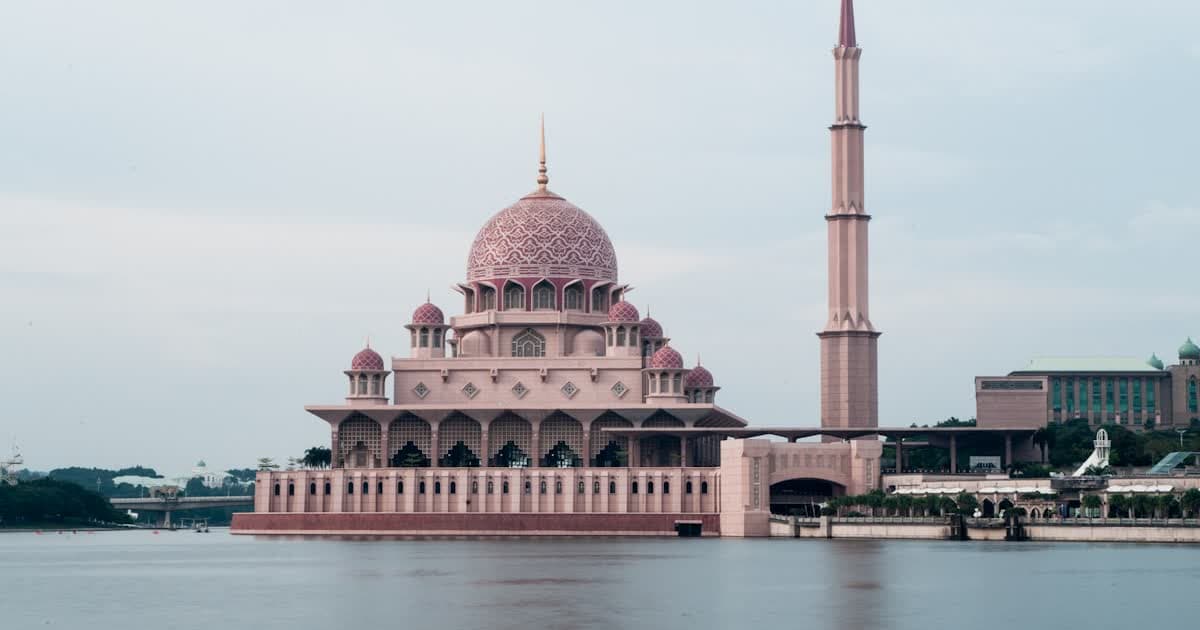
Masjid Putra (Pink Mosque) - Putrajaya:
Perhaps Malaysia's most photographed mosque, Masjid Putra's rose-colored granite construction creates a stunning visual against the blue waters of Putrajaya Lake. The mosque combines Persian, Arabic, and Malay architectural elements, resulting in a uniquely beautiful structure that draws visitors from around the world.
Visitor Information: - Location: Persiaran Persekutuan, Putrajaya - Visitor hours: 9:00am-12:30pm, 2:00pm-4:00pm, 5:30pm-6:00pm (closed Fridays until 3pm) - Free robes and headscarves provided - No entry fee - Boat tours available on Putrajaya Lake for exterior views - Sunset views particularly spectacular
Masjid Sultan Salahuddin Abdul Aziz (Blue Mosque) - Shah Alam:
As Malaysia's largest mosque and one of the largest in Southeast Asia, the Blue Mosque in Shah Alam impresses with its scale. The main dome, one of the world's largest, is visible from great distances. Four minarets, each standing 142.3 meters tall, rank among the world's tallest. The mosque can accommodate over 24,000 worshippers.
Visitor Information: - Location: Persiaran Masjid, Shah Alam, Selangor - Visitor hours: 9:00am-12:00pm, 2:00pm-4:00pm - Free guided tours (approximately 30 minutes) - Modest dress required - Photography permitted in most areas - Combine with visit to Shah Alam Lake Gardens
Masjid Jamek - Kuala Lumpur:
Kuala Lumpur's oldest mosque, built in 1909, sits at the confluence of the Gombak and Klang rivers - the very spot where Kuala Lumpur was founded. The Mughal-influenced architecture features onion domes, minarets, and arched colonnades. Recent renovations have beautifully enhanced the surrounding River of Life project, making it stunning at night with colored lights and fountains.
Visitor Information: - Location: Jalan Tun Perak (near Masjid Jamek LRT station) - Visitor hours: 8:30am-12:30pm, 2:30pm-4:00pm - Free entry and robes provided - Historical significance as KL's birthplace - Night visits for exterior photography recommended
Masjid Kapitan Keling - Penang:
This historic mosque in Georgetown's UNESCO World Heritage Zone represents the Indian-Muslim heritage in Malaysia. Built in 1801 by the Kapitan Keling (leader of the Indian Muslim community), it features distinctive yellow and white coloring with Moorish domes. The mosque has been expanded over centuries while maintaining its historical character.
Visitor Information: - Location: Jalan Masjid Kapitan Keling, Georgetown - Open for visitors outside prayer times - Walking distance from other heritage sites - Part of Penang's Street of Harmony (multiple religious sites) - Free entry
Masjid Kristal (Crystal Mosque) - Terengganu:
One of Malaysia's most unique mosques, the Crystal Mosque is constructed primarily of steel, glass, and crystal, creating an ethereal appearance especially at night when illuminated. Located in the Taman Tamadun Islam (Islamic Heritage Park), it sits on the Terengganu River, appearing to float on water.
Visitor Information: - Location: Islamic Heritage Park, Kuala Terengganu - Entry to park required (approximately RM15) - Night visits highly recommended for best views - Combine with tour of Islamic Heritage Park featuring replica mosques from around the world - Part of the broader Islamic tourism development in Terengganu
State Mosques Worth Visiting:
Masjid Zahir (Kedah): One of Malaysia's oldest and most beautiful mosques, built in 1912 with Moorish design.
Masjid Selat Melaka (Melaka): A "floating" mosque built on stilts over the Melaka Strait, offering stunning sunset views.
Masjid Bandaraya Kota Kinabalu (Sabah): A striking contemporary design with blue and gold domes reflected in surrounding pools.
Masjid Tengku Tengah Zaharah (Terengganu): Another "floating" mosque, also known as the Floating Mosque, featuring white architecture against the South China Sea.
Prayer Times in Malaysia:
Prayer times vary slightly by location and season: - Fajr: Approximately 5:30am-6:00am - Dhuhr: Approximately 1:00pm-1:30pm - Asr: Approximately 4:30pm-5:00pm - Maghrib: Approximately 7:00pm-7:30pm - Isha: Approximately 8:30pm-9:00pm
Download Muslim Pro or similar apps for precise times based on your location.
Mosque Visiting Etiquette:
Dress modestly - most mosques provide robes and headscarves for visitors, but bringing your own shows respect. Remove shoes before entering. Speak quietly, especially during prayer times. Photography is usually permitted outside of prayer times, but ask first. Men and women worship in separate areas. Non-Muslims are welcome in most areas but may be restricted from certain inner sanctuaries.
Prayer Facilities - Airports, Malls, Hotels
Praying with Ease Throughout Malaysia:
One of Malaysia's greatest advantages for Muslim travelers is the ubiquity of prayer facilities. Known locally as "surau" (prayer rooms) when smaller than mosques, these spaces are found virtually everywhere, ensuring you never miss a prayer regardless of where your travels take you.
Airport Prayer Facilities:
Kuala Lumpur International Airport (KLIA & KLIA2): Both KLIA terminals feature multiple surau throughout the airport. The main prayer rooms are spacious, well-maintained, and clearly signed. Each surau has separate sections for men and women, complete with wudu (ablution) facilities. You'll find prayer rooms before immigration, after immigration, near departure gates, and in the arrival halls. The surau operate 24/7, making early morning or late night prayers convenient.
Key locations: - Main terminal: Level 5 near departure gates - Satellite terminal: Near Gate C - KLIA2: Multiple locations on each level - Arrival hall: Near baggage claim - Landside: Before security checkpoints
Penang International Airport: Clean, well-maintained surau available both before and after immigration. Located on the main departure level with clear signage.
Langkawi International Airport: Prayer rooms available in the main terminal. Smaller than KLIA but adequate for travelers.
East Malaysia Airports: Kota Kinabalu and Kuching airports both feature good prayer facilities. Other smaller airports like Sandakan, Tawau, Miri, and Sibu all have surau available.
Shopping Mall Prayer Rooms:
Every major shopping mall in Malaysia provides free prayer facilities. This is mandated by local regulations, ensuring Muslim shoppers never miss their prayers. The quality of surau varies, but most are well-maintained with proper wudu facilities.
Major KL Malls and Their Surau: - Pavilion KL: Level 7, spacious and well-maintained - KLCC Suria: Basement 2 and Level 4 - Mid Valley Megamall: Lower Ground Floor, excellent facilities - 1 Utama: Multiple locations across the massive complex - Sunway Pyramid: Lower Ground Floor - IOI City Mall: Multiple levels
Finding surau in malls: - Look for direction signs (usually clearly posted) - Ask any security guard or information counter - Check near toilet facilities (often nearby) - Look for the crescent moon symbol
What to expect: - Separate men's and women's sections - Prayer mats provided - Wudu facilities with proper drainage - Qibla direction marked - Clean, air-conditioned spaces - Some have telekung (prayer garments) available
Hotel Prayer Facilities:
Most Malaysian hotels cater to Muslim travelers with prayer amenities:
In-Room Facilities: - Qibla direction sticker or arrow (usually on the desk or ceiling) - Prayer mat available upon request - Some hotels place prayer items in the room automatically - Bidet or water spray in bathrooms (standard in Malaysia)
Hotel Surau/Musholla: - Many 4 and 5-star hotels have dedicated prayer rooms - Usually located on lower floors - Available 24/7 - Separate sections for men and women
Shariah-Compliant Hotels: Several hotel chains focus entirely on Muslim travelers: - De Palma Hotels: Multiple locations, no alcohol on premises - Tabung Haji Hotels: Pilgrim-focused but open to all - Grand BlueWave: Shah Alam, fully compliant - Some PNB-owned properties
Other Prayer Facility Locations:
Highway Rest Areas (R&R): Malaysia's highway rest stops all feature mosques or surau. These are especially convenient during road trips, allowing you to combine rest with prayer.
Petrol Stations: Most Petronas, Shell, and other major petrol stations include surau. Look for signs or ask staff. These are particularly useful during long drives.
Public Buildings: Government offices, hospitals, universities, and public institutions all provide prayer facilities. Even private office buildings often have surau for employees and visitors.
Train Stations: KL Sentral has multiple surau. Other major train and bus stations also provide prayer facilities.
Wudu Facilities:
Finding proper wudu facilities is rarely a problem in Malaysia:
Mosques: Always have comprehensive wudu areas Surau: Most have dedicated wudu facilities Public Toilets: Many include wudu-friendly sinks or designated ablution areas Hotels: Water spray/bidet available in most bathrooms
Tips for Wudu: - Bring a small towel if doing wudu in basic facilities - Some surau provide disposable wudu towels - Hotels usually provide face towels suitable for drying after wudu
Friday Prayers (Jummah):
Friday prayers are widely observed in Malaysia:
Timing: Usually between 1:00pm-1:30pm, with khutbah starting earlier Language: Khutbah delivered in Malay with Arabic prayers Duration: Approximately 45-60 minutes total
Best Places for Jummah: - Masjid Negara: Central location, excellent facilities - Masjid Jamek: Historic atmosphere - State mosques: Often less crowded than national mosque - Neighborhood mosques: Authentic local experience
Practical Considerations: - Arrive 20-30 minutes early for good spots - Malls are quieter during Friday prayers - Some businesses close 12pm-2pm on Fridays - Traffic congestion near mosques common
Prayer Apps for Malaysia:
Recommended apps: - Muslim Pro: Accurate Malaysian prayer times, Qibla compass - Athan: Prayer time alerts, mosque finder - HalalTrip: Combined halal food and prayer facility finder
Pro Tip: When staying at a hotel, ask reception about prayer arrangements. Many hotels can arrange morning wake-up calls for Fajr, provide extra prayer mats, or direct you to the nearest mosque for Jummah.
Islamic Heritage Sites
Discovering Malaysia's Islamic History:
Islam arrived in the Malay Peninsula in the 13th century through Arab and Indian traders, fundamentally transforming the region's religious and cultural landscape. Today, Malaysia preserves this rich heritage through historic mosques, museums, and cultural sites that tell the story of Islam's journey in Southeast Asia.
The Arrival of Islam in Malaysia:
The earliest evidence of Islam in Malaysia dates to 1303, marked by the Batu Bersurat (inscribed stone) discovered in Terengganu. This stone, bearing Islamic inscriptions in Jawi script, represents the oldest such artifact in Southeast Asia. The stone now resides in the Terengganu State Museum, serving as tangible proof of Islam's early presence in the region.
The Melaka Sultanate (1400-1511) marked the official establishment of Islam as the state religion in Malaysia. Sultan Mahmud Shah's conversion to Islam set the precedent for future Malay rulers, and Melaka became a center for Islamic learning and trade. Arab, Indian, and Chinese Muslim traders gathered in Melaka, spreading Islam throughout the Malay world.
Melaka: Cradle of Malaysian Islam:
Melaka holds special significance for Malaysian Muslims. Key heritage sites include:
Masjid Kampung Hulu: Built in 1728, this is Malaysia's oldest surviving mosque. Its unique architecture blends Malay, Chinese, and Hindu influences, reflecting Melaka's multicultural history. The tiered roof resembles Javanese and Balinese temple architecture, adapted for Islamic worship.
Masjid Kampung Kling: Another historic mosque showcasing the cultural synthesis of early Malaysian Islam. The minaret shows Sumatran influence while the interiors display Malay craftsmanship.
Baba Nyonya Heritage Museum: While primarily showcasing Peranakan Chinese culture, this museum reveals how Islam interacted with other cultures in Melaka. Some Baba families converted to Islam, creating unique cultural fusions.
Melaka Sultanate Palace Museum: A replica of the original 15th-century sultan's palace, this museum chronicles the Islamic sultanate that made Melaka a center of the Muslim world.
Islamic Arts Museum Malaysia - Kuala Lumpur:
This extraordinary museum stands as the largest Islamic arts museum in Southeast Asia, housing over 7,000 artifacts spanning the entire Muslim world.
Highlights: - Scale models of famous mosques from around the world - Rare Quran manuscripts, including historic illuminated copies - Islamic textiles from various Muslim civilizations - Jewelry and metalwork showcasing Islamic artistry - Ottoman, Mughal, and Malay Islamic art - Architectural elements from historic mosques
Visitor Information: - Location: Jalan Lembah Perdana, near Masjid Negara - Entry fee: RM20 (adults), discounts for students - Hours: 10am-6pm daily - Allow 2-3 hours for a thorough visit - Gift shop with authentic Islamic art reproductions
Terengganu: Heart of East Coast Islamic Heritage:
Terengganu preserves traditional Malay-Islamic culture more intensely than any other Malaysian state.
Taman Tamadun Islam (Islamic Heritage Park): This 22-acre park features replica mosques from around the Muslim world, including scaled models of Al-Aqsa Mosque, the Prophet's Mosque in Medina, and significant mosques from various Islamic civilizations. The Crystal Mosque sits within this park.
Terengganu State Museum: One of Malaysia's largest museums, it houses extensive collections of Islamic heritage items including traditional textiles, weapons, manuscripts, and royal regalia. The museum complex includes historic wooden palaces demonstrating traditional Malay-Islamic architecture.
Masjid Abidin: The state mosque of Terengganu, built in 1793 and renovated multiple times, represents centuries of Islamic worship in the region.
Traditional Pondok Schools: Terengganu and neighboring Kelantan maintain traditional Islamic boarding schools (pondok) where students study Quran, Arabic, and Islamic sciences. While not tourist attractions per se, visitors can sometimes arrange visits to observe this living tradition.
Kedah: Ancient Islamic Heritage:
Masjid Zahir: Built in 1912, Masjid Zahir ranks among Malaysia's most beautiful mosques. Its Moorish architecture was influenced by Azizi Mosque in Algeria. The mosque holds deep significance as the site of Kedah's independence proclamation.
Bujang Valley Archaeological Site: While predating Islam, this site shows the transition from Hindu-Buddhist to Islamic civilization in Malaysia. Archaeological evidence reveals how Islam gradually replaced earlier religions.
Kelantan: Traditional Islamic Culture:
Kelantan offers perhaps the most authentic traditional Malay-Islamic experience in Malaysia.
Masjid Muhammadi: The state mosque, featuring distinctive traditional Malay architecture, serves as the spiritual center of Kelantan.
Traditional Crafts: Kelantan preserves Islamic artistic traditions including: - Songket weaving (gold-threaded textiles) - Batik with Islamic geometric patterns - Woodcarving with Islamic motifs - Silverwork and metalcraft
International Islamic University Malaysia (IIUM):
Located in Gombak, IIUM represents modern Islamic education. The campus features beautiful Islamic architecture, including a striking mosque. Visitors are welcome to explore the grounds and attend occasional public lectures and events.
Islamic Cultural Events:
Maulidur Rasul (Prophet's Birthday): Celebrated with processions, religious talks, and community gatherings. A public holiday in Malaysia, usually occurring in September or October (Islamic calendar).
Israk Mikraj: Commemorating the Prophet's night journey, observed with special prayers and religious programs.
Nuzul Quran: Celebrating the revelation of the Quran, occurring during Ramadan with special recitations and religious activities.
Practical Tips for Heritage Site Visits:
- Dress modestly at all religious and heritage sites
- Photography may be restricted in some areas
- Engage local guides for deeper understanding
- Visit during off-peak hours for a more contemplative experience
- Combine heritage visits with local halal food experiences
Cultural Note: When visiting traditional Malay-Islamic areas like Kelantan and Terengganu, dress conservatively even outside of religious sites. Locals appreciate visitors who respect their cultural values.
Ramadan in Malaysia - What to Expect
Experiencing Ramadan in Malaysia:
Ramadan in Malaysia offers Muslim travelers a unique opportunity to experience the holy month in a Muslim-majority country with excellent infrastructure. The atmosphere transforms the entire nation, from the famous Bazaar Ramadan food markets to the special spiritual energy at mosques during tarawih prayers.
The Malaysian Ramadan Atmosphere:
During Ramadan, Malaysia takes on a distinctive character. Office hours may be adjusted, with some businesses closing earlier. The pace of daytime life slows somewhat as the Muslim majority observes fasting. However, as sunset approaches, energy builds toward iftar (breaking of fast), and evenings become vibrant with activity.
What Happens During Ramadan:
Fasting Hours: Malaysians fast from approximately 5:30am (Fajr) to 7:20pm (Maghrib), though exact times vary by location and date. This means about 13-14 hours of fasting daily. The tropical climate makes fasting challenging, especially when Ramadan falls during hot months.
Daily Routine Changes: - Some restaurants open later or close during daytime - Business hours may be shortened - Government offices often have adjusted hours - Traffic patterns change as people rush home for iftar - Evening activities extend later than usual
Bazaar Ramadan - A Culinary Highlight:
The Bazaar Ramadan represents one of Malaysia's most beloved Ramadan traditions. These open-air food markets spring up across the country each afternoon, offering an incredible array of food and drinks for iftar.
What to Find at Bazaar Ramadan: - Ayam percik: Grilled chicken with spiced coconut gravy - Murtabak: Stuffed savory pancakes with meat fillings - Bubur lambuk: Traditional Ramadan rice porridge - Various kuih: Colorful traditional Malay sweets - Fresh dates from various countries - Exotic fruit juices and cooling drinks - Nasi lemak, satay, and other Malaysian favorites - Special Ramadan-only treats
Famous Bazaar Locations in KL: - Kampung Baru: The largest and most famous - Jalan Tuanku Abdul Rahman (TAR) - Bangsar - Various locations in each neighborhood
Timing: Bazaars typically open around 3pm and become busiest between 5pm-7pm as people rush to buy iftar food. Arrive early for the best selection; arrive at peak times for the full atmosphere.
Iftar Experiences:
Hotel Ramadan Buffets: Major hotels offer elaborate Ramadan buffet dinners featuring hundreds of dishes from various cuisines. These are particularly popular for family gatherings and corporate events.
- Prices range from RM80-250 per person
- Reservations essential, especially on weekends
- Timing: Usually begins at Maghrib
- Many hotels offer set menus and group packages
Mosque Iftar: Many mosques provide free iftar meals, known as "moreh" or community iftar. This authentic experience is open to all Muslims.
- Arrive before Maghrib
- Simple but fulfilling food
- Beautiful community atmosphere
- Dates and water provided for breaking fast
Restaurant Iftar: Many restaurants offer special Ramadan menus or buffets. The atmosphere is festive, and the food is specifically prepared for the breaking of fast.
Tarawih Prayers:
Tarawih prayers, performed after Isha during Ramadan, offer a profound spiritual experience. Malaysian mosques welcome visitors to join these special prayers.
What to Expect: - Duration: 1-2 hours depending on the mosque - Usually 8-20 rakaat depending on tradition - Beautiful Quran recitation - Community atmosphere - Tea and dates often served after prayers
Best Places for Tarawih: - Masjid Negara: Large congregation, good facilities - State mosques: Excellent Quran recitation - Neighborhood mosques: Intimate community feeling - Famous reciters may visit certain mosques
Tips for Non-Fasting Visitors:
If you're not fasting (traveling exemption, health reasons, etc.): - Eat and drink discreetly during daytime - Avoid eating publicly in Muslim-majority areas - Hotel restaurants and food courts usually operate normally - Non-Muslim restaurants remain open - Be respectful of those fasting around you
Laylatul Qadr (Night of Power):
The last ten nights of Ramadan are particularly sacred, with Muslims seeking Laylatul Qadr. Mosques are especially vibrant during this period, with extended prayers and greater attendance.
Hari Raya Aidilfitri (Eid ul-Fitr):
The end of Ramadan brings Malaysia's biggest celebration:
What to Expect: - Public holiday (usually 2 days officially, many take the week) - Mass exodus from cities to hometowns - Some businesses closed for several days - Festive atmosphere with decorations everywhere - Open houses where visitors are welcomed - Traditional foods including ketupat, rendang, and cookies
Open House Culture: Malaysians host open houses where anyone can visit, eat, and celebrate. If invited to an open house: - Dress festively but modestly - Bring a small gift (fruits, cookies) if possible - Expect abundant food - Greet hosts with "Selamat Hari Raya" - Be prepared to visit multiple houses
Travel Considerations: - Book flights and accommodation well in advance - Expect heavy traffic on highways - Public transport may be less frequent - Some tourist services reduced during first few days - Excellent time to experience Malaysian hospitality
Hari Raya Aidiladha (Eid ul-Adha):
The Festival of Sacrifice occurs about two months after Aidilfitri: - Public holiday in Malaysia - Korban (sacrifice) rituals at mosques - Special prayers at mosques - Less elaborate than Aidilfitri but still significant
Pro Tip: Visiting Malaysia during Ramadan is highly recommended for Muslim travelers wanting an authentic Islamic experience. The combination of excellent facilities, widespread observance, and special Ramadan activities creates a memorable spiritual journey.
Muslim-Friendly Hotels and Resorts
Finding the Perfect Muslim-Friendly Accommodation:
Malaysia offers a wide spectrum of Muslim-friendly accommodation options, from fully Sharia-compliant hotels to international chains that cater excellently to Muslim needs. Understanding the different categories helps you choose the right accommodation for your travel style and preferences.
Categories of Muslim-Friendly Accommodation:
Sharia-Compliant Hotels: These hotels adhere strictly to Islamic principles. They serve no alcohol anywhere on the premises, offer only halal food, may have gender-segregated facilities, and often provide additional Islamic amenities.
Muslim-Friendly Hotels: These hotels cater well to Muslim guests while also serving non-Muslim clientele. They offer halal food options, prayer facilities, and standard Muslim amenities, but may also serve alcohol in separate areas and have mixed facilities.
Standard Hotels with Muslim Amenities: Most international hotel chains in Malaysia offer the basic amenities Muslim travelers need: Qibla direction, prayer mats on request, halal breakfast options, and proximity to mosques.
Essential Muslim-Friendly Hotel Features:
In-Room Amenities: - Qibla direction indicator (sticker, arrow, or digital) - Prayer mat available (provided or on request) - Quran copy (on request) - Bidet or water spray in bathroom (standard in Malaysia) - Alcohol-free minibar option
Food and Dining: - Halal-certified restaurant or halal options - Halal room service - Halal breakfast buffet - No cross-contamination with non-halal items
Facilities: - Surau (prayer room) on premises - Modest swimwear accepted at pool - Same-gender spa therapists available - Family-friendly entertainment options
Top Sharia-Compliant Hotels:
De Palma Hotels: Multiple locations across Malaysia (Shah Alam, Kuala Selangor, Ampang), De Palma Hotels maintain strict Sharia compliance with no alcohol, certified halal dining, and mosque-like surau facilities.
Grand BlueWave Hotel Shah Alam: This hotel features comprehensive Islamic facilities including a surau that accommodates 200 people, halal-certified restaurants, and conservative entertainment options.
Tabung Haji Hotels: Operated by the Malaysian Hajj pilgrims fund board, these hotels in Kuala Lumpur and near airports cater specifically to Muslim travelers with full Sharia compliance.
Muslim-Friendly International Hotels:
Major international chains operate with excellent Muslim-friendly practices in Malaysia:
Shangri-La Hotels: - Halal-certified restaurants - Prayer facilities in most properties - Qibla direction in rooms - Halal room service
Marriott/Ritz-Carlton: - Extensive halal dining options - Prayer mats provided - Staff trained in Muslim guest needs - Halal breakfast always available
Hilton Hotels: - Halal-certified food and beverage - Prayer room facilities - Qibla direction standard - Ramadan special programs
Holiday Inn/InterContinental: - Halal breakfast buffets - Prayer mats on request - Muslim-friendly trained staff
Resort Options for Muslim Travelers:
Beach Resorts: When choosing beach resorts, consider: - Modest swimwear acceptance (burkinis welcomed everywhere) - Private beach sections (some resorts offer) - Halal restaurant options - Family-friendly atmosphere
Recommended Muslim-Friendly Resorts: - Tanjong Jara Resort (Terengganu): Luxury with Islamic cultural programs - Berjaya Langkawi: Halal options, family-friendly - Shangri-La Rasa Sayang (Penang): Excellent halal dining - Avillion Port Dickson: Modest atmosphere, halal certified
Budget-Friendly Muslim-Friendly Options:
Guesthouses and Homestays: Malay-operated guesthouses offer naturally Muslim-friendly environments with home-cooked halal food and modest atmospheres.
Budget Hotels: OYO, Tune Hotels, and local budget chains offer basic but clean accommodation with easy access to halal food and nearby mosques.
Airbnb: Many Malay hosts on Airbnb create naturally Muslim-friendly environments. Look for Malay names, read reviews mentioning halal, and message hosts about specific needs.
Booking Platforms for Muslim Travelers:
HalalBooking.com: Specialized platform for Muslim travelers with verified Muslim-friendly properties. Filters for specific needs like alcohol-free, halal kitchen, and prayer facilities.
Booking.com: Use filters for "Halal" or search for specific amenities. Read recent reviews mentioning Muslim-friendly features.
HalalTrip: Combined travel app with hotel booking, halal restaurant finder, and prayer time features.
Questions to Ask When Booking:
Before confirming your reservation, consider asking: 1. Is breakfast halal certified? 2. Is there a surau or prayer room? 3. Is Qibla direction marked in rooms? 4. Are prayer mats available? 5. Is the minibar alcohol-free (or can it be emptied)? 6. Are there halal room service options? 7. Is there a mosque within walking distance?
Regional Accommodation Notes:
Kuala Lumpur: Abundant options at all price points. Easy to find Muslim-friendly accommodation in any neighborhood.
Penang: Good options available, particularly around Georgetown. Georgetown has many Malay-operated guesthouses.
Langkawi: Resort options with halal dining. Most large resorts cater well to Muslim guests.
East Coast (Kelantan, Terengganu): Naturally conservative environment means virtually all accommodation is Muslim-friendly. Many excellent beach resorts with Islamic values.
East Malaysia (Sabah, Sarawak): Fewer specifically Muslim-friendly options but adequate facilities available. Ask about halal breakfast when booking.
Pro Tip: During Ramadan, request a room away from the restaurant if you're fasting and don't want to smell food during the day. Hotels in Muslim areas may offer special Ramadan amenities like sahur wake-up calls.
Halal-Friendly Travel Tools
Book halal-friendly accommodation, tours, and get food delivered from halal restaurants.

Book tours, attractions, theme parks, and experiences across Malaysia at best prices.

Book flights, hotels, trains, and attractions. Exclusive MY deals and 24/7 support.

Food delivery from thousands of restaurants, hawker stalls, and grocery shops.
Dress Code Guidance
Dressing Modestly in Malaysia:
Malaysia is generally relaxed about dress codes compared to some Muslim-majority countries, but understanding local expectations helps you dress appropriately for different situations. The key principle is modest dressing that respects local sensibilities while remaining comfortable in Malaysia's tropical climate.
General Guidelines:
For Women: - Cover shoulders and upper arms - Skirts or pants below the knee - Avoid tight or revealing clothing - Loose, flowing garments are comfortable and appropriate - Headscarf not required except in mosques - Light, breathable fabrics for the heat
For Men: - Long pants preferred in formal settings - Shorts acceptable in casual tourist areas - Collared shirts for nicer restaurants - Sleeveless shirts acceptable but not at mosques - Covered footwear for temples and some attractions
Location-Specific Dress Codes:
Mosques: - Women: Long, loose clothing covering arms and legs, headscarf required - Men: Long pants, covered shoulders preferred - Both: Most mosques provide robes and scarves for visitors - Remove shoes before entering
Government Buildings: - Conservative dress expected - No shorts, sleeveless shirts, or flip-flops - Some buildings may refuse entry if dressed too casually
Upscale Restaurants and Clubs: - Smart casual minimum - Some places have specific dress codes - Covered shoes often required
Shopping Malls: - Casual dress acceptable - Beachwear not appropriate - Air-conditioned, so bring a light jacket
Beaches and Resorts: - Standard swimwear accepted at hotel pools - Burkinis welcomed everywhere - Cover up when leaving beach/pool area - Some East Coast beaches more conservative
Markets and Street Food Areas: - Casual dress fine - Comfortable shoes recommended - Light, loose clothing for heat
Regional Variations:
Kuala Lumpur and Major Cities: Most cosmopolitan, with the most relaxed dress expectations. You'll see everything from Western fashion to full niqab. Dress for comfort while maintaining basic modesty.
Penang: Similar to KL, with a mix of modest and Western dress. The beach areas are more casual.
Langkawi: Resort island with relaxed dress codes. Beachwear acceptable in beach areas but cover up elsewhere.
East Coast (Kelantan, Terengganu): Most conservative region. Women should dress very modestly - long sleeves, long skirts or loose pants. Headscarves not required but appreciated. Men should wear long pants.
Sabah and Sarawak: More diverse population means varied expectations. Generally relaxed but respect Muslim areas.
Modest Fashion in Malaysia:
Malaysia is a hub for modest fashion, with excellent options available:
Where to Shop: - Jalan Tuanku Abdul Rahman (TAR): Traditional and modern modest fashion - Sogo: Department store with good modest options - KLCC and Pavilion: International modest fashion brands - The Curve and 1 Utama: Mix of local and international brands
Local Designers: - Rizalman Ibrahim: High-end modest fashion - Hatta Dolmat: Traditional meets contemporary - Jovian Mandagie: Celebrity designer with modest lines - Various brands in Jalan TAR and major malls
What to Look For: - Baju kurung: Traditional Malay dress, very comfortable - Tudung-friendly tops: Designed to wear with headscarf - Wide-leg pants: Modest and comfortable - Loose maxi dresses: Perfect for Malaysian climate - Modest swimwear: Widely available
Headscarf (Tudung/Hijab) Notes:
For Muslim Women: - Personal choice whether to wear in Malaysia - Many styles available from traditional to fashionable - Air-conditioned spaces make hijab comfortable - Sport hijabs available for active wear
For Non-Muslim Women: - Not required anywhere except mosques - Wear if you prefer for modesty - Provides sun protection
Practical Clothing Tips:
Fabric Choices: - Choose breathable fabrics (cotton, linen, bamboo) - Avoid heavy materials - Quick-dry fabrics useful for rain - Light colors cooler in sun
Layering Strategy: - Light cardigan for air-conditioned spaces - Easy-to-carry scarf for mosque visits - Shawl that doubles as prayer covering
Footwear: - Shoes easy to slip on/off (frequent removal) - Comfortable walking shoes for touring - Sandals acceptable most places - Nice shoes for upscale dining
What to Pack:
Essential Modest Wardrobe: - 3-4 loose, long tops - 2-3 long skirts or loose pants - 1 modest maxi dress - Light cardigan or jacket - Comfortable scarf/shawl - Prayer outfit (if needed) - Modest swimwear
Cultural Note: Malaysians are generally understanding of tourists and won't be offended by minor dress code variations. However, dressing modestly shows respect and will be appreciated, especially in religious and rural areas. When in doubt, err on the side of modesty.
Alcohol and Nightlife - What to Know
Understanding Alcohol in Muslim Malaysia:
Malaysia's relationship with alcohol reflects its multicultural character. While Islam prohibits alcohol for Muslims, Malaysia's significant non-Muslim population means alcohol is legally available. Understanding the landscape helps Muslim travelers navigate comfortably.
Legal Status of Alcohol:
Alcohol is legal in Malaysia (except Kelantan and Terengganu) for non-Muslims. This means: - Bars, clubs, and pubs exist in major cities - Hotels may serve alcohol - Restaurants may have alcohol licenses - Supermarkets and convenience stores sell alcohol - Duty-free alcohol available at airports and Langkawi
Where Alcohol is Served:
Hotels: - International hotels typically have bars - Some hotels keep alcohol separate from halal dining - Sharia-compliant hotels have no alcohol on premises - Ask about alcohol policies when booking
Restaurants: - Many restaurants are alcohol-free (especially Malay/Mamak) - Chinese restaurants often serve alcohol - Western restaurants may have wine/beer - Licensed restaurants display permits
Nightlife Areas: - Kuala Lumpur: Changkat Bukit Bintang, Bangsar, TREC - Penang: Various bars in Georgetown - Langkawi: Resort bars and beach clubs - These areas can be easily avoided
Alcohol-Free Zones:
State Restrictions: - Kelantan: No alcohol sales to Muslims; very limited availability overall - Terengganu: Similar restrictions; most of the state is dry - Other states: Alcohol available but not in Muslim establishments
Muslim-Only Regulations: - Muslims are prohibited from purchasing or consuming alcohol - Some establishments check ID - Penalties exist for Muslims caught drinking - These laws don't apply to non-Muslim tourists
Navigating Alcohol-Free Dining:
Finding alcohol-free establishments is easy in Malaysia:
Guaranteed Alcohol-Free: - All Malay restaurants - All Mamak restaurants - JAKIM halal-certified establishments - Most food courts and hawker centers - Sharia-compliant hotels and restaurants
Signs of Alcohol-Free: - No beer logos or advertisements - Halal certification displayed - Malay ownership and staff - Located in Muslim-majority areas
Nightlife Alternatives:
Malaysia offers plenty of evening entertainment without alcohol:
Night Markets: - Pasar malam (night markets) operate throughout the week - Food, shopping, entertainment - Family-friendly atmosphere - Completely alcohol-free
Late-Night Dining: - Mamak restaurants open 24/7 - Many food courts open late - Night hawker centers - Safe, lively atmosphere
Cultural Performances: - Traditional dance shows - Cultural centers with evening programs - Temple festivals (various communities)
Shopping: - Malls open until 10pm - Night markets until midnight - Weekend bazaars
Nature and Views: - KLCC fountain show - Genting Highlands (outdoor areas) - Night walks and tours
Shisha and Smoking:
Shisha (hookah) is available in some cafes: - Legal for non-Muslims - Some confusion about regulations - Available in certain areas (check locally) - Not associated with alcohol in Malaysia
For Families with Children:
Malaysia's nightlife scene is separate from family areas: - Tourist areas are generally family-friendly - Nightlife concentrated in specific zones - Hotels in business/tourist areas are quiet - Easy to avoid party scenes
Social Expectations:
If invited to events or gatherings: - Politely decline alcohol if offered - No pressure to drink in Malaysia - Non-alcoholic options always available - Malaysians understand and respect abstinence
Ramadan Considerations:
During Ramadan: - Many bars and clubs close or reduce hours - Less visible alcohol consumption - Even non-Muslims often limit public drinking - More conservative atmosphere overall
East Malaysia (Sabah and Sarawak):
Different from Peninsular Malaysia: - Less Muslim majority population - Alcohol more freely available - Indigenous communities may consume alcohol - Still easy to find halal, alcohol-free options
Practical Advice: You can easily spend your entire trip in Malaysia without encountering alcohol. Stick to Malay and Mamak restaurants, choose Sharia-compliant or Muslim-friendly hotels, and avoid known nightlife districts. Malaysia makes it very easy to maintain an alcohol-free lifestyle.
Islamic Banking and Finance
Malaysia's World-Leading Islamic Finance:
Malaysia stands as a global hub for Islamic banking and finance, offering Muslim travelers access to Sharia-compliant financial services that rival the best in the world. Whether you need basic banking services or sophisticated financial products, Malaysia's Islamic finance infrastructure ensures you can manage your money in accordance with Islamic principles.
Understanding Islamic Finance:
Islamic finance operates on principles that prohibit: - Riba (interest) - charging or paying interest - Gharar (excessive uncertainty) - speculative transactions - Haram investments - funding prohibited activities
Instead, Islamic finance uses: - Profit-sharing arrangements - Asset-backed transactions - Trade-based financing - Lease-based products
Islamic Banks in Malaysia:
Full-Fledged Islamic Banks: - Bank Islam Malaysia: First Islamic bank, established 1983 - Bank Muamalat: Focused on ethical banking - Affin Islamic: Part of Affin Bank Group - Al Rajhi Banking & Investment Corporation: Saudi-owned
Islamic Windows (Islamic divisions of conventional banks): - Maybank Islamic: Largest Islamic banking provider - CIMB Islamic: Strong corporate Islamic finance - RHB Islamic: Comprehensive Islamic products - Public Islamic Bank: Retail-focused Islamic banking - Hong Leong Islamic: Growing Islamic portfolio
ATM Access for Travelers:
International card holders can use: - All Malaysian ATMs accept international cards - Visa, Mastercard, and other major networks work - ATMs found everywhere: malls, banks, convenience stores - Some ATMs in Islamic banks specifically
Important notes: - ATM withdrawals work the same regardless of bank type - Your home bank's policies determine interest, not Malaysian banks - Notify your bank of travel plans - Maximum withdrawal typically RM1,500 per transaction
Money Changers and Currency:
Licensed money changers are available everywhere: - Major malls have multiple money changers - Rates competitive, especially in KL Sentral and KLCC - No difference between "Islamic" and regular money changers - Currency exchange is permissible in Islam
Best rates typically found: - Mid Valley Megamall - Sogo KL - Pavilion KL - Local money changer shops (better than airport)
Mobile Payment and E-Wallets:
Malaysia has excellent digital payment infrastructure:
Popular options: - Touch 'n Go eWallet: Widely accepted, easy to load - GrabPay: Linked to Grab app - Boost: Local Malaysian e-wallet - BigPay: Fintech with Mastercard
For visitors: - Touch 'n Go eWallet can be set up with passport - Useful for public transport, parking, small purchases - Reduces need for cash
Credit Cards:
International credit cards widely accepted: - Visa and Mastercard work everywhere - American Express less common - Contactless payments widespread - Some places are cash-only (street vendors, small shops)
Islamic credit cards available for residents: - Maybank Islamic Mastercard - CIMB Islamic Visa - Bank Islam cards - These operate on different principles (no interest-based)
Islamic Financial Services for Residents:
If staying longer term (DE Rantau, MM2H), consider:
Savings Accounts: - Based on mudharabah (profit-sharing) or wadiah (safekeeping) - Profit rate instead of interest rate - Halal returns on deposits
Financing: - Home financing (Musharakah Mutanaqisah - diminishing partnership) - Auto financing (Ijarah - leasing) - Personal financing (various structures)
Takaful (Islamic Insurance): - Cooperative insurance model - Available for life, health, travel, motor - Major providers: Takaful Malaysia, Prudential BSN Takaful
Practical Tips for Muslim Travelers:
Daily Transactions: - Use ATMs and cards normally - Cash widely used for small transactions - No need to seek specifically Islamic financial services for tourist activities
For Peace of Mind: - If concerned about interest, use debit cards - Keep excess cash in e-wallets - Use cash for day-to-day expenses
Currency Exchange: - Exchange at competitive rates in city centers - Avoid airport exchanges (poor rates) - Major currencies easily exchanged
Zakat Considerations:
If you need to pay zakat while in Malaysia: - State zakat collection centers accept payment - Online payment available through various platforms - Zakat can be distributed to local recipients - Consult local Islamic authority for guidance
Islamic Finance Tourism:
For those interested in learning about Islamic finance: - Visit Bank Islam headquarters - Attend talks at Islamic financial institutions - International Islamic University has finance programs - Malaysia hosts major Islamic finance conferences
Long-Term Financial Planning:
For those considering extended stays: - Opening bank accounts possible with valid visa - Islamic financing available for major purchases - Property investment has Islamic financing options - Consult with banks about specific requirements
Practical Note: For most tourist activities, Malaysia's regular financial infrastructure works perfectly. The extensive Islamic finance system is more relevant for residents or those with specific Sharia-compliant financial needs. What's important for travelers is knowing that Malaysia offers the option of conducting all financial affairs in a Sharia-compliant manner if desired.
Muslim-Friendly Activities and Family Options
Enjoying Malaysia the Halal Way:
Malaysia offers abundant entertainment and activities that align with Islamic values. From world-class theme parks to stunning natural attractions, Muslim families and travelers can enjoy fulfilling experiences without compromising their principles. Here's your guide to halal-friendly fun in Malaysia.
Family-Friendly Theme Parks:
Sunway Lagoon (Selangor): - Multiple theme parks in one: water, amusement, wildlife, extreme - Halal food courts and restaurants throughout - Surau (prayer rooms) available - Modest swimwear (burkini) accepted - Family-friendly atmosphere
Legoland Malaysia (Johor): - Perfect for families with children - Halal food options throughout park - Prayer facilities available - No alcohol served in park - Adjacent water park with modest dress acceptance
Genting Highlands: - Indoor and outdoor theme parks - Skytropolis Funland: Family-friendly indoor park - Multiple halal restaurants - Surau facilities in hotels and mall - Cool weather, perfect for outdoor activities - Casino area easily avoided
Lost World of Tambun (Ipoh): - Hot springs and water park - Natural attractions - Halal food available - Prayer facilities - Tiger Valley and other wildlife attractions
Nature and Outdoor Activities:
Cameron Highlands: - Cool climate tea plantations - Strawberry farms - Nature walks and gardens - Halal restaurants (mainly Malay and Indian) - No nightlife, family atmosphere
Taman Negara: - World's oldest rainforest - Jungle trekking, canopy walk, river activities - Halal food at park restaurants - Surau at main camp - Muslim-friendly tour operators available
Langkawi: - Island paradise with duty-free shopping - Cable car and sky bridge - Mangrove tours - Many halal restaurants - Resort options with halal facilities
Perhentian Islands: - Crystal clear waters - Snorkeling and diving - Modest swimwear accepted - Muslim-operated resorts available - Naturally conservative East Coast atmosphere
Cultural Experiences:
Islamic Heritage Tours: - Mosque tours in KL, Putrajaya, and beyond - Islamic Arts Museum - Historical sites in Melaka - Traditional craft villages
Traditional Crafts: - Batik workshops (Terengganu, Kelantan) - Songket weaving demonstrations - Kite making (Kelantan) - Traditional Malay house visits
Cooking Classes: - Learn to make halal Malaysian dishes - Many operators specifically offer halal cooking - Great family activity - Take recipes home
Shopping Experiences:
Modest Fashion Shopping: - Jalan TAR traditional shops - Modern malls with Islamic fashion - Local designer boutiques - Affordable to luxury options
Traditional Markets: - Pasar Siti Khadijah (Kelantan) - Central Market KL - Jonker Street Market (Melaka - check halal status) - Night markets everywhere
Beach and Water Activities:
Muslim-Friendly Beach Considerations: - Burkini accepted at all beaches - Some resorts have ladies-only pool hours - Private beach sections available - East Coast beaches more conservative
Recommended Beach Destinations: - Redang Island: Family resorts, snorkeling - Tioman Island: Diving, natural beauty - Pangkor Laut: Luxury resort experience - Port Dickson: Close to KL, day trips possible
Water Sports: - Snorkeling and diving (modest wetsuits work well) - Kayaking and paddleboarding - Island hopping tours - River cruises
Spa and Wellness:
Halal Spa Experiences: - Same-gender therapists on request - Halal-certified products at some spas - Modest treatments available - Traditional Malay massage widely available
Hammam Experiences: - Traditional Islamic bath experience - Available in KL - Separate sessions for men and women - Authentic Middle Eastern experience
Educational Attractions:
Museums: - National Museum (Muzium Negara) - Islamic Arts Museum Malaysia - Petrosains (interactive science) - Aquaria KLCC - All have halal food nearby and prayer facilities
Wildlife: - KL Bird Park - National Zoo - Sepilok Orangutan Rehabilitation Centre (Sabah) - Elephant sanctuaries
Evening Entertainment:
Night Markets (Pasar Malam): - Weekly in most neighborhoods - Food, shopping, entertainment - Completely family-friendly - No alcohol
Light Shows: - KLCC Lake Symphony fountains - Putrajaya lights - Melaka River Cruise
Cultural Performances: - Traditional dance shows - Shadow puppet performances (Wayang Kulit) - Cultural centers with evening programs
Sports and Active Recreation:
Golf: - Numerous courses throughout Malaysia - Halal food at clubhouses - Prayer facilities often available
Cycling: - Organized rides in many cities - Park trails and routes - Bicycle rental widely available
Hiking: - Mount Kinabalu (with preparation) - Numerous trails in national parks - Forest reserves near cities
Guided Tours:
Muslim-Friendly Tour Operators: Many tour operators specifically cater to Muslim travelers: - Halal meals included - Prayer stops scheduled - Appropriate activities only - Female guides for women's groups available
What to Look For: - Clear statement of halal food provision - Prayer time accommodation - Family-friendly itineraries - No visits to non-halal establishments
Family Tip: Malaysian attractions are generally very family-friendly. Children are welcomed everywhere, and you'll find changing facilities, highchairs, and kid-friendly menus at most tourist destinations. Prayer facilities mean you never have to cut activities short for salat.
Tips for Women Travelers
Women-Friendly Muslim Travel in Malaysia:
Malaysia offers an exceptionally comfortable environment for Muslim women travelers. The combination of widespread modest fashion, women-only facilities, and respectful cultural norms makes it one of the easiest destinations for hijabi travelers and those seeking modest experiences.
General Safety for Women:
Malaysia is considered safe for women travelers: - Low crime rates in tourist areas - Respectful culture toward women - Female police officers available - Well-lit public areas - Safe public transportation
Modest Fashion Availability:
Malaysia is a modest fashion paradise:
Shopping for Hijab and Modest Wear: - Massive variety of tudung (hijab) styles - Everything from basic to designer options - Prayer-friendly fashion widely available - Plus-size modest options available
Where to Shop: - Jalan TAR: Best variety and prices for traditional wear - Sogo: Department store with good modest section - Pavilion and KLCC: International modest fashion - Online: Numerous Malaysian modest fashion brands
Price Range: - Basic hijabs from RM10 - Designer pieces from RM100+ - Modest dresses from RM50-500 - Complete outfits for all budgets
Prayer Facilities for Women:
Women's sections in surau: - Always separate from men's area - Usually clean and well-maintained - Prayer mats and telekung often provided - Mirrors for adjusting hijab
Quality varies by location: - Malls: Generally excellent - Mosques: Always good facilities - Petrol stations: Basic but functional - Airports: Excellent facilities
Women-Only Spaces:
Spas and Wellness: - Request female therapists (always accommodated) - Some spas are women-only - Hammam experiences available - Halal products on request
Swimming: - Many hotels have women-only pool hours - Some resorts have separate women's pools - Burkini accepted everywhere - Ladies-only beaches in some East Coast areas
Gyms: - Some gyms offer women-only hours - Women-only fitness centers exist - Ask hotels about ladies' gym facilities
Transportation: - Women-only train cars during peak hours (pink cars) - GrabFamily for female drivers - First row in public buses often women-only
Healthcare for Women:
Muslim-friendly healthcare: - Female doctors available on request - Many clinics specifically for women - Modest examinations respected - Excellent maternity care
Finding female healthcare providers: - Most hospitals can arrange female doctors - Women's clinics abundant in cities - Pharmacies have female staff
Hair Salons:
Muslimah-friendly salons: - Many salons are women-only - Private rooms for hijab removal available - Called "Muslim-friendly salons" or "Muslimah salon" - No need to remove hijab in public
Salon Tips: - Ask before booking if gender-segregated - Many malls have Muslimah salon options - Home services available through apps
Accommodation for Solo Women:
Safe options for women traveling alone: - International hotels very safe - Many hostels have women-only dorms - Malay-run guesthouses family-friendly - Airbnb with female hosts available
Security features to look for: - 24-hour reception - Key card access - Well-lit corridors - Security cameras
Transportation Tips for Women:
Safe transport options: - Grab: Track rides, share journey feature - Women-only train cars in KL - Well-lit, busy bus stations - Avoid empty streets late at night
Night travel: - Stick to well-lit areas - Use reputable transport apps - Share itinerary with someone - Keep phone charged
Cultural Considerations:
Dress expectations vary: - KL: Diverse, hijab common but not required - Penang: Mixed, relaxed atmosphere - East Coast: More conservative, modest dress expected - East Malaysia: Diverse, relaxed
Interactions with men: - Professional and respectful generally - Some conservative Muslims avoid handshakes with opposite gender - Personal space generally respected - Harassment rare but report if occurs
Women's Groups and Communities:
Connect with other women: - Expat women's groups on Facebook - Muslim women's travel communities - Hotel concierge can arrange women's tours - Cooking classes often women-only groups
Specific Activities for Women:
Women-focused experiences: - Makeup and hijab styling classes - Henna art experiences - Traditional massage and spa days - Modest fashion shopping tours - Cooking classes
Emergency Contacts:
If you need help: - Police: 999 - Women's Aid Organisation: 03-7956 3488 - All Women's Action Society: 03-7877 4221 - Talian Kasih (crisis helpline): 15999
Packing Tips for Muslim Women:
Essentials: - Sufficient hijabs for trip length - Portable prayer mat - Compact telekung - Modest swimwear if beaches planned - Light cardigan for air-con and mosque visits - Comfortable walking shoes (easy slip-on)
Ramadan Considerations for Women:
Special accommodations during Ramadan: - Prayer facilities often expanded - Women's sections may be fuller for tarawih - Special products for menstruation available - Pharmacies stock all necessary items
Encouraging Note: Malaysian Muslim women are active in all aspects of society - business, politics, education, and travel. You'll find female representation everywhere, making it easy to find help, advice, and companionship during your travels. Malaysia genuinely welcomes women travelers and goes out of its way to provide comfortable, safe experiences.
Halal Shopping - Products and Markets
Shopping Halal in Malaysia:
Malaysia is a halal shopper's paradise. From internationally certified food products to Muslim fashion, prayer items to Islamic art, you'll find an incredible range of halal goods. Understanding where and what to shop ensures you return home with quality halal products.
Halal Food Products:
JAKIM-Certified Products: - Look for the official JAKIM halal logo - Malaysia's certification recognized worldwide - Covers ingredients, processing, and handling - Exported Malaysian halal products maintain certification
What to Buy: - Instant noodles (Maggi, MyKuali, etc.) - Sambal and curry pastes - Malaysian snacks and chips - Cookies and biscuits - Coffee and tea products - Dried goods and spices - Canned foods - Chocolate and confectionery
Best Places to Buy: - Major supermarkets: Jaya Grocer, Village Grocer, AEON - Hypermarkets: Giant, Lotus's (formerly Tesco) - Convenience stores: 7-Eleven, myNEWS - Airport duty-free shops
Malaysian Specialty Foods: - Bak kut teh seasoning (halal versions exist - check labels) - White coffee (Ipoh famous for this) - Serunding (meat floss) - Keropok (fish crackers) - Dodol (traditional sweet) - Bahulu (sponge cake)
Islamic Fashion and Clothing:
Modest Fashion Shopping:
Jalan Tuanku Abdul Rahman (Jalan TAR): This is the heart of Islamic fashion shopping in KL: - Countless shops selling tudung, baju kurung, baju melayu - Traditional and contemporary styles - Wholesale and retail options - Very competitive prices
What You'll Find: - Tudung/hijab in every style and price range - Baju kurung (traditional Malay women's dress) - Baju melayu (men's traditional wear) - Prayer garments (telekung) - Modest modern fashion - Children's Islamic clothing - Wedding attire
Other Shopping Areas: - Sogo: Modern department store with Islamic fashion - Jakel: Textile specialist with Islamic fashion - KLCC/Pavilion: International modest fashion brands - The Curve: Good variety of modest options
Prayer Items and Islamic Products:
What to Shop For: - Prayer mats (sajadah) - from basic to luxury - Tasbeeh (prayer beads) - Quran copies - various sizes and translations - Islamic books in multiple languages - Prayer caps (songkok, kopiah) - Telekung (women's prayer garment) - Attar (alcohol-free perfume) - Oud and bakhoor (incense)
Where to Find: - Islamic bookshops near mosques - Masjid Negara shops - Jalan TAR stores - Major malls (usually basement levels) - Night markets
Halal Cosmetics and Personal Care:
Malaysian Halal Cosmetics Brands: - SimplySiti: Celebrity-founded halal cosmetics - SO.LEK: Full halal range - Orkid Cosmetics: Traditional halal brand - Pretty Suci: Wudu-friendly makeup - Zakia Halal Cosmetics: International halal range
What Makes Cosmetics Halal: - No alcohol or animal derivatives - No haram ingredients - Wudu-friendly (water-permeable for some) - Halal-certified manufacturing
Shopping Tips: - Look for JAKIM or international halal certification - Check ingredient lists if uncertain - Major pharmacies stock halal options - Duty-free has some halal cosmetics
Traditional Markets:
Famous Markets for Halal Shopping:
Pasar Siti Khadijah (Kota Bharu, Kelantan): - Women-run market - Traditional Kelantanese products - Food, clothing, crafts - Authentic cultural experience - Completely halal
Central Market (Pasar Seni) KL: - Arts and crafts - Souvenirs - Some food items - Traditional Malaysian products - Air-conditioned comfort
Kampung Baru Market: - Traditional Malay market in KL - Fresh produce and food - Traditional items - Early morning best
Night Markets (Pasar Malam): - Different locations each night - Food, clothing, household items - Very affordable - Local experience
Halal Souvenirs:
What to Bring Home: - Batik fabric and clothing - Pewter items (Royal Selangor) - Songket textiles - Traditional crafts - Halal chocolate (Beryl's) - Malaysian coffee and tea - Spices and curry pastes - Islamic calligraphy art
Duty-Free Shopping:
Langkawi Duty-Free: - Entire island is duty-free - Chocolate and confectionery (check halal) - Cosmetics and perfumes - Electronics
KLIA Duty-Free: - Wide range of products - Halal Malaysian products available - Last-minute souvenir shopping - Chocolate and food items
Online Halal Shopping:
Major platforms: - Shopee Malaysia: Wide halal product range - Lazada: Various halal categories - Zalora: Modest fashion specialist
Tips for Halal Shopping:
Verification: - Always check for halal certification - When in doubt, ask shopkeepers - Malay shops are reliably halal - Chinese shops may have non-halal items mixed in
Bargaining: - Expected at markets and small shops - Not appropriate at malls or fixed-price stores - Start at about 50% of asking price - Friendly negotiation is part of the experience
Weights and Measures: - Malaysia uses metric system - Prices sometimes per 100g for food items - Check unit prices when comparing
Customs Considerations: - Know your home country's import rules - Food items may require declaration - Keep receipts for valuable items - Pack halal items carefully
Shopping Tip: Malaysian halal products make excellent gifts. JAKIM certification is respected internationally, so your halal-conscious friends and family back home will appreciate authentic Malaysian halal products.
Islamic Art and Culture
Appreciating Islamic Art in Malaysia:
Malaysia's Islamic artistic heritage represents a unique fusion of Middle Eastern, Indian, and indigenous Malay aesthetics. From intricate geometric patterns to calligraphic masterpieces, visitors can explore a rich tradition of Islamic art that continues to evolve in contemporary expressions.
Islamic Arts Museum Malaysia:
This world-class museum deserves special attention:
Collections: - Scale models of mosques from around the Islamic world - Rare Quran manuscripts from various periods - Islamic textiles from multiple civilizations - Jewelry and metalwork - Ceramics and glass - Arms and armor with Islamic decorations - Architectural elements from historic mosques
Special Features: - Architecture Gallery showcasing mosque designs - Ottoman Room with period furnishings - Quran and Manuscript Gallery - Children's Library with Islamic learning resources - Regular exhibitions and events
Visitor Information: - Location: Jalan Lembah Perdana, near Masjid Negara - Hours: 10am-6pm daily - Entry: RM20 adults, RM8 children - Gift shop with Islamic art reproductions
Traditional Malaysian Islamic Crafts:
Batik: Malaysian batik differs from Indonesian versions, often incorporating Islamic geometric and floral patterns that avoid representational imagery.
Where to See and Buy: - Terengganu and Kelantan specialize in traditional batik - Jadi Batek in KL offers workshops - Penang has contemporary batik artists - Craft Cultural Complex (KL) demonstrates techniques
Songket: This gold-threaded textile represents the height of Malay-Islamic craftmanship: - Traditionally worn for weddings and ceremonies - Terengganu produces the finest songket - Prices range from hundreds to thousands of ringgit - Royal Selangor Visitor Centre has songket displays
Woodcarving: Islamic influence appears in traditional Malay woodcarving: - Geometric patterns replace representational images - Mosque decorations showcase the craft - Kelantan and Terengganu are centers - Contemporary artists continue the tradition
Metalwork: - Traditional Islamic patterns in brassware - Royal Selangor (pewter) incorporates Islamic designs - Traditional silverwork from Kelantan - Copper and brass items from traditional markets
Calligraphy:
Islamic calligraphy holds special importance:
Where to See: - Mosques throughout Malaysia - Islamic Arts Museum - Traditional Malay houses - Contemporary art galleries
Learning Opportunities: - Workshops at Islamic Arts Museum - Private calligraphy classes - Some hotels arrange experiences - Cultural centers offer lessons
Styles You'll Encounter: - Jawi (Malay-Arabic script) - Classic Arabic calligraphy - Contemporary calligraphy art - Decorative Quranic verses
Contemporary Islamic Art:
Malaysia has a vibrant contemporary Islamic art scene:
Artists to Know: - Ahmad Fuad Osman: Contemporary themes with Islamic aesthetics - Fauzin Mustafa: Calligraphy-based works - Jalaini Abu Hassan: Cultural commentary - Various emerging artists combining tradition and modernity
Galleries: - National Art Gallery (Balai Seni Negara) - Ilham Gallery (KLCC area) - Islamic Arts Museum contemporary exhibitions - Private galleries in Bangsar and Damansara
Mosque Architecture:
Malaysian mosques showcase diverse Islamic architectural influences:
Architectural Styles: - Moorish (Masjid Zahir in Kedah) - Persian (Masjid Putra in Putrajaya) - Ottoman (various mosques) - Contemporary Malaysian (Masjid Negara) - Traditional Malay (wooden mosques in Kelantan, Terengganu)
Notable Architectural Features: - Geometric dome patterns - Minaret designs varying by influence - Arabic calligraphy in decorations - Traditional Malay elements in older mosques - Contemporary Malaysian interpretations
Traditional Malay-Islamic Arts:
Wayang Kulit (Shadow Puppets): While having Hindu origins, Malay shadow puppetry adapted to Islamic contexts: - Stories emphasizing moral lessons - Available in Kelantan and Terengganu - Performances at cultural centers - Puppet making demonstrations
Dikir Barat: Traditional Kelantanese performance art: - Group singing with Islamic themes - Competitive format - Cultural performances include demonstrations - Reflects Malay-Islamic identity
Islamic Cultural Festivals:
Events Throughout the Year: - Maulidur Rasul processions and celebrations - Quran recitation competitions - Islamic calligraphy exhibitions - Ramadan cultural events - Traditional craft fairs
Where to Experience: - State cultural events - Mosques during special occasions - Cultural centers - Tourism Malaysia event calendar
Purchasing Islamic Art:
What to Buy: - Calligraphy prints and originals - Traditional craft items - Islamic geometric art - Contemporary Islamic art - Reproduction architectural elements
Where to Shop: - Islamic Arts Museum gift shop - Central Market (Pasar Seni) - Galleries in arts districts - Traditional craft centers - Online from Malaysian artists
Learning Opportunities:
Workshops and Classes: - Calligraphy basics at various venues - Batik making experiences - Craft demonstrations at cultural centers - Some hotels arrange cultural experiences
Cultural Centers: - Craft Cultural Complex (Kompleks Kraf) - State cultural centers - University galleries and programs - Private cultural organizations
Photography of Islamic Art:
Tips for Capturing Islamic Art: - Most museums allow photography (no flash) - Mosque interiors may have restrictions - Best light for exterior photography: early morning or late afternoon - Geometric patterns photograph beautifully - Detail shots reveal craftsmanship
Etiquette: - Ask permission in private galleries - Respect restrictions in mosques - Never photograph people praying - Support artists by purchasing their work
Cultural Appreciation: Malaysian Islamic art represents centuries of creative expression within Islamic principles. Taking time to appreciate this heritage deepens your understanding of how Islam has shaped Malaysian identity and continues to inspire artistic innovation.
Best Destinations for Muslim Travelers
Malaysia's Top Destinations for Muslim Travelers:
Every corner of Malaysia welcomes Muslim travelers, but some destinations stand out for their exceptional combination of attractions, halal infrastructure, and Islamic heritage. Here's your guide to the best places to visit as a Muslim traveler in Malaysia.
Kuala Lumpur - The Modern Islamic Metropolis:
Why Visit: - World-class halal dining scene - Iconic mosques (Masjid Negara, Masjid Jamek) - Islamic Arts Museum Malaysia - Excellent prayer facilities everywhere - Modern Muslim lifestyle options
Must-Do: - Visit Masjid Negara for prayers or touring - Explore Islamic Arts Museum - Shop for modest fashion on Jalan TAR - Dine at Kampung Baru - Experience KLCC and Petronas Towers
Halal Highlights: - Kampung Baru food haven - Mamak restaurants everywhere - International halal dining - Ramadan bazaars (in season)
Stay: Choose from Sharia-compliant hotels to international chains, all with Muslim-friendly amenities.
Putrajaya - The Planned Islamic Capital:
Why Visit: - Masjid Putra (Pink Mosque) - stunning architecture - Islamic government architecture - Serene, family-friendly atmosphere - Less crowded than KL - Beautiful lakeside setting
Must-Do: - Tour Masjid Putra - Cruise Putrajaya Lake - Visit Putra Square and government buildings - Explore botanical gardens - Night light shows
Halal Highlights: - Fully halal food scene - Government area means conservative atmosphere - Multiple mosque options for prayers
Stay: Business hotels with excellent facilities, many designed with Islamic aesthetics.
Melaka - Historical Islamic Heritage:
Why Visit: - Birthplace of Malaysian Islamic sultanate - Historic mosques dating to 1700s - UNESCO World Heritage Site - Rich Malay-Islamic culture - Excellent halal street food
Must-Do: - Visit Masjid Kampung Hulu (oldest mosque) - Explore Sultanate Palace Museum - River cruise at sunset - Shop at Jonker Street (halal options available) - Visit Melaka Islamic Museum
Halal Highlights: - Famous halal street food - Traditional Malay cuisine - Floating mosque (Masjid Selat) - Many Muslim-operated businesses
Stay: Heritage hotels and modern accommodations, mostly Muslim-friendly.
Terengganu - East Coast Islamic Heartland:
Why Visit: - Crystal Mosque and Islamic Heritage Park - Traditional Malay-Islamic culture - Beautiful beaches - Traditional crafts (batik, songket) - Conservative, naturally Muslim-friendly
Must-Do: - Tour Taman Tamadun Islam - Visit Crystal Mosque at night - Learn traditional crafts - Explore Chinatown (with halal options) - Beach activities at Rantau Abang
Halal Highlights: - Entire state is essentially halal - Traditional cuisine dominates - No alcohol concerns - Conservative dress appreciated
Stay: Beach resorts with full halal facilities, budget to luxury options.
Kelantan - Traditional Malay-Islamic Culture:
Why Visit: - Most conservative Malaysian state - Authentic traditional culture - Excellent traditional crafts - Unique local cuisine - Living Islamic heritage
Must-Do: - Shop at Pasar Siti Khadijah - Watch traditional crafts being made - Visit Masjid Muhammadi - Try local specialties (nasi kerabu) - Experience cultural performances
Halal Highlights: - Everything is halal - Traditional atmosphere - Gender-segregated queues - Conservative dress expected
Stay: Limited international options, but comfortable local hotels, all naturally Muslim-friendly.
Penang - Multicultural with Strong Muslim Presence:
Why Visit: - UNESCO World Heritage Georgetown - Famous halal food scene - Historic mosques - Beach resorts - Street art and culture
Must-Do: - Visit Masjid Kapitan Keling - Nasi kandar food trails - Street art walk in Georgetown - Penang Hill - Beach time at Batu Ferringhi
Halal Highlights: - Famous nasi kandar restaurants - Many Malay restaurants - Mamak scene - Clear halal marking in diverse food scene
Stay: Range from budget Georgetown guesthouses to luxury beach resorts.
Langkawi - Island Paradise:
Why Visit: - Stunning natural beauty - Duty-free shopping - Cable car and sky bridge - Beaches and water sports - Relaxed atmosphere
Must-Do: - Cable car ride - Mangrove tour - Island hopping - Duty-free shopping - Beach relaxation
Halal Highlights: - Malay resort restaurants - Multiple halal dining options - Prayer facilities at attractions - Modest swimwear accepted everywhere
Stay: Beach resorts with varying levels of Muslim-friendly facilities.
Perhentian Islands - Muslim-Friendly Beach Paradise:
Why Visit: - Crystal clear waters - Excellent snorkeling/diving - Naturally conservative atmosphere - Affordable beach vacation - Marine life encounters
Must-Do: - Snorkeling and diving - Beach hopping - Turtle sanctuary visit - Sunset watching - Relaxation
Halal Highlights: - East Coast = conservative - Most resorts are Malay-owned - Halal food throughout - Modest swimwear norm
Stay: Beach chalets from budget to comfortable, mostly Malay-operated.
Sabah - Nature and Muslim-Friendly Adventures:
Why Visit: - Mount Kinabalu - Orangutan sanctuaries - Pristine beaches - Marine parks - Diverse culture
Must-Do: - Climb Mount Kinabalu - Visit Sepilok Orangutan Centre - Island hopping - Kinabalu National Park - City mosque visit
Halal Highlights: - Good halal options in Kota Kinabalu - Muslim-owned tour operators - Diverse but accommodating - State mosque worth visiting
Stay: Range of options in KK, Muslim-friendly resorts on islands.
Recommended Itineraries:
One Week Islamic Heritage: Day 1-2: KL (Masjid Negara, Islamic Arts Museum) Day 3: Putrajaya (Pink Mosque) Day 4-5: Melaka (Historical mosques, heritage) Day 6-7: Terengganu (Crystal Mosque, crafts)
One Week Beaches and Mosques: Day 1-2: KL (mosques, halal food) Day 3-4: Langkawi (nature, beaches) Day 5-7: Perhentian Islands (snorkeling, relaxation)
Travel Tip: Malaysia's excellent infrastructure makes multi-destination travel easy. Domestic flights are affordable, buses comfortable, and halal food available throughout your journey. Plan according to your interests, knowing that Muslim-friendly facilities await wherever you go.
The Future of Muslim Travel in Malaysia: Even Easier, Even Better
These are forward-looking predictions, not guarantees, but Malaysia's already world-leading Muslim-friendly travel scene is only getting stronger, and the years ahead look genuinely exciting for Muslim visitors.
Malaysia stays crowned #1. Expect the country to hold its top spot on the Global Muslim Travel Index well past 2027, as continuous investment in halal infrastructure widens its lead over rivals like Indonesia, Turkey and the UAE.
Halal certification goes fully digital. By 2028, scanning a QR code to instantly verify JAKIM halal status, right down to the individual stall, should become routine, making "Halal ke?" a question you rarely need to ask.
Smarter prayer and travel planning. AI-powered apps will pair real-time prayer times with live surau availability, mosque crowd levels and halal-restaurant routing, so missing a prayer or a meal becomes nearly impossible. Booking the whole trip, halal-friendly stays, tours and transfers, gets seamless through platforms like Klook and Trip.com.
A boom in Muslim-friendly luxury. Expect a wave of new Shariah-compliant resorts, private-pool villas with ladies-only hours, and premium halal fine dining, especially in Langkawi, Terengganu and around the JS-SEZ in Johor.
More mosques become must-see icons. Continued tourism investment in landmarks like the Crystal Mosque, Putra Mosque and floating mosques, plus better night-lighting and visitor centres, will make Malaysia's mosque trail a global bucket-list draw.
Easier arrivals and connectivity. Streamlined digital arrival processing, expanded direct flights from the Gulf and South Asia, and growing high-speed rail ambitions should make reaching and moving around Muslim-friendly Malaysia smoother than ever.
For Muslim travelers, the message is simple: Malaysia is already the easiest place in the world to travel as a Muslim, and it is quietly getting even better every year.
Practical Tips and Resources
Essential Information for Muslim Travelers:
This section consolidates all the practical information you need for a smooth Muslim-friendly trip to Malaysia. From useful phrases to important contacts, keep this as your quick reference guide.
Useful Malay Phrases:
Religious and Food-Related: - Halal ke? - Is this halal? - Di mana masjid? - Where is the mosque? - Di mana surau? - Where is the prayer room? - Terima kasih - Thank you - Assalamualaikum - Islamic greeting (widely used) - Insya Allah - God willing - Alhamdulillah - Praise be to God - Maaf - Excuse me / Sorry
General Travel Phrases: - Berapa harga? - How much? - Tolong - Please / Help - Ya / Tidak - Yes / No - Saya tidak faham - I don't understand - Boleh cakap Inggeris? - Do you speak English?
Pre-Trip Preparation:
Documents Checklist: - Passport (6+ months validity) - Malaysia Digital Arrival Card (MDAC) - completed online - Travel insurance documents - Hotel confirmations - Flight itinerary - Copy of important documents (stored separately)
Muslim Travel Essentials to Pack: - Compact prayer mat - Travel-sized Quran or Quran app on phone - Compass or Qibla app - Modest clothing - Headscarf/hijab - Telekung (women's prayer garment) - Tasbeeh (optional) - Small towel for wudu
Essential Apps:
Prayer and Religious: - Muslim Pro: Prayer times, Qibla, mosque finder - Athan: Prayer time alerts - Quran apps of your choice
Travel and Food: - HalalTrip: Halal restaurants, hotels, mosques - Zabihah: Halal restaurant finder - Grab: Transport and food delivery - Google Maps: Navigation with halal filters
General: - Touch 'n Go eWallet: Payments - Currency converter app - Translation app
Money and Banking:
Currency: Malaysian Ringgit (RM or MYR)
ATMs: - Widely available (MEPS network) - Maximum withdrawal: Usually RM1,500 per transaction - International cards widely accepted - Notify bank before travel
Money Changers: - Best rates in city centers (not airport) - Licensed changers: Mid Valley, KLCC, KL Sentral - Compare rates before exchanging
Credit Cards: - Visa and Mastercard widely accepted - Contactless payments common - Some places cash-only
Islamic Banking: - Available if needed (Bank Islam, Bank Muamalat) - ATMs work same as conventional banks - Islamic finance products for longer stays
Health and Safety:
Vaccinations: - No mandatory vaccinations for most visitors - Yellow fever certificate if arriving from endemic countries - Routine vaccinations should be up to date
Halal Medications: - Most common medications available - Ask pharmacist about halal/haram ingredients - Bring prescriptions for specific medications - Alcohol-based medicines may be a concern - ask for alternatives
Medical Facilities: - Excellent private hospitals - Public hospitals available - Female doctors on request - Medical tourism is common
Emergency Numbers: - Police/Ambulance/Fire: 999 - Tourist Police: 03-2166 8322 - Women's helpline: 15999 - Your country's embassy
Cultural Etiquette:
General: - Greet with "Assalamualaikum" (Muslims will appreciate it) - Use right hand for giving/receiving - Remove shoes before entering homes and mosques - Dress modestly, especially in religious areas - Respect prayer times
At Mosques: - Dress modestly (robes usually provided) - Remove shoes - Speak quietly - Don't walk in front of praying people - Photography etiquette varies - ask first
In Public: - Public displays of affection uncommon - Point with thumb, not finger - Respect elders - Be patient with slower service during Ramadan
Climate and Clothing:
Weather: - Tropical: Hot (30-35C) and humid year-round - Monsoon seasons vary by region - Highlands are cooler (15-25C)
Clothing Tips: - Light, breathable fabrics - Loose-fitting for comfort and modesty - Cardigan for air-conditioned spaces - Modest swimwear for beaches - Walking shoes for touring
Transportation:
Getting Around: - Grab: Primary ride-hailing app - Public transport: Excellent in KL (LRT, MRT, monorail) - Buses: Intercity and local - Trains: KTM and ETS between major cities - Domestic flights: AirAsia, Malaysia Airlines, Firefly
Prayer Facilities in Transport: - Airports: Surau available - R&R stops: All have surau - Train stations: Major ones have surau - Buses: Stop at R&R with facilities
Communication:
SIM Cards: - Easy to buy at airport or shops - Major providers: Celcom, Maxis, Digi, U Mobile - Prepaid options affordable - Good coverage nationwide
WiFi: - Free WiFi in malls, cafes, hotels - Mobile data reliable and cheap - Consider portable WiFi for groups
Important Contacts:
Emergency: 999 Tourist Police: 03-2166 8322 Immigration: 03-8000 8000 Tourism Malaysia: 1-300-88-5050 JAKIM (Halal info): 03-8870 7000
Embassies: - Look up your country's embassy in KL before travel - Register with embassy for emergencies - Keep contact details accessible
Common Mistakes to Avoid:
- Assuming all Chinese restaurants are halal - check first
- Not completing MDAC before arrival
- Underestimating heat - stay hydrated
- Eating publicly during Ramadan (if fasting Muslim or as courtesy)
- Not having cash for small vendors
- Forgetting passport for East Malaysia travel
- Not booking accommodation during peak seasons
- Missing prayer times due to activities - plan around prayers
Final Checklist Before Travel:
- [ ] Passport valid 6+ months
- [ ] MDAC completed
- [ ] Travel insurance purchased
- [ ] Flights and accommodation booked
- [ ] Muslim travel apps downloaded
- [ ] Prayer essentials packed
- [ ] Modest clothing prepared
- [ ] Emergency contacts saved
- [ ] Bank notified of travel
- [ ] Copy of documents stored separately
Final Word: Malaysia truly deserves its reputation as the world's most Muslim-friendly destination. With preparation and this guide, you'll find practicing your faith effortless while enjoying everything this beautiful country offers. Selamat datang (welcome) to Malaysia!
Top 10 Most-Reviewed Mosques in Malaysia
Ranked by Google review count, updated weekly
- 1.
National Mosque of Malaysia
National Mosque, Jalan Perdana, Perdana Botanical Gardens, Kuala Lumpur
4.826.7k - 2.
Putra Mosque
Persiaran Persekutuan, Presint 1, Putrajaya
4.724.2k - 3.
Tuanku Mizan Zainal Abidin Masjid
25, Jalan Tuanku Abdul Rahman, Presint 3, Putrajaya
4.813.4k - 4.
Sultan Salahuddin Abdul Aziz Shah Mosque
Tingkat 1, Dewan Syarahan dan Muzakarah Islam, Masjid Sultan Salahuddin Abdul Aziz Shah, Persiaran Masjid, Seksyen 14, Shah Alam
4.813.2k - 5.
Melaka Straits Masjid
Masjid Selat
4.611.7k - 6.
Sultan Abdul Samad Jamek Mosque
Masjid Jamek Kl, Jalan Tun Perak, City Centre, Kuala Lumpur
4.610.9k - 7.
Raja Haji Fi Sabilillah Mosque
Persiaran Semarak Api, Cyberjaya
4.89.1k - 8.
Masjid Bandaraya Kota Kinabalu
Jalan Pasir, Jalan Teluk Likas, Kampung Likas, Kota Kinabalu
4.58.9k - 9.
Masjid Wilayah Persekutuan (The Federal Territory Mosque)
Jabatan Agama Islam Wilayah Persekutuan, Jln Tuanku Abdul Halim, Kompleks Kerajaan, Kuala Lumpur
4.87.5k - 10.
Masjid Kristal
Pulau Wan Man, Losong Panglima P'erang, Kuala Terengganu
4.37.5k
Sources & References
Data in this guide is cross-referenced against the following official sources.
- JAKIM Islamic affairs, prayer times, halal standards, mosque directory
- Halal Malaysia Portal Halal certification verification and directory
- Tourism Malaysia Muslim-friendly travel packages and destinations
- CrescentRating Global Muslim travel index, Malaysia consistently #1