
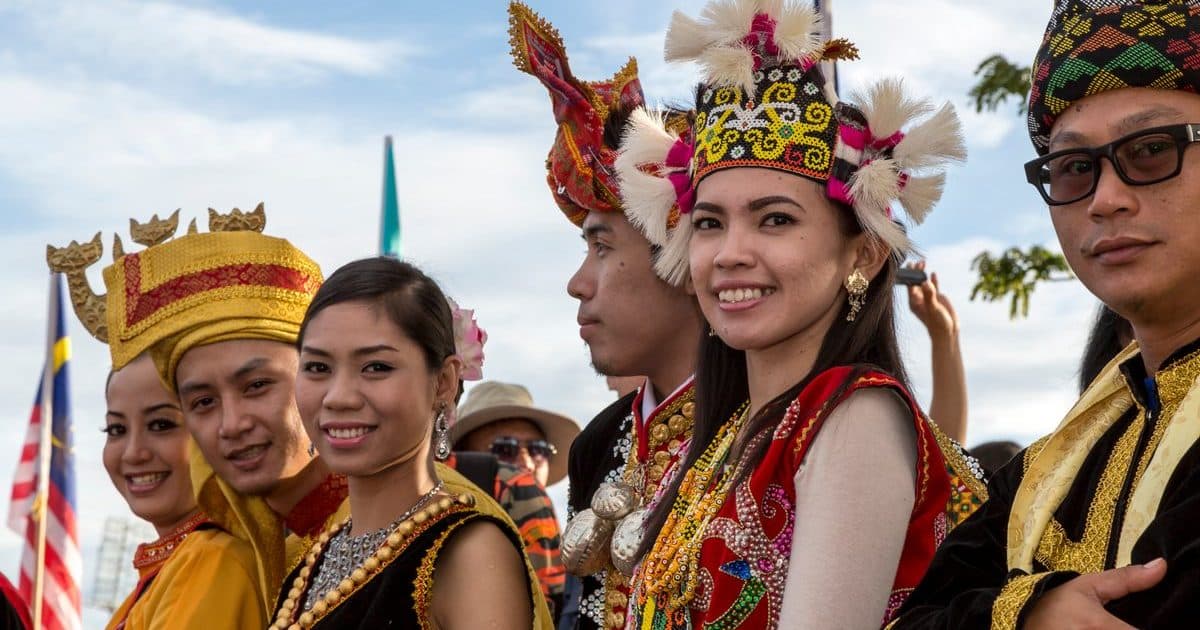
 CEphoto, Uwe Aranas / CC BY-SA 3.0
In This Guide
Understanding Malaysian Culture
Malaysia is one of the world's most culturally diverse nations. Three major ethnic groups—Malay, Chinese, and Indian—along with indigenous peoples, have created a unique multicultural society where different traditions coexist harmoniously.
Ethnic Composition
| Group | Percentage | Religion |
|---|---|---|
| Malay (Bumiputera) | 69% | Islam |
| Chinese | 23% | Buddhism, Taoism, Christianity |
| Indian | 7% | Hinduism, Christianity, Islam |
| Others | 1% | Various |
Key Cultural Values
- Harmony (Muhibbah): Peaceful coexistence between races
- Respect for elders: Deeply ingrained in all communities
- Face (Maruah): Avoiding embarrassment, maintaining dignity
- Hospitality: Guests are treated with great warmth
- Religious tolerance: Multiple faiths practiced openly
Languages
- Bahasa Malaysia (Malay): National language
- English: Widely spoken, business language
- Mandarin/Cantonese: Chinese community
- Tamil: Indian community
- Indigenous languages: Sabah and Sarawak
The Malaysian Identity
Despite diversity, Malaysians share:
- Love of food (national obsession)
- Mamak culture (24/7 Indian-Muslim restaurants)
- "Malaysia Boleh" spirit (can-do attitude)
- Passion for badminton
- Pride in natural heritage
Religions & Beliefs
Islam
Official religion, practiced by all ethnic Malays.
Key aspects:
- Five daily prayers (you'll hear the call to prayer)
- Friday prayers (Jumaat) - many businesses close 12-2pm
- Ramadan fasting month
- Halal food requirements
- Modest dress expectations
Visiting mosques:
- Remove shoes
- Cover arms and legs
- Women cover hair (robes provided)
- Don't walk in front of people praying
- Ask permission for photos
Notable mosques:
- Masjid Negara (National Mosque), KL
- Masjid Putra (Pink Mosque), Putrajaya
- Masjid Sultan Salahuddin (Blue Mosque), Shah Alam
Buddhism & Taoism
Practiced mainly by Chinese Malaysians.
Key aspects:
- Temple offerings and prayers
- Ancestor worship
- Chinese festivals (CNY, Hungry Ghost)
- Vegetarian festivals
Notable temples:
- Kek Lok Si, Penang
- Thean Hou Temple, KL
- Sam Poh Tong, Ipoh
Hinduism
Practiced mainly by Indian Malaysians.
Key aspects:
- Temple worship
- Colorful festivals (Deepavali, Thaipusam)
- Vegetarianism common
- Sacred cows
Notable temples:
- Batu Caves, KL
- Sri Mahamariamman, KL
- Arulmigu Balathandayuthapani, Penang
Christianity
Significant minority, especially in East Malaysia.
- Catholic and Protestant denominations
- Christmas widely celebrated
- Many churches in Sabah and Sarawak
Indigenous Beliefs
Sabah and Sarawak indigenous peoples:
- Animist traditions
- Harvest festivals
- Unique cultural practices
Social Etiquette
Greetings
Malay Greeting (Salam)
- Light handshake, then touch heart
- Between same gender usually
- Opposite gender: Nod and smile, or wait for them to extend hand
- Say "Assalamualaikum" (peace be upon you)
Chinese Greeting
- Handshake common
- Slight bow shows respect
- Business cards with both hands
Indian Greeting
- Handshake or "Namaste" (palms together)
- Respect for elders important
General Tips
- Use right hand for giving/receiving
- Titles important (Encik, Puan, Dato')
- Avoid pointing with index finger (use thumb)
- Remove shoes when entering homes
Dining Etiquette
At Someone's Home
- Remove shoes at door
- Bring a gift (fruit, sweets)
- Wait to be seated
- Wait for host to start eating
- Compliment the food
Eating with Hands
- Common for Malay and Indian food
- Use RIGHT hand only
- Wash hands before and after
- Rice is scooped, not grabbed
At Restaurants
- Tipping not expected
- "Kurang manis" = less sweet
- "Kurang pedas" = less spicy
- Sharing dishes is normal
Alcohol
- Don't offer to Muslims
- Available but expensive
- Some states restrict sales
- Don't drink in public spaces
Dress Code
General
- Modest dress appreciated
- Cover shoulders and knees for temples/mosques
- Beachwear only at beaches
- Smart casual for nice restaurants
Religious Sites
- Mosques: Cover arms, legs, hair (women)
- Temples: Remove shoes, modest dress
- Churches: Smart casual
Business
- Formal attire expected
- Batik shirts acceptable for men
- Conservative for women
Taboos & Sensitive Topics
Avoid
- Touching someone's head
- Pointing feet at people or religious objects
- Public displays of affection
- Criticizing royalty or religion
- Discussing race relations negatively
- Left hand for giving/receiving
Sensitive Topics
- Politics (especially racial policies)
- Religion (be respectful)
- Royalty (protected by law)
- May 13 (1969 racial riots)
Major Festivals
Islamic Festivals
Hari Raya Aidilfitri (Eid)
End of Ramadan fasting month.
When: Varies (Islamic calendar)
Duration: 2 days public holiday
Celebrations:
- Open houses (everyone welcome)
- Traditional Malay food
- New clothes (baju kurung/melayu)
- Visiting family and friends
- Green and gold decorations
Tourist tip: Visit Malay villages, attend open houses
Hari Raya Haji
Festival of Sacrifice.
When: ~70 days after Aidilfitri
Celebrations: Prayers, animal sacrifice, charity
Ramadan
Month of fasting.
When: Varies (Islamic calendar)
What to expect:
- Muslims fast sunrise to sunset
- Ramadan bazaars (evening food markets)
- Some restaurants close during day
- Respectful not to eat publicly
Chinese Festivals
Chinese New Year
Most celebrated Chinese festival.
When: January/February (lunar calendar)
Duration: 2 days public holiday (celebrations 15 days)
Celebrations:
- Lion and dragon dances
- Red decorations and ang pow (red packets)
- Family reunions
- Fireworks
- Mandarin oranges
Tourist tip: Visit Chinatowns, watch lion dances
Hungry Ghost Festival
When: 7th lunar month (Aug/Sep)
- Offerings to spirits
- Chinese opera performances
- Burning of paper offerings
Mid-Autumn Festival
When: 8th lunar month (Sep/Oct)
- Mooncakes
- Lantern displays
- Family gatherings
Indian Festivals
Deepavali (Diwali)
Festival of Lights.
When: October/November
Duration: 1 day public holiday
Celebrations:
- Oil lamps and lights
- Kolam (floor art)
- Indian sweets
- New clothes
- Open houses
Tourist tip: Visit Little India areas
Thaipusam
Hindu festival of devotion.
When: January/February
Location: Batu Caves (main)
Spectacle:
- Kavadi (elaborate structures carried)
- Body piercings
- Procession up 272 steps
- Millions attend
Tourist tip: Arrive early, respect the devotees
Other Festivals
Wesak Day
Buddha's birthday.
When: May (full moon)
- Temple celebrations
- Processions
- Vegetarian food
Christmas
When: December 25
- Widely celebrated
- Mall decorations
- Public holiday
Harvest Festivals (Sabah/Sarawak)
- Kaamatan (Sabah) - May
- Gawai Dayak (Sarawak) - June
- Traditional celebrations
- Rice wine (tuak)
- Cultural performances
Heritage & History
Historical Overview
Pre-Colonial Era
- Hindu-Buddhist kingdoms (1st-14th century)
- Malacca Sultanate (1400-1511)
- Islamic influence spreads
Colonial Period
- Portuguese (1511-1641)
- Dutch (1641-1824)
- British (1824-1957)
- Japanese occupation (1941-1945)
Independence
- Merdeka: August 31, 1957
- Malaysia formed: September 16, 1963
- Includes Sabah and Sarawak
UNESCO World Heritage Sites
Melaka & George Town
Historic Straits Settlements.
Melaka highlights:
- A Famosa fortress
- Stadthuys (Dutch buildings)
- Jonker Street
- Peranakan heritage
George Town highlights:
- Street art
- Clan jetties
- Colonial architecture
- Multicultural temples
Kinabalu Park
Natural heritage (Sabah).
- Mount Kinabalu
- Biodiversity hotspot
Gunung Mulu
Cave systems (Sarawak).
- Spectacular caves
- Karst formations
Archaeological Heritage of Lenggong Valley
Prehistoric site (Perak).
- 1.83 million year old tools
- Perak Man skeleton
Peranakan (Baba Nyonya) Culture
Unique Straits Chinese heritage.
Origins:
- Chinese traders + local Malay women
- 15th-17th century
- Distinct culture developed
Characteristics:
- Unique cuisine (Nyonya food)
- Elaborate traditional dress (kebaya)
- Distinctive architecture
- Blend of Chinese and Malay traditions
Where to experience:
- Melaka (Heeren Street)
- Penang (Peranakan Mansion)
- Singapore (Katong)
Orang Asli (Indigenous Peoples)
Peninsular Malaysia's original inhabitants.
Groups:
- Negrito (north)
- Senoi (central)
- Proto-Malay (south)
Where to learn:
- Taman Negara visits
- Orang Asli Museum (Gombak)
- Cameron Highlands villages
Sabah & Sarawak Indigenous
Diverse tribal cultures:
- Kadazan-Dusun (Sabah)
- Iban (Sarawak)
- Bidayuh (Sarawak)
- Orang Ulu (Sarawak)
Experiences:
- Longhouse stays
- Cultural villages
- Harvest festivals
- Traditional crafts
Book Cultural Experiences
Heritage walks, museum passes, and cultural tours — book at the best prices.

Arts & Crafts
Traditional Crafts
Batik
Wax-resist dyed fabric.
Types:
- Hand-drawn (batik tulis) - more valuable
- Block-printed (batik cap) - more affordable
Where to buy:
- Kelantan and Terengganu (east coast)
- Central Market, KL
- Craft Complex, KL
Prices: RM50-500+ depending on quality
Songket
Gold/silver thread woven fabric.
Uses:
- Traditional ceremonies
- Royal occasions
- Special events
Where to buy:
- Terengganu
- Kelantan
- Sarawak (Pua Kumbu variation)
Pewter
Malaysia is world's largest pewter producer.
Royal Selangor:
- Factory tour in KL
- Make your own pewter
- Quality souvenirs
Woodcarving
Intricate traditional carvings.
Styles:
- Malay (geometric, floral)
- Sarawakian (tribal motifs)
- Kelantan (shadow puppet related)
Pottery
Labu Sayong (gourd-shaped water vessels).
- Perak specialty
- Black clay
- Keeps water cool
Performing Arts
Wayang Kulit (Shadow Puppets)
Traditional shadow play.
Where to see:
- Kelantan (traditional heartland)
- Cultural shows in KL
- Museums
Mak Yong
Ancient dance-drama.
- UNESCO Intangible Heritage
- Kelantan origin
- Rarely performed now
Dikir Barat
Group singing performance.
- Kelantan tradition
- Call and response
- Often competitive
Traditional Dance
- Joget (lively couple dance)
- Zapin (Arab-influenced)
- Inang (graceful)
- Ngajat (Iban warrior dance)
Traditional Music
Gamelan
Percussion orchestra.
- Malay courts
- Bronze instruments
- Ceremonial music
Kompang
Frame drums.
- Wedding celebrations
- Processions
- Group performances
Sape
Sarawakian lute.
- Orang Ulu instrument
- Haunting melodies
- Cultural performances
Where to Experience Arts
Kuala Lumpur
- National Museum
- Islamic Arts Museum
- Craft Complex
- Central Market
Penang
- Peranakan Mansion
- Street art
- Clan houses
Sarawak
- Sarawak Cultural Village
- Rainforest World Music Festival
- Longhouse visits
Food Culture
Food as Culture
Food is central to Malaysian identity. It's how communities bond, celebrate, and express hospitality.
Eating Culture
Mamak Culture
24/7 Indian-Muslim restaurants.
- Social gathering spots
- Late-night hangouts
- Watching football
- Affordable food
- Teh tarik (pulled tea)
Kopitiam Culture
Traditional coffee shops.
- Morning breakfast spots
- Kopi (local coffee)
- Toast and eggs
- Neighborhood gathering
Hawker Culture
Street food tradition.
- UNESCO recognized
- Affordable excellence
- Specialization (one dish perfected)
- Generational recipes
Food Taboos by Religion
Muslims (Halal)
- No pork
- No alcohol
- Meat must be halal slaughtered
- No blood products
Hindus
- Many vegetarian
- No beef (cow is sacred)
- Some avoid garlic/onion
Buddhists
- Some vegetarian
- Especially during festivals
- Avoid killing (some won't eat shellfish)
Dining Customs
Sharing
- Dishes placed in center
- Everyone shares
- Rice is individual
- Order variety for table
Hands vs Utensils
- Malay/Indian: Often eat with hands
- Chinese: Chopsticks or spoon/fork
- Western utensils available everywhere
Ordering
- Point at what you want
- "Satu" = one, "Dua" = two
- "Makan sini" = eat here
- "Bungkus" = takeaway
Food Festivals
Ramadan Bazaars
Evening food markets during Ramadan.
- Massive variety
- Special Ramadan dishes
- Best time for Malay food
Chinese New Year
- Yee Sang (prosperity salad)
- Reunion dinners
- Mandarin oranges
Deepavali
- Indian sweets
- Murukku (crunchy snack)
- Vegetarian options
Harvest Festivals
- Traditional rice wine
- Indigenous dishes
- Sabah and Sarawak
Food Etiquette Tips
- Accept food offerings graciously
- Compliment the cook
- Don't waste food
- Try everything offered
- Eat with right hand if using hands
- Don't blow nose at table
- Burping is not offensive (can show satisfaction)
Language & Communication
Bahasa Malaysia Basics
Essential Phrases
| English | Malay | Pronunciation |
|---|---|---|
| Hello | Helo | heh-loh |
| Thank you | Terima kasih | tuh-ree-mah kah-see |
| You're welcome | Sama-sama | sah-mah sah-mah |
| Yes | Ya | yah |
| No | Tidak | tee-dak |
| Please | Tolong | toh-long |
| Sorry | Maaf | mah-ahf |
| Excuse me | Maafkan saya | mah-ahf-kan sah-yah |
| How much? | Berapa? | buh-rah-pah |
| Delicious | Sedap | suh-dahp |
| Where is...? | Di mana...? | dee mah-nah |
Numbers
| Number | Malay |
|---|---|
| 1 | Satu |
| 2 | Dua |
| 3 | Tiga |
| 4 | Empat |
| 5 | Lima |
| 10 | Sepuluh |
| 100 | Seratus |
Food Ordering
| Phrase | Meaning |
|---|---|
| Kurang manis | Less sweet |
| Kurang pedas | Less spicy |
| Tak mau pedas | No spicy |
| Makan sini | Eat here |
| Bungkus | Takeaway |
| Bil, tolong | Bill, please |
| Sedap! | Delicious! |
Manglish (Malaysian English)
Unique Malaysian English expressions:
- "Lah" - emphasis particle ("Okay lah")
- "Can or not?" - Is it possible?
- "Got" - Have ("Got parking or not?")
- "Already" - Completed ("Eat already?")
- "One" - Emphasis ("Very nice one")
Common Manglish
| Manglish | Meaning |
|---|---|
| "Can lah" | Yes, it's possible |
| "Cannot lah" | No, it's not possible |
| "Where got?" | That's not true |
| "So how?" | What should we do? |
| "Aiyo/Aiyah" | Expression of frustration |
| "Walao" | Wow/expression of surprise |
Communication Tips
Speaking English
- Widely understood in cities
- Speak clearly, not loudly
- Avoid complex vocabulary
- Be patient with accents
Non-Verbal
- Smile goes a long way
- Pointing with thumb, not finger
- Beckoning with palm down
- Avoid prolonged eye contact with elders
Business Communication
- Titles important (Dato', Tan Sri)
- Business cards with both hands
- Small talk before business
- Indirect communication style
Do's and Don'ts
Do's
General
- Do smile and be friendly
- Do remove shoes when entering homes
- Do use right hand for giving/receiving
- Do dress modestly at religious sites
- Do try local food
- Do learn basic Malay phrases
- Do respect all religions equally
- Do accept hospitality graciously
At Religious Sites
- Do remove shoes
- Do cover up appropriately
- Do ask before taking photos
- Do speak quietly
- Do follow local customs
Dining
- Do wash hands before eating
- Do try eating with your hands (right only)
- Do compliment the food
- Do accept offered food/drinks
- Do share dishes at the table
Social
- Do greet elders first
- Do use titles when appropriate
- Do be patient and polite
- Do accept business cards with both hands
Don'ts
General
- Don't touch anyone's head
- Don't point with your index finger
- Don't show soles of feet to people
- Don't use left hand for giving/receiving
- Don't public display affection
- Don't raise your voice in anger
Religious
- Don't offer alcohol to Muslims
- Don't offer beef to Hindus
- Don't offer pork to Muslims
- Don't disrespect any religion
- Don't enter mosques during prayer without permission
Social
- Don't criticize the royal family
- Don't discuss race relations negatively
- Don't make fun of local customs
- Don't be impatient or aggressive
- Don't assume everyone speaks English
Photography
- Don't photograph people without permission
- Don't photograph military installations
- Don't photograph inside mosques without permission
- Don't use flash in temples
Serious Taboos
Legal Issues
- Drug trafficking: Death penalty
- Insulting royalty: Illegal
- Insulting religion: Illegal
- LGBT activities: Illegal (though rarely enforced on tourists)
Cultural Taboos
- Touching heads (sacred in some cultures)
- Pointing feet at religious objects
- Walking in front of people praying
- Entering homes with shoes
- Refusing hospitality repeatedly
Quick Reference Card
Always:
✓ Smile
✓ Be patient
✓ Dress modestly
✓ Remove shoes indoors
✓ Use right hand
✓ Respect all religions
Never:
✗ Touch heads
✗ Point with finger
✗ Show feet soles
✗ Criticize royalty
✗ Public affection
✗ Lose your temper
Cultural Experiences
Immersive Experiences
Homestays
Stay with local families.
Where:
- Kampung (village) homestays
- Longhouse stays (Sarawak)
- Orang Asli communities
What to expect:
- Home-cooked meals
- Daily life participation
- Cultural exchange
- Basic accommodation
Booking:
- Tourism Malaysia programs
- Local tourism offices
- Online platforms
Cooking Classes
Learn Malaysian cuisine.
Popular classes:
- Penang (Nyonya cooking)
- KL (various cuisines)
- Langkawi (Malay cooking)
- Melaka (Peranakan)
Cost: RM150-300 per class
Cultural Villages
Sarawak Cultural Village
Living museum of indigenous cultures.
- Traditional houses
- Cultural performances
- Craft demonstrations
- Dance shows
Location: Near Kuching
Cost: RM60
Mari Mari Cultural Village
Sabah indigenous cultures.
- Five ethnic houses
- Traditional activities
- Blowpipe, fire-making
- Cultural performances
Location: Near Kota Kinabalu
Cost: RM180
Festivals to Attend
Best for Tourists
| Festival | Experience |
|---|---|
| Thaipusam | Spectacular devotion |
| Chinese New Year | Lion dances, celebrations |
| Hari Raya | Open houses, food |
| Gawai/Kaamatan | Indigenous culture |
| Deepavali | Lights, sweets |
Heritage Walks
George Town
- Free heritage walks
- Street art trail
- Clan jetties
- Little India
Melaka
- Jonker Street
- Dutch Square
- Portuguese Settlement
- Peranakan houses
Kuala Lumpur
- Chinatown
- Little India
- Kampung Baru (Malay village)
- Heritage trail
Craft Workshops
Batik Making
- Penang, Terengganu, KL
- Learn wax-resist technique
- Make your own piece
- Cost: RM50-150
Pewter Workshop
- Royal Selangor, KL
- Make your own item
- Factory tour included
- Cost: RM70-150
Pottery
- Perak (Labu Sayong)
- Traditional techniques
- Take home creation
Religious Site Visits
Respectful Visiting
- Check visiting hours
- Dress appropriately
- Remove shoes
- Ask about photography
- Observe quietly
- Don't interrupt worship
- Make small donation if appropriate
Modern Malaysian Culture
Contemporary Malaysia
While traditional culture remains strong, modern Malaysia has developed its own unique contemporary identity.
Pop Culture
Music
- K-pop influence strong among youth
- Local artists: Yuna, Zee Avi (international success)
- Nasyid (Islamic music) popular
- Indie scene growing
- Traditional music fusion
Film & TV
- Local film industry (Malay-language)
- International productions filmed here
- Netflix producing Malaysian content
- Reality TV popular
- Korean drama influence
Fashion
- Modest fashion hub
- Local designers gaining recognition
- Fusion of traditional and modern
- Hijab fashion industry
- Streetwear scene
Social Media Culture
Popular Platforms
- Instagram (lifestyle, food)
- TikTok (entertainment)
- Facebook (older demographics)
- Twitter (news, commentary)
- YouTube (content creators)
Influencer Culture
- Food bloggers influential
- Lifestyle influencers
- Modest fashion influencers
- Travel content creators
Cafe Culture
Third Wave Coffee
- Specialty coffee scene booming
- Instagram-worthy cafes
- Brunch culture
- Work-from-cafe common
Popular Areas
- Bangsar (KL)
- TTDI (KL)
- George Town (Penang)
- Ipoh (heritage cafes)
Youth Culture
Trends
- Bubble tea obsession
- Korean culture influence
- Gaming and esports
- Sneaker culture
- Thrift shopping
Hangouts
- Shopping malls
- Cafes
- Mamak restaurants
- Gaming cafes
Work Culture
Business Norms
- Hierarchical structures
- Relationship-focused
- Indirect communication
- Face-saving important
- Punctuality flexible
Modern Workplaces
- Coworking spaces growing
- Startup ecosystem
- Digital nomad friendly
- Work-life balance improving
Urban vs Rural
Urban Malaysia
- Cosmopolitan
- English widely used
- International influences
- Fast-paced
- Diverse dining
Rural Malaysia
- Traditional values stronger
- Malay language dominant
- Agricultural lifestyle
- Stronger community bonds
- Slower pace
Regional Cultural Differences
Peninsular Malaysia
West Coast (KL, Penang, Melaka)
- Most cosmopolitan
- Chinese influence strong
- International exposure
- Urban lifestyle
- Diverse food scene
East Coast (Kelantan, Terengganu)
- Most traditional Malay
- Conservative dress
- Islamic influence strongest
- Traditional arts preserved
- Unique dialects
North (Kedah, Perlis)
- Agricultural heartland
- Thai influence
- Rice paddies
- Laid-back lifestyle
South (Johor)
- Singapore influence
- Business-oriented
- Diverse population
- Cross-border culture
East Malaysia
Sabah
- Kadazan-Dusun majority
- Christian significant population
- Harvest festival (Kaamatan)
- Mountain culture
- Filipino influence
Sarawak
- Iban, Bidayuh, Orang Ulu
- Longhouse tradition
- Gawai festival
- Rainforest culture
- Most culturally diverse state
Key Differences
| Aspect | Peninsular | East Malaysia |
|---|---|---|
| Dominant culture | Malay | Indigenous |
| Religion | Islam majority | Mixed |
| Language | Malay, English | Many indigenous |
| Festivals | Islamic, Chinese | Harvest festivals |
| Food | Malay, Chinese, Indian | Indigenous, seafood |
| Lifestyle | Urban/rural mix | More rural |
State Personalities
Penang
- Food obsessed
- Heritage proud
- Hokkien influence
- Liberal attitudes
Kelantan
- Traditional Malay
- Arts and crafts
- Conservative
- Unique dialect
Sarawak
- Laid-back
- Culturally proud
- Nature-focused
- Hospitable
Johor
- Business-minded
- Singapore-connected
- Diverse
- Modern
Cultural Sensitivity by Region
More Conservative:
- Kelantan
- Terengganu
- Kedah
- Perlis
More Liberal:
- Kuala Lumpur
- Penang
- Sabah
- Sarawak
Dress Recommendations:
- East Coast: Most modest
- Cities: Smart casual
- East Malaysia: Relaxed
- Religious sites: Always modest
Interacting with Locals
Making Connections
Malaysians are generally friendly and curious about foreigners. Here's how to connect meaningfully.
Starting Conversations
Good Topics:
- Food (always a winner)
- Travel experiences
- Family
- Sports (badminton, football)
- Local recommendations
Avoid:
- Politics
- Race relations
- Religion (unless they bring it up)
- Salary/money
- Criticism of Malaysia
Common Questions You'll Get:
- "Where are you from?"
- "First time in Malaysia?"
- "How do you like Malaysian food?"
- "Are you married?"
- "How old are you?"
Note: Personal questions are normal and friendly, not intrusive.
Building Rapport
Tips:
- Learn a few Malay words
- Show interest in their culture
- Accept hospitality graciously
- Be patient and smile
- Share about your country
- Compliment sincerely
Food Bonding
- Accept food offers
- Ask for recommendations
- Show enthusiasm for local food
- Share meals together
- Learn dish names
Social Invitations
Open Houses
During festivals, you may be invited to open houses:
- Bring small gift (fruit, sweets)
- Dress appropriately
- Try all offered food
- Stay 1-2 hours
- Thank host sincerely
Home Visits
If invited to someone's home:
- Remove shoes
- Bring a gift
- Accept refreshments
- Compliment the home
- Don't overstay
Business Relationships
Building Trust:
- Relationship before business
- Small talk important
- Multiple meetings normal
- Patience required
- Face-to-face preferred
Gift Giving:
- Not expected but appreciated
- Avoid alcohol for Muslims
- Quality over quantity
- Present with both hands
- Don't expect immediate opening
Handling Misunderstandings
If You Make a Mistake:
- Apologize sincerely
- Don't over-explain
- Learn from it
- Move on gracefully
- Malaysians are forgiving
Cultural Patience:
- Things move slower
- "Malaysian time" is real
- Indirect communication
- Read between lines
- Don't show frustration
Malaysian Weddings & Ceremonies
Malay Weddings
Traditional Malay weddings are elaborate multi-day affairs.
Key Ceremonies
Merisik (Viewing)
- Groom's family visits bride's family
- Assess compatibility
- Exchange of gifts
Meminang (Proposal)
- Formal proposal
- Negotiation of hantaran (gifts)
- Setting wedding date
Akad Nikah (Solemnization)
- Islamic marriage contract
- Witnessed by religious official
- Bride's consent required
- Mas kahwin (dowry) given
Bersanding (Enthronement)
- Couple sits on pelamin (dais)
- Dressed as king and queen
- Guests pay respects
- Blessing ceremony
What to Expect as Guest
- Dress modestly (baju kurung/melayu ideal)
- Bring cash gift in envelope
- Eat the provided food
- Congratulate the couple
- Stay 1-2 hours
Chinese Weddings
Blend of traditional and modern elements.
Key Elements
- Tea ceremony (serving tea to elders)
- Multiple outfit changes
- 8-10 course dinner
- Ang pow (red packet) gifts
- Yam seng (toasting)
What to Expect as Guest
- Dress smartly (avoid white, black)
- Bring ang pow (even amount, no 4)
- Participate in yam seng
- Multi-course dinner
- Games and entertainment
Indian Weddings
Colorful, elaborate celebrations.
Hindu Wedding Elements
- Mehendi (henna) ceremony
- Garland exchange
- Fire ceremony (Agni)
- Tying of thali (sacred thread)
- Seven steps ritual
What to Expect as Guest
- Wear bright colors
- Remove shoes at temple
- Vegetarian food common
- Long ceremonies
- Multiple events over days
Wedding Gift Etiquette
| Wedding Type | Gift |
|---|---|
| Malay | Cash in envelope (RM50-200) |
| Chinese | Ang pow (RM88-388, even numbers) |
| Indian | Cash or household items |
Other Ceremonies
Baby Ceremonies
- Malay: Aqiqah (naming, hair shaving)
- Chinese: Full moon celebration
- Indian: Naming ceremony
Coming of Age
- Malay: Khatam Quran (completing Quran)
- Hindu: Puberty ceremonies
Funerals
- Malay: Quick burial (within 24 hours)
- Chinese: Multi-day wake
- Hindu: Cremation
- Dress in white or muted colors
Superstitions & Beliefs
Common Malaysian Superstitions
Superstitions remain strong across all communities. Understanding them helps avoid awkward situations.
General Beliefs
Numbers
- 4: Unlucky (sounds like "death" in Chinese)
- 8: Lucky (sounds like "prosperity")
- 7: Generally lucky
- 13: Less significant than in West
Colors
- Red: Luck, prosperity (Chinese)
- White: Mourning (Chinese, Malay)
- Yellow: Royalty (Malay)
- Green: Islam, prosperity
Malay Superstitions
Pantang Larang (Taboos)
- Don't sit on pillows (causes boils)
- Don't open umbrella indoors
- Don't point at rainbows
- Don't cut nails at night
- Don't sing while cooking (marry old spouse)
- Don't sweep at night (sweeps away luck)
Spirits & Supernatural
- Pontianak (female vampire ghost)
- Hantu (general term for ghosts)
- Bomoh (traditional healer/shaman)
- Jampi (spells/charms)
Pregnancy Taboos
- Don't mock animals (baby resembles them)
- Don't attend funerals
- Don't tie knots
- Husband shouldn't kill animals
Chinese Superstitions
Feng Shui
- Building orientation matters
- Water features for wealth
- Mirror placement important
- Avoid number 4 in addresses
Hungry Ghost Month
- Don't swim (spirits drown you)
- Don't move house
- Don't get married
- Don't start new business
- Offerings to appease spirits
New Year
- Clean house before, not during
- No sweeping on CNY day
- Wear red
- No sharp objects (cutting luck)
Indian Superstitions
Auspicious Times
- Rahu Kalam (inauspicious period daily)
- Consult astrologer for major decisions
- Certain days better for activities
Evil Eye
- Lemon and chilies ward off evil
- Black dot on baby's face
- Burning camphor
General
- Don't cut hair on Tuesday
- Don't wash hair on Thursday
- Crows bring news
- Lizard sounds have meanings
Respecting Beliefs
- Don't mock superstitions
- Follow host's customs
- Ask if unsure
- Observe what locals do
Sports & Recreation Culture
National Sports
Badminton
Malaysia's most beloved sport. The country has produced world champions and Olympic medalists.
Why It Matters:
- Lee Chong Wei (national hero)
- Olympic medals
- Thomas Cup victories
- Every neighborhood has courts
- Affordable and accessible
Where to Watch:
- Malaysia Open (annual)
- Live matches on TV
- Local clubs
Football (Soccer)
Second most popular sport.
- Malaysian Super League
- Passionate fans
- JDT (Johor) dominant team
- National team improving
Sepak Takraw
Traditional Southeast Asian sport—volleyball with feet.
- Acrobatic kicks
- Rattan ball
- Competitive leagues
- Uniquely Malaysian
Traditional Sports
Wau (Kite Flying)
- Giant traditional kites
- Kelantan specialty
- Competitions held
- Intricate designs
Gasing (Top Spinning)
- Heavy wooden tops
- Competitive spinning
- Traditional craft
- Kelantan/Terengganu
Silat
Malay martial art.
- Self-defense
- Cultural performances
- Competitive sport
- Spiritual elements
Recreation Culture
Hiking
- Growing popularity
- Weekend warriors
- Social media driven
- Sunrise hikes popular
Running
- Marathon culture growing
- Park runs
- Night runs
- Charity runs
Cycling
- Road cycling popular
- Mountain biking
- Cycling clubs
- Le Tour de Langkawi
Golf
- Many courses
- Affordable green fees
- Popular with tourists
- Business networking
Fitness Culture
- Gyms everywhere
- CrossFit growing
- Yoga popular
- Morning tai chi in parks
Top 10 Most-Reviewed Museums in Malaysia
Ranked by Google review count — updated weekly
- 1.
The National Museum of Malaysia
Department of Museum, Muzium Negara, Jln Damansara, Perdana Botanical Gardens, Kuala Lumpur
4.314.5k - 2.
Science Centre Singapore
15 Science Centre Rd, Singapore
4.610.7k - 3.
Singapore Discovery Centre
510 Upper Jurong Rd, Singapore
4.79.1k - 4.
Pinang Peranakan Mansion
29, Church St, Georgetown, George Town
4.56.3k - 5.
Army Museum Port Dickson
Muzium Tentera Darat, Kem, Port Dickson
4.65.4k - 6.
Terengganu State Museum
Terengganu State Museum, Bukit Losong
4.55.1k - 7.
Sabah State Museum
Sabah Museum Complex, Jalan Muzium, Kota Kinabalu
4.24.9k - 8.
National Art Gallery
Lembaga Pembangunan Seni Visual Negara, 2, Jalan Temerloh, off, Jln Tun Razak, Kuala Lumpur
4.54.9k - 9.
Kampung Budaya Sarawak
Sarawak Cultural Village, Pantai Damai Santubong, Kampung Budaya Sarawak, Kuching
4.44.8k - 10.
Samudera Museum
Muzium Samudera, Jln Merdeka, Banda Hilir, Melaka
4.24.7k
Sources & References
Data in this guide is cross-referenced against the following official sources.
- National Heritage Department UNESCO sites, heritage buildings, cultural preservation
- Tourism Malaysia Cultural festivals, heritage trails, traditional arts
- National Museum (Muzium Negara) Malaysian history, cultural exhibitions, artefacts