
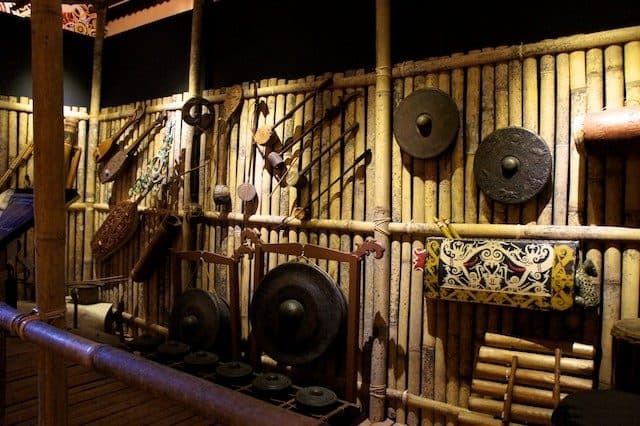
East Malaysian traditional music instruments

Malaysia Traditional Songs Guide

Folk songs, traditional music, and the rich musical heritage of Malaysia

Vernon Chan / CC BY 2.0
#1

Rasa Sayang

Feeling of Love

Malay Archipelago

Pre-colonial

The most famous Malaysian folk song, known throughout Southeast Asia. "Rasa Sayang" uses the traditional Malay pantun (quatrain) poetry form with verses about love and longing. It became iconic as a symbol of Malaysian culture.

🎵 Love Song (Pantun)

🇲🇾Lyrics (Malay)

Rasa sayang, hey! Rasa sayang sayang hey Hey lihat nona jauh Rasa sayang sayang hey Buah cempedak di luar pagar Ambil galah tolong jolokkan Saya budak baru belajar Kalau salah tolong tunjukkan Rasa sayang, hey! Rasa sayang sayang hey Hey lihat nona jauh Rasa sayang sayang hey Pulau Pandan jauh ke tengah Gunung Daik bercabang tiga Hancur badan dikandung tanah Budi yang baik dikenang juga

🇬🇧Translation (English)

Feeling of love, hey! Feeling of love, love, hey Hey, looking at the maiden afar Feeling of love, love, hey The cempedak fruit is beyond the fence Get a pole to help knock it down I am a child, still learning If I'm wrong, please teach me Feeling of love, hey! Feeling of love, love, hey Hey, looking at the maiden afar Feeling of love, love, hey Pandan Island is far out at sea Mount Daik has three peaks Though my body turns to dust Good deeds will still be remembered

Cultural Significance

Represents the pantun tradition of Malay poetry, where the first two lines set up a metaphor and the last two deliver the message.

Did You Know?

  • Claimed by both Malaysia and Indonesia as cultural heritage
  • Uses the traditional pantun poetry structure
  • Featured in the Visit Malaysia campaign
  • Has hundreds of different pantun verses
#2

Chan Mali Chan

Chan Mali Chan

Malacca / Malay Peninsula

15th-16th Century

A beloved Malay folk song from the Malacca Sultanate era. The playful, rhythmic song has been passed down through generations and is often sung at cultural events. The meaning of "Chan Mali Chan" is debated, possibly referring to sounds or a person's name.

🎵 Folk Song

🇲🇾Lyrics (Malay)

Chan mali chan, chan mali chan Chan mali chan, ketipung payung Chan mali chan, chan mali chan Chan mali chan, ketipung payung Anak ayam turun sepuluh Mati seekor tinggal sembilan Anak kambing turun sekawan Mati seekor tinggal lapan Chan mali chan, chan mali chan Chan mali chan, ketipung payung Nenek-nenek si bongkok tiga Siang mengantuk malam berjaga Cuci kain di tepi sumur Kain basah dicampak jauh Teng-teng-teng, tenaga kuda Kalau mati sahaya yang rugi

🇬🇧Translation (English)

Chan mali chan, chan mali chan Chan mali chan, ketipung payung Chan mali chan, chan mali chan Chan mali chan, ketipung payung Ten baby chicks come down One dies, nine remain A group of young goats come down One dies, eight remain Chan mali chan, chan mali chan Chan mali chan, ketipung payung Grandmother bent over three times Drowsy by day, awake at night Washing clothes by the well Wet clothes thrown far away Teng-teng-teng, horse power If it dies, I'm the one who loses

Cultural Significance

One of the oldest surviving Malay folk songs, representing the rich oral tradition of the Malay Peninsula.

Did You Know?

  • Dates back to the Malacca Sultanate period
  • "Ketipung payung" may refer to traditional drums
  • Often performed with traditional dance movements
  • Verses are playful and often nonsensical
#3

Burung Kakak Tua

The Cockatoo

Maluku / Malay Archipelago

Colonial Era

A charming folk song about an elderly cockatoo. Originally from the Maluku Islands, it spread throughout the Malay world. The song uses the bird as a metaphor for wisdom and aging, often sung by children.

🎵 Children's Song

🇲🇾Lyrics (Malay)

Burung kakak tua Hinggap di jendela Nenek sudah tua Giginya tinggal dua Letuk, letuk, letuk Letuk, letuk, letuk Nenek sudah tua Giginya tinggal dua Burung kakak tua Paruhnya panjang bengkok Nenek sudah tua Badannya sudah bongkok Letuk, letuk, letuk Letuk, letuk, letuk Nenek sudah tua Badannya sudah bongkok

🇬🇧Translation (English)

The cockatoo bird Perched at the window Grandmother is already old Only two teeth left Knock, knock, knock Knock, knock, knock Grandmother is already old Only two teeth left The cockatoo bird Its beak is long and curved Grandmother is already old Her body is already hunched Knock, knock, knock Knock, knock, knock Grandmother is already old Her body is already hunched

Cultural Significance

Teaches children to respect and be kind to elderly people through playful comparison with the cockatoo bird.

Did You Know?

  • One of the most popular children's songs in Malaysia
  • The cockatoo represents wisdom and longevity
  • "Letuk" imitates the bird's pecking sound
  • Also popular in Indonesia and Singapore
#4

Lenggang Kangkung

Swaying Water Spinach

Malay Peninsula

Traditional

A lively song about water spinach (kangkung) swaying in water. It's traditionally accompanied by the Joget dance, one of Malaysia's most popular folk dances. The song celebrates simple village life.

🎵 Folk Dance Song

🇲🇾Lyrics (Malay)

Lenggang lenggang kangkung Kangkung di tepi kali Kangkung di tepi kali Lenggang lenggang kangkung Lenggang-lenggang si dayang Si dayang cantik menawan Si dayang cantik menawan Lenggang-lenggang si dayang Kalau tuan mudik ke hulu Carikan saya bunga melati Kalau tuan mati dahulu Nantikan saya di pintu syurga Lenggang lenggang kangkung Patah kayu bergoyang Patah kayu bergoyang Lenggang lenggang kangkung

🇬🇧Translation (English)

Swaying, swaying water spinach Water spinach by the river Water spinach by the river Swaying, swaying water spinach Swaying, swaying maiden The maiden is beautiful and charming The maiden is beautiful and charming Swaying, swaying maiden If you go upstream Find me a jasmine flower If you die before me Wait for me at heaven's gate Swaying, swaying water spinach Broken branch swaying Broken branch swaying Swaying, swaying water spinach

Cultural Significance

Represents the joget tradition and village life, often performed at weddings and celebrations.

Did You Know?

  • Accompanied by the traditional Joget dance
  • Kangkung (water spinach) is a common Malaysian vegetable
  • The swaying motion mimics the vegetable in water
  • Popular at Malay weddings and festivals
#5

Suriram

Suriram

Malay Peninsula

Traditional

A gentle, melodic lullaby sung to soothe children to sleep. "Suriram" creates a peaceful atmosphere with its soft melody and calming lyrics about beautiful scenery and peaceful sleep.

🎵 Lullaby

🇲🇾Lyrics (Malay)

Suriram, suriram Suriram ram ram ram Suriram yang manis Anak siapa gerangan Yang manis tidur tak jaga Suriram, suriram Suriram ram ram ram Suriram yang manis Anak siapa gerangan Yang manis tidur tak jaga

🇬🇧Translation (English)

Suriram, suriram Suriram ram ram ram Sweet suriram Whose child could this be The sweet one sleeping unawares Suriram, suriram Suriram ram ram ram Sweet suriram Whose child could this be The sweet one sleeping unawares

Cultural Significance

One of the most beloved Malay lullabies, passed down through generations to comfort children.

Did You Know?

  • The word "Suriram" has no specific meaning - it's a soothing sound
  • Often sung while gently rocking children
  • Has a hypnotic, calming melody
  • Still commonly sung by Malaysian parents today
#6

Anak Itik Tok Wi

Tok Wi's Duckling

Kelantan / East Coast

Traditional

A playful song from the East Coast of Malaysia about a duckling belonging to Tok Wi (an elderly person). The repetitive, catchy melody makes it perfect for children, teaching counting and rhythm.

🎵 Children's Song

🇲🇾Lyrics (Malay)

Anak itik tok wi Mandi dalam kolam Sakit ape tok wi Sakit sendi tulang Ubat ape tok wi Ubat limau lelam Sakit ape tok wi Sakit sengal tulang Anak itik tok wi Mandi dalam kolam Sakit ape tok wi Sakit sendi tulang

🇬🇧Translation (English)

Tok Wi's duckling Bathing in the pond What ails you, Tok Wi Aching joints and bones What medicine, Tok Wi Lemongrass remedy What ails you, Tok Wi Aching, sore bones Tok Wi's duckling Bathing in the pond What ails you, Tok Wi Aching joints and bones

Cultural Significance

Represents the rural, agrarian lifestyle of traditional Malay villages.

Did You Know?

  • Originally from Kelantan on the East Coast
  • The repetitive structure helps children learn rhythm
  • Actions often accompany the song
  • "Tok Wi" is a term of endearment for elderly
#7

Dayung Sampan

Rowing the Sampan

Malay Archipelago

Traditional

A rhythmic work song traditionally sung by fishermen while rowing their sampan (small boat). The steady rhythm helped coordinate rowing movements and pass the time during long journeys.

🎵 Work Song

🇲🇾Lyrics (Malay)

Dayung dayung dayung dayung sampan Naik sampan menjala ikan Ikan dijala hai nelayan Di tengah muara Dayung dayung dayung dayung sampan Naik sampan sampan didayung Sampan pun melaju hai nelayan Ke pantai nan biru Kalau tuan mencari jodoh Jangan mencari hai nelayan Selalu cemburu

🇬🇧Translation (English)

Row, row, row, row the boat Board the boat to cast the net Fish are netted, oh fisherman In the middle of the estuary Row, row, row, row the boat Board the boat, the boat is rowed The boat speeds along, oh fisherman To the blue shore If you are looking for a partner Don't look for one, oh fisherman Who is always jealous

Cultural Significance

Represents the maritime heritage of the Malay people who have been seafarers for centuries.

Did You Know?

  • A sampan is a traditional flat-bottomed boat
  • Rowing songs helped synchronize movements
  • Contains advice about life and hard work
  • Still sung in fishing communities today
#8

Bunga Melur

Jasmine Flower

Malay Peninsula

Mid-20th Century

Written by S. Sudarmaji and performed by the legendary P. Ramlee, this song compares the jasmine flower to a humble village girl, pure, fragrant, and beautiful despite being overlooked. It is one of P. Ramlee's most beloved compositions.

🎵 Love Song

🇲🇾Lyrics (Malay)

Di hujung sana tempatmu, bunga melur Bukan di taman yang indah, bunga melur Hanya di sudut halaman Tiada dihiasi jambangan indah permai Tapi warnamu yang putih, bunga melur Tandanya suci dan murni, bunga melur Walaupun ditiup debu Warnamu dan baumu tetap memikat kalbu Ibarat gadis desa, bunga melur Sederhana Walau kering tak bercahaya, bunga melur Baumu memikat jiwa Semoga sabar dahulu, bunga melur Pada di satu ketika, bunga melur Masanya kan menjelma Disanjung dan dipuja oleh gadis remaja

🇬🇧Translation (English)

Over there is your place, jasmine Not in a beautiful garden, jasmine Only in a corner of the yard Not adorned in a pretty vase But your white colour, jasmine Signifies purity and innocence, jasmine Even when blown with dust Your colour and scent still captivate the heart Like a village girl, jasmine Simple and humble Though dry and without shine, jasmine Your scent captivates the soul Be patient for now, jasmine At one moment, jasmine Your time will come Admired and adored by young maidens

Cultural Significance

Compares the humble jasmine to a modest village girl, celebrating inner beauty and purity over outward glamour. A staple of P. Ramlee's musical legacy.

Did You Know?

  • Written by S. Sudarmaji, performed by P. Ramlee
  • Later covered by Siti Nurhaliza on her traditional songs album
  • Jasmine (melur/melor) symbolizes purity and humility in Malay culture
  • Melur is a popular girl's name in Malaysia
#9

Potong Bebek Angsa

Cutting the Duck and Goose

Malay Archipelago

Traditional

A fun, action-oriented children's song with accompanying hand movements. Despite the somewhat violent-sounding title, it's a playful song about preparing food, teaching children about traditional cooking.

🎵 Children's Game Song

🇲🇾Lyrics (Malay)

Potong bebek angsa Masak di kuali Nona-nona cantik Jalan ke mari Sorong-sorong, sorong ke kanan Sorong-sorong, sorong ke kiri Sorong-sorong, sorong ke kanan Pusing, pusing sini Potong bebek angsa Masak di periuk Nona-nona cantik Sila duduk

🇬🇧Translation (English)

Cutting the duck and goose Cooking in the pan Beautiful maidens Come this way Push, push, push to the right Push, push, push to the left Push, push, push to the right Turn, turn here Cutting the duck and goose Cooking in the pot Beautiful maidens Please sit down

Cultural Significance

Combines music with physical activity, teaching coordination and following instructions.

Did You Know?

  • Includes hand and body movements
  • Often played in kindergartens
  • Teaches basic cooking concepts to children
  • Has variations throughout Southeast Asia
#10

Geylang Si Paku Geylang

Geylang, the Thorny Geylang

Singapore/Malay Peninsula

19th Century

A nostalgic song referencing Geylang, an area known for its paku (fern) plants. The song speaks of village life and romantic longing, connecting to the shared heritage of Malaysia and Singapore.

🎵 Folk Song

🇲🇾Lyrics (Malay)

Geylang si paku geylang Geylang si rama-rama Geylang si paku geylang Geylang si rama-rama Pulau Pinang jauh ke tengah Di situlah kapal berlabuh Hati dendam tak apa Asalkan badan jangan berebut Geylang si paku geylang Geylang si rama-rama Geylang si paku geylang Geylang si rama-rama Pisang emas dibawa berlayar Masak sebiji di atas peti Hutang emas boleh dibayar Hutang budi dibawa mati

🇬🇧Translation (English)

Geylang with the fern, Geylang Geylang with the butterflies Geylang with the fern, Geylang Geylang with the butterflies Penang Island far at sea That's where ships anchor A grudging heart is fine As long as there's no physical fight Geylang with the fern, Geylang Geylang with the butterflies Geylang with the fern, Geylang Geylang with the butterflies Golden bananas taken sailing One ripens on a chest Gold debts can be repaid Debts of kindness are carried to death

Cultural Significance

Represents the shared Malay heritage between Malaysia and Singapore before separation.

Did You Know?

  • Geylang is now an area in Singapore
  • "Paku" refers to fern plants that grew there
  • Contains traditional pantun wisdom
  • Symbolizes the intertwined history of Malaysia and Singapore

Frequently Asked Questions

What is the most famous Malaysian traditional song?

"Rasa Sayang" is the most famous Malaysian traditional song, known throughout Southeast Asia. It features the traditional pantun poetry form and has become an iconic symbol of Malaysian culture.

What is pantun in Malay music?

Pantun is a traditional form of Malay poetry consisting of four-line stanzas (quatrains). The first two lines create a mood or imagery, while the last two lines deliver the main message. Many traditional Malay songs use this poetic form.

What instruments are used in traditional Malaysian music?

Traditional Malaysian music uses instruments like the gamelan (bronze percussion ensemble), rebab (bowed string instrument), kompang (hand drum), gendang (double-headed drum), and various gongs.

Are Malaysian traditional songs taught in schools?

Yes, Malaysian traditional songs are part of the school curriculum in Malaysia. They are taught during music classes and performed at school events to preserve cultural heritage and foster national identity.