
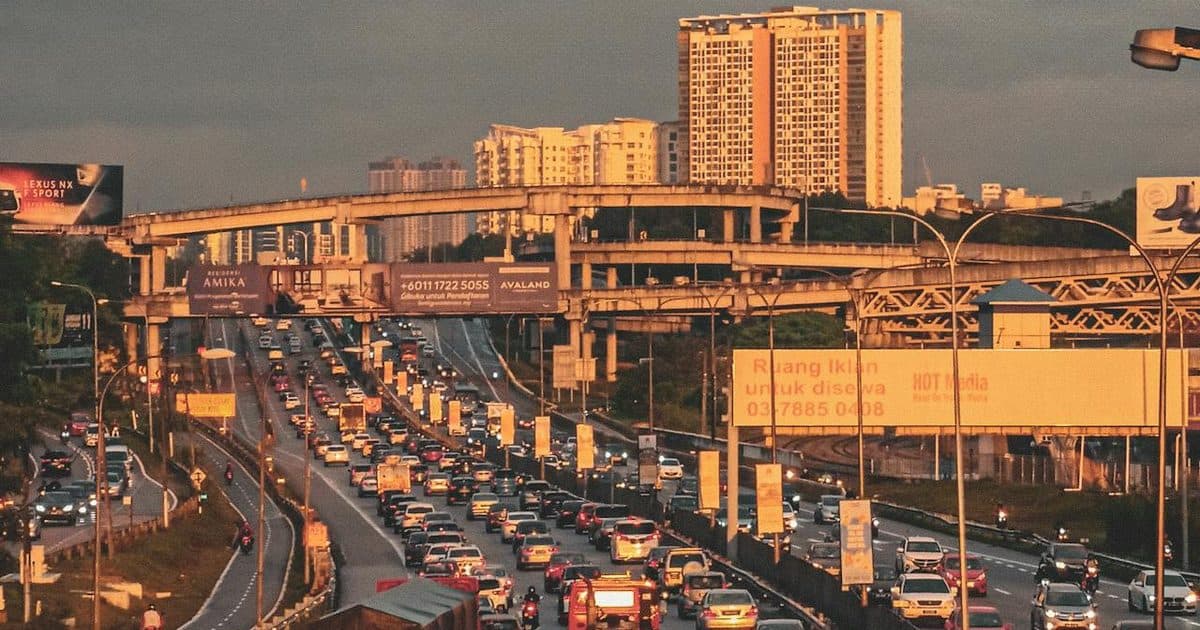
Driving in Malaysia Guide 2026
Complete guide to driving, licensing, car rental, and road safety in Malaysia
Remember: Drive on the LEFT side of the road. Steering wheel is on the RIGHT. Use Waze for navigation - it is essential in Malaysia.
In This Guide
Driving in Malaysia Overview
Malaysia offers an excellent road network that makes driving one of the best ways to explore the country. From modern highways connecting major cities to scenic coastal roads and mountain passes, the driving experience can be both convenient and enjoyable once you understand the local driving culture and conditions.
Key Facts About Driving in Malaysia:
- Drive on the LEFT side of the road (British system) - Steering wheel is on the RIGHT side of the vehicle - Speed is measured in kilometers per hour (km/h) - Distance is measured in kilometers - Well-maintained toll highways connect major cities - GPS navigation (especially Waze) is essential - Touch 'n Go card is the primary payment method for tolls and parking
Road Network Quality:
Malaysia has invested heavily in road infrastructure, resulting in one of the best highway systems in Southeast Asia. The quality varies significantly by road type and region.
Highways (Expressways): - Excellent condition with multiple lanes - Well-lit with clear signage in Malay and English - Rest stops (R&R) every 30-50 km with food, fuel, and toilets - Speed limits of 110 km/h (some sections 90 km/h) - All highways are tolled
Federal Roads: - Good condition, single or dual carriageway - Connect smaller towns not on highway network - Speed limit 90 km/h - Free to use - Some sections may have potholes after monsoon season
State and Rural Roads: - Variable condition from good to poor - Narrower roads, often single lane each direction - May encounter potholes, especially after heavy rain - Speed limit 60-80 km/h - Watch for motorcycles and bicycles
East Malaysia (Sabah/Sarawak): - Generally good main roads - Some remote areas have unpaved or poorly maintained roads - 4WD recommended for off-the-beaten-path destinations - Logging trucks common on certain routes
Malaysian Driving Culture:
Understanding local driving habits will help you navigate safely and reduce stress on the road.
Common Behaviors to Expect: - Motorcycles weaving between traffic lanes (legal in Malaysia) - Last-minute lane changes without signaling - Tailgating, especially by faster vehicles wanting you to move - Flashing high beams means "I'm coming through" not "go ahead" - Horn used frequently but not aggressively - Double parking common in busy areas - Emergency lane used during traffic jams (illegal but common)
Positive Aspects: - Generally good road discipline on highways - Drivers usually let you merge if you signal - Traffic police presence deters worst behavior - Most drivers are courteous once you understand the system - Road rage incidents are relatively rare
When Driving Makes Sense:
Driving is ideal for: - Road trips exploring multiple destinations - Accessing areas without public transport - Family travel with luggage and children - Visiting attractions outside city centers - East Malaysia exploration - Night outings in areas with limited taxi/Grab - Shopping trips requiring cargo space
Consider alternatives when: - Staying only in Kuala Lumpur city center (excellent public transport) - Short visits to major tourist areas - You're uncomfortable driving on the left - Visiting during major holidays (extreme traffic) - Budget is very tight (public transport is cheaper)
Best Times to Drive:
Optimal driving conditions: - Early morning (before 7am) for long trips - Mid-morning to early afternoon on weekdays - Evenings after 8pm in cities
Avoid if possible: - Rush hours: 7-9am and 5-8pm - Friday afternoon/evening (weekend exodus) - Sunday evening (return traffic) - Public holidays (especially first and last days) - Monsoon season on east coast (November-February)
*Pro Tip:* Waze is universally used in Malaysia and provides excellent real-time traffic updates. It's considered more accurate than Google Maps for Malaysian traffic conditions.
Driver's License Requirements
Understanding license requirements is crucial before getting behind the wheel in Malaysia. The rules differ for tourists, long-term visitors, and those planning to become residents.
For Tourists (Under 1 Year Stay):
International Driving Permit (IDP): - Strongly recommended for all tourists - Must be issued by your home country before arrival - Valid only with your original license - Accepted by all rental companies - Recognized by Malaysian police - Cost: Usually USD 15-20 in home country - Valid for 1 year from issue date
Using Foreign License Without IDP: - Technically accepted from most countries - Valid for up to 1 year from entry - Must be in English or have certified translation - Some rental companies may refuse without IDP - Police may question validity during stops - Insurance claims may be complicated
Countries with Direct Recognition: - Singapore, Brunei, Hong Kong - Australia, New Zealand - United Kingdom, Ireland - Most EU countries - Japan, South Korea - United States, Canada
*Important:* Even if your license is "accepted," having an IDP eliminates any potential language barrier issues and proves you have legitimate driving authorization.
For Long-Term Visitors (MM2H, DE Rantau, etc.):
If staying more than 1 year, you should convert to a Malaysian license or obtain a long-term driving authorization.
Process depends on your visa type: - MM2H holders: Can drive on foreign license during visa validity - DE Rantau holders: Foreign license accepted during stay - Employment Pass holders: Should convert license within first year - Permanent Residents: Must convert to Malaysian license
Converting to Malaysian License:
Eligibility: - Valid long-term visa (Employment Pass, MM2H, PR) - Current valid foreign driving license - Resident in Malaysia
Countries with Reciprocal Agreements (Easier Process): - Singapore, Brunei - Australia (some states) - United Kingdom - Japan, South Korea - New Zealand - Some European countries
Conversion Process for Reciprocal Countries: 1. Obtain letter from your embassy confirming license validity 2. Get medical examination at any clinic (RM30-50) 3. Visit JPJ (Road Transport Department) office 4. Submit: passport, visa, foreign license, embassy letter, medical cert 5. Pay fee (approximately RM150-300) 6. Receive Malaysian license (usually same day)
Conversion for Non-Reciprocal Countries: - May require written test - May require practical driving test - More documentation needed - Process takes longer (1-2 weeks) - Consider using professional service to assist
Getting a Fresh Malaysian License (No Prior License):
If you don't have a valid license from your home country, you'll need to go through the full Malaysian licensing process.
Step 1: L License (Learner's) - Age: Minimum 16 for motorcycle, 17 for car - Take 5-hour KPP (Road Safety Education) course - Pass computer-based theory test - Cost: RM300-400 - Valid for 2 years
Step 2: P License (Probationary) - Complete practical driving course at driving school - Pass practical driving test at JPJ - Receive P license (red "P" sticker on car) - Must display P plate for 2 years - Restrictions: No driving midnight-5am, speed limit 90 km/h
Step 3: Full License (CDL - Competent Driving License) - After 2 years with P license - No major traffic offenses - Apply for full license at JPJ - Valid for 1-5 years (renewable)
License Classes in Malaysia:
Class A: Motorcycle under 500cc Class B: Motorcycle over 500cc Class B2: Motorcycle 250-500cc Class D: Car up to 7,500kg Class E: Commercial vehicles Class F: Taxi Class G: Heavy vehicles Class H: Buses
Most tourists and expats need Class D for car rental.
Where to Get IDP Before Coming to Malaysia:
United States: - AAA offices - AATA (American Automobile Touring Alliance) - Cost: ~USD 20
United Kingdom: - Post Office - AA (Automobile Association) - Cost: ~GBP 5.50
Australia: - Automobile clubs in each state - Cost: ~AUD 40
Canada: - CAA (Canadian Automobile Association) - Cost: ~CAD 25
JPJ Offices for License Matters:
Kuala Lumpur: - UTC Pudu (most convenient) - JPJ Wangsa Maju - Processing usually same day
Penang: - JPJ Seberang Jaya - Less crowded than KL
Johor Bahru: - JPJ Johor Bahru
*Tip:* Visit JPJ offices early morning (before 9am) to avoid queues. Bring all original documents plus photocopies.
Road Rules & Traffic Laws
Malaysian traffic laws are based on British system rules. Understanding and following these regulations will keep you safe and help avoid fines.
Fundamental Rules:
Drive on the LEFT side: - All vehicles drive on the left - Overtake on the right only - Steering wheel on the right side of car - Roundabouts go clockwise - When in doubt, remember: "left is right"
Give way rules: - Traffic on roundabouts has priority - Traffic from the right has priority at unmarked junctions - Emergency vehicles always have priority - Pedestrians at zebra crossings have right of way
Speed Limits:
| Road Type | Speed Limit | Notes |
|---|---|---|
| Expressways/Highways | 110 km/h | Some sections 90-100 km/h |
| Federal Roads | 90 km/h | Dual carriageway |
| State Roads | 60-80 km/h | Varies by location |
| Urban/Town Areas | 50-60 km/h | May be lower in residential |
| School Zones | 30 km/h | During school hours |
| Construction Zones | 30-60 km/h | As posted |
Speed cameras are common on highways. Waze alerts you to most camera locations, but new cameras may not be in the database yet.
Mandatory Requirements:
Seatbelts: - Mandatory for driver and front passenger - Rear seatbelts mandatory where fitted - Fine: RM300 for non-compliance - Driver responsible for passengers under 18
Child Restraints: - Children under 12 must sit in rear - Child car seats required for children under 136cm height - Rear-facing seat for infants under 1 year - Forward-facing seat for toddlers 1-4 years - Booster seat for children 4-12 years - Fine: RM300 for non-compliance
Mobile Phone Use: - Handheld phone use while driving is illegal - Hands-free devices permitted - Fine: RM300 first offense - Includes texting, social media, navigation - Phone must be mounted if using GPS
Headlights: - Required from 7pm to 7am - Required during reduced visibility (rain, fog) - High beam use on highways permitted - Dip high beams for oncoming traffic
Blood Alcohol Limit:
Legal limit: 0.05% BAC (50mg per 100ml blood)
Penalties for drunk driving: - First offense: RM1,000-6,000 fine and/or up to 1 year prison - Second offense: RM3,000-10,000 fine and/or up to 2 years prison - Repeat offenders: Higher penalties and license suspension
Police conduct random breathalyzer checkpoints, especially: - Weekend nights - Near entertainment areas - During festive seasons - After major events
*Advice:* With readily available Grab and affordable taxis, there's no reason to drink and drive in Malaysia.
Traffic Offenses and Fines:
| Offense | Fine |
|---|---|
| Speeding (up to 25 km/h over) | RM150-300 |
| Speeding (25-50 km/h over) | RM300-500 |
| Running red light | RM300 |
| No seatbelt | RM300 |
| Using mobile phone | RM300 |
| Illegal parking | RM100-300 |
| No valid license | RM300-2,000 |
| Driving without insurance | RM1,000-3,000 |
| Dangerous driving | RM5,000-10,000 |
| Hit and run | RM5,000-10,000 + prison |
Automated Enforcement System (AES):
Malaysia uses automated cameras for traffic enforcement: - Speed cameras on highways - Red light cameras at major junctions - Fixed cameras and mobile units - Fines mailed to registered address - Must be paid within 14 days for discount
Checking and Paying Fines: - MyEG portal: www.myeg.com.my - PDRM online: Check police fines - JPJ online: Check traffic department fines - Pay at post office or online - 50% discount if paid within 14 days
Roundabout Rules:
- Traffic already on roundabout has priority
- Enter when safe gap appears
- Keep left if taking first/second exit
- Keep right if going more than halfway around
- Signal left when exiting
- Multiple lane roundabouts: stay in your lane
Overtaking Rules:
Legal overtaking: - On the right side only - When road markings permit - With clear visibility ahead - When safe to complete maneuver
Illegal overtaking: - On the left (except in certain lane situations) - On double white lines - Near pedestrian crossings - On hills or bends with no visibility - Within 50m of junction
Motorcycle Lane Rules:
Malaysia has dedicated motorcycle lanes on many highways: - Motorcycles should use designated lanes - Cars should not enter motorcycle lanes - At junctions, motorcycles may filter to front - Be extremely aware of motorcycles when changing lanes
Emergency Vehicle Priority:
When you see/hear emergency vehicles: - Pull to the left and stop if possible - Clear the lane - Do not follow behind emergency vehicles - Do not block junctions - Resume normal driving after they pass
*Local Knowledge:* While the rules are clear, enforcement can be inconsistent. Drive defensively, expect the unexpected, and always prioritize safety over right-of-way.
Car Rental Guide
Renting a car in Malaysia is straightforward with numerous options from international chains to local companies and modern car-sharing apps. Here's everything you need to know.
Rental Company Options:
International Companies: - Hertz: Premium service, wide vehicle selection - Avis: Good coverage, reliable service - Budget: Value-focused, good for standard rentals - Europcar: Available at major airports - Sixt: Growing presence in Malaysia
Local Companies: - Hawk Rent A Car: Largest local fleet - Mayflower: Established local company - Galaxy Car Rental: Budget-friendly option - Kasina: Good value, flexible terms - Orix: Japanese-backed, quality vehicles
Car-Sharing Apps: - SOCAR: Hourly/daily rental via app - GoCar: Similar to SOCAR, good coverage - Trevo: Peer-to-peer car rental (like Airbnb for cars)
Typical Rental Rates (2026):
| Vehicle Type | Daily Rate | Weekly Rate |
|---|---|---|
| Economy (Axia, Bezza) | RM80-120 | RM450-700 |
| Compact (Vios, City) | RM120-180 | RM700-1,000 |
| Sedan (Camry, Accord) | RM180-280 | RM1,100-1,600 |
| SUV (X-Trail, CRV) | RM200-350 | RM1,200-2,000 |
| MPV (Innova, Alza) | RM180-280 | RM1,000-1,600 |
| Luxury (Mercedes, BMW) | RM400-800 | RM2,500-5,000 |
| 4WD (Fortuner, Pajero) | RM300-450 | RM1,800-2,500 |
Rates vary by: - Season (higher during holidays) - Booking advance notice (earlier = cheaper) - Rental duration (longer = cheaper per day) - Pickup location (airport pickup often costlier) - Company (international chains cost more)
Requirements for Renting:
Mandatory: - Valid driving license (IDP recommended) - Passport - Credit card (for deposit, usually RM500-3,000) - Minimum age: Usually 21-23 (varies by company) - Minimum 1-2 years driving experience
Some companies require: - Local phone number - Local address - Second form of ID - Deposit paid in cash for local companies
Insurance Options:
Basic Coverage (Usually Included): - Collision Damage Waiver (CDW) - Third Party Liability - Theft Protection - Excess applies (RM500-5,000)
Additional Coverage Options: - Super CDW/Zero Excess: RM15-40/day - Personal Accident Insurance: RM5-15/day - Windscreen/Tire Protection: RM10-20/day - Roadside Assistance: Often included
Understanding Excess: - Excess is your maximum liability if damage occurs - Standard excess: RM2,000-5,000 - Reduced excess: RM500-1,000 - Zero excess: You pay nothing for damage
*Recommendation:* Always take at least reduced excess coverage. Malaysian roads are generally safe, but motorcycle contacts and parking dings are common.
Booking Tips:
For Best Rates: 1. Book at least 1 week in advance 2. Compare prices on aggregator sites (Rentalcars.com, Kayak) 3. Check company direct sites too 4. Consider local companies for better rates 5. Look for weekly/monthly discounts 6. Book in RM currency to avoid conversion fees
For Best Experience: 1. Read reviews for specific location 2. Check vehicle condition photos 3. Understand fuel policy (full-to-full is standard) 4. Confirm pickup location and hours 5. Get confirmation in writing 6. Ask about toll payment devices
At Pickup:
Before Signing: 1. Inspect vehicle thoroughly (inside and out) 2. Note all existing damage on rental form 3. Take photos/video with timestamp 4. Check spare tire and jack 5. Ensure registration document is in car 6. Get 24-hour emergency number 7. Ask about Touch 'n Go card (essential for tolls)
Essential Questions: - Is Touch 'n Go card included? - What's the fuel policy? - Where do I return the car? - What if I return late? - What's the breakdown procedure? - Any restricted areas (some ban cross-border to Singapore)?
Fuel Policy:
Full-to-Full: - Receive car with full tank - Return with full tank - Most common and fairest policy - Keep final fuel receipt as proof
Full-to-Empty: - Pay for full tank upfront - Return with any fuel level - Usually more expensive - Incentive to return empty (wasteful)
Same-to-Same: - Return with similar level as received - Open to interpretation
One-Way Rentals:
Available options: - KL to Penang - KL to Johor Bahru - Between airport locations - Usually additional fee (RM100-500) - Not always possible with local companies
Typically not possible: - Peninsular to East Malaysia - Cross-border (Malaysia to Singapore/Thailand)
Long-Term Rentals:
Monthly rates offer significant savings: - Economy: RM1,500-2,500/month - Sedan: RM2,500-4,000/month - SUV: RM3,500-6,000/month
Long-term benefits: - Lower daily rate - More flexibility - Often includes basic maintenance - Insurance included - Good alternative to buying for expats
Car-Sharing Apps (SOCAR/GoCar):
How they work: 1. Download app and register 2. Verify license (photo upload) 3. Add payment method 4. Book car at convenient location 5. Unlock with app 6. Keys inside vehicle 7. Drive and return to same spot 8. Lock with app
Pros: - No paperwork at counter - 24/7 availability - Short-term rentals possible (hourly) - Convenient pickup locations - Insurance included
Cons: - Limited vehicle selection - Must return to same location - Can't leave Malaysia - App issues possible - Cancellation fees
*Best For:* Short trips, city driving, spontaneous rentals.
Buying a Car in Malaysia
For long-term residents, buying a car in Malaysia can be more economical than continuous rental. However, the process involves understanding local market dynamics, import duties, and registration requirements.
Understanding Malaysian Car Prices:
Malaysia has some of the highest car prices in ASEAN due to import duties and excise taxes. This protects the national car brands (Proton and Perodua) but makes foreign brands significantly more expensive.
Price Comparison (Example - Toyota Camry): - Malaysia: RM200,000-250,000 - Thailand: ~RM120,000 equivalent - USA: ~RM100,000 equivalent
Why Prices Are High: - Import duties: 20-30% - Excise duties: 60-105% (based on engine size) - Sales tax: 10% - Total tax can exceed 100% of car value - CBU (Completely Built Up) imports cost more than CKD (Completely Knocked Down)
National Car Brands (Tax Advantages):
Proton (Malaysian brand): - Lower prices due to tax exemptions - Models: Saga, Persona, X50, X70 - Reasonable quality, improving reputation - Good dealer network - Lower resale value
Perodua (Malaysian brand): - Most popular brand in Malaysia - Models: Axia, Bezza, Myvi, Alza, Aruz, Ativa - Excellent fuel economy - Affordable maintenance - Strong resale value - Best-selling: Myvi (excellent all-rounder)
Popular Foreign Brands:
Japanese (Most Popular): - Toyota: Vios, Camry, Corolla Cross, Hilux - Honda: City, Civic, CR-V, HR-V - Mazda: CX-5, CX-30, Mazda 3 - Nissan: Almera, X-Trail
Korean (Growing Market Share): - Hyundai: Tucson, Santa Fe - Kia: Seltos, Carnival
European (Premium): - Mercedes-Benz: Wide range locally assembled - BMW: Strong presence - Volkswagen: Golf, Tiguan - Volvo: Growing popularity
New vs Used Cars:
Buying New:
Advantages: - Full warranty (3-5 years) - Latest safety features - Financing readily available - No hidden history - Manufacturer support
Disadvantages: - Rapid depreciation (20-30% first year) - Higher insurance costs - Higher road tax (first registration) - Waiting time for popular models
Typical New Car Prices: - Budget (Axia, Bezza): RM35,000-55,000 - Compact (Vios, City): RM75,000-110,000 - Mid-size (Camry, Accord): RM180,000-250,000 - SUV (CR-V, X-Trail): RM150,000-220,000 - Luxury (C-Class, 3 Series): RM250,000-350,000
Buying Used:
Advantages: - Significantly lower prices - Depreciation already absorbed - Lower insurance costs - Immediate availability - Better value for money
Disadvantages: - Unknown history possible - May need repairs sooner - Warranty expired or limited - Financing harder to obtain - Risk of odometer tampering
Where to Buy Used: - Carlist.my (largest online marketplace) - Mudah.my (general classifieds) - Carsome (inspected used cars, warranty) - myTukar (similar to Carsome) - Authorized pre-owned dealers - Private sales
Used Car Tips: 1. Check PUSPAKOM inspection report 2. Verify mileage matches service history 3. Check for outstanding finance (JPJ website) 4. Get independent mechanic inspection 5. Test drive thoroughly 6. Negotiate based on market prices 7. Ensure proper ownership transfer
Registration and Documentation:
For New Cars: 1. Purchase from authorized dealer 2. Dealer handles registration 3. Pay registration fee (RM20) 4. Pay road tax (varies by engine size) 5. Get number plates 6. Receive registration card (VOC)
For Used Cars: 1. Seller and buyer go to JPJ together 2. Complete ownership transfer form (JPJ K3) 3. Pay transfer fee (RM100) 4. Update road tax to new owner 5. Transfer insurance to new owner 6. Receive updated registration
Road Tax:
Annual road tax based on engine capacity:
Private Cars (Peninsular Malaysia): - Up to 1,000cc: RM20 - 1,001-1,200cc: RM55 - 1,201-1,400cc: RM70 - 1,401-1,600cc: RM90 - 1,601-1,800cc: RM200 - 1,801-2,000cc: RM280 - 2,001-2,500cc: RM380 - Above 2,500cc: Progressive increase
Sabah/Sarawak rates are lower.
Electric vehicles have special (lower) rates.
Insurance Requirements:
Minimum Required: Third-party coverage
Types Available: - Third Party Only: Covers damage to others - Third Party Fire & Theft: Above plus fire/theft - Comprehensive: Full coverage including own damage
Typical Annual Premiums: - Budget car (comprehensive): RM800-1,500 - Mid-range car: RM1,500-3,000 - Luxury car: RM3,000-8,000
No Claims Discount (NCD): - Builds up 25% per claim-free year - Maximum 55% discount - Transfers with you to new cars - Lost if you make a claim
Financing a Car:
Bank Loans: - Interest rate: 2.5-4.5% p.a. - Tenure: Up to 9 years - Down payment: 10-20% minimum - Processing fee: ~1% of loan - Early settlement: Penalty may apply
Requirements for Foreigners: - Employment Pass or MM2H visa - Minimum income requirements - Larger down payment (often 30%+) - May need Malaysian guarantor - Limited bank options
Hire Purchase vs Bank Loan: - Hire purchase more common in Malaysia - Bank technically owns car until paid off - Interest calculated on full amount - Early settlement rules differ
Who Can Buy Cars:
Malaysian Citizens: Full rights Permanent Residents: Full rights Employment Pass Holders: Yes, with some restrictions MM2H Holders: Yes, can import one car duty-free Students: Generally no Tourists: No
MM2H Tax-Free Car Import:
MM2H participants can: - Import one car duty-free (new or used) - Significant savings on luxury cars - Must keep car for minimum period - Complex process with specific requirements - Consider whether worth the hassle
Selling Your Car:
Options: 1. Trade-in at dealer (convenient, lower price) 2. Sell to used car dealer (quick, fair price) 3. Sell to Carsome/myTukar (inspected offer) 4. Private sale (highest price, more effort)
Private Sale Process: 1. Advertise on Carlist/Mudah 2. Handle enquiries and viewings 3. Negotiate price 4. Complete JPJ transfer together 5. Receive payment (cashier's check safest) 6. Hand over keys and documents
*Tip for Expats:* If you're unsure about length of stay, consider long-term car rental instead of buying. The flexibility often outweighs potential savings from ownership.
Motorcycles & Scooters
Motorcycles are incredibly popular in Malaysia, offering an affordable and efficient way to navigate traffic. However, they also come with significant risks that riders must understand.
Motorcycle Culture in Malaysia:
Statistics: - Over 15 million registered motorcycles - Majority of road fatalities involve motorcycles - Used by all demographics for commuting - Food delivery services heavily rely on motorcycles - Lane splitting is legal and common
Common Uses: - Daily commuting (beats traffic) - Food delivery (Grab, Foodpanda, etc.) - Rural transportation - Recreation and touring - Last-mile connectivity
License Requirements:
For Tourists: - International Driving Permit with motorcycle endorsement - Must specifically authorize motorcycles (Class A/B) - Standard IDP may not include motorcycle - Check your IDP carefully before riding
License Classes: - Class B2: Motorcycles 251-500cc - Class B: Motorcycles above 500cc (requires B2 first) - Class A: Motorcycles up to 250cc
Getting Malaysian Motorcycle License:
Step 1: L License - 5-hour KPP theory course - Pass computer-based test - Cost: ~RM300
Step 2: Practical Training - 8-hour training at driving school - Learn basics and traffic situations - School provides motorcycle
Step 3: Practical Test - Conducted at JPJ - Circuit test (figure 8, emergency stop, etc.) - On-road test - Pass both to get P license
Step 4: Full License - After 2 years with P license - Apply for full license
Renting Motorcycles:
Availability: - Common in tourist areas (Langkawi, Penang) - Less common in KL (Grab is preferred) - Beach destinations often have rentals - Islands almost always have rentals
Typical Rates: - Scooter (110-150cc): RM30-50/day - Small motorcycle: RM50-80/day - Larger bikes: RM100-200/day
Rental Requirements: - Valid license (IDP with motorcycle class) - Passport or ID - Deposit (RM100-500) - Signing of rental agreement
What to Check: - Brake condition - Tire condition - Lights working - Horn working - Fuel level - Helmet included (legally required)
Buying a Motorcycle:
Popular Brands: - Honda (most popular): Wave, EX5, RS150, PCX - Yamaha: Y15ZR, NVX, MT-15 - SYM: VF3i, Jet - Modenas: Local brand, affordable
Typical Prices: - Basic scooter (100-110cc): RM4,000-6,000 - Mid-range (125-155cc): RM6,000-10,000 - Sports (150-200cc): RM10,000-18,000 - Big bikes (300cc+): RM20,000-100,000+
Registration and Insurance: - Similar process to cars - Road tax: RM2-50/year (depending on cc) - Insurance: RM100-500/year (comprehensive)
Motorcycle Rules:
Legal Requirements: - Helmet mandatory (and enforced) - Headlights on at all times (required by law) - Valid license - Valid road tax and insurance - Rearview mirrors required
Traffic Rules for Motorcycles: - Can use dedicated motorcycle lanes on highways - Lane splitting legal but at your own risk - Must follow all traffic signals - No riding on sidewalks/pedestrian areas - Maximum 2 people on motorcycle - Pillion must also wear helmet
Motorcycle Lanes:
Many Malaysian highways have dedicated motorcycle lanes: - Separated from main carriageway - Lower speed limit (70 km/h) - Toll-free for motorcycles on some highways - Located on the left side - Mandatory on certain stretches
Safety Considerations:
Why Motorcycles Are Dangerous in Malaysia: - Hot, humid weather causes fatigue - Sudden tropical rainstorms reduce visibility - Larger vehicles may not see motorcycles - Road surfaces can be slippery - High traffic density - Distracted drivers
Safety Statistics: - Motorcyclists account for ~60% of road deaths - Helmets reduce death risk by 40% - Most accidents occur at junctions - Young riders (16-25) most at risk
Safety Tips: 1. Always wear helmet (full-face recommended) 2. Wear bright/reflective clothing 3. Assume you're invisible to cars 4. Don't ride in blind spots 5. Avoid riding in heavy rain 6. Never drink and ride 7. Take breaks on long journeys 8. Maintain your motorcycle regularly
Gear Recommendations: - Full-face helmet (RM150-500) - Riding gloves (RM50-200) - Jacket with armor (RM200-600) - Sturdy footwear (not flip-flops) - Rain gear (essential in tropics)
Electric Motorcycles and Scooters:
Growing Market: - Government incentives for electric vehicles - Several local and international brands - Charging infrastructure improving - Lower running costs - Quieter operation
Popular Electric Options: - Blueshark: Local brand - NIU: Chinese brand with Malaysian presence - SOCO: Premium electric motorcycles - Various Chinese imports
Food Delivery Riders:
The Gig Economy: - Thousands of delivery riders on roads - Usually riding small motorcycles/scooters - Often rushing to meet delivery times - Be extra cautious around them - They may make sudden stops or turns
*Important Note:* If you're not experienced with motorcycles, Malaysia's traffic may not be the best place to learn. Consider taking extra lessons or sticking to less busy areas until comfortable.
Road Safety & Accident Statistics
Understanding road safety in Malaysia helps you prepare for potential hazards and drive more defensively. Malaysia has made progress in reducing road fatalities but still has relatively high accident rates compared to developed nations.
Accident Statistics:
Annual Figures (Approximate): - Road deaths: 5,000-6,000 per year - Road injuries: 500,000+ per year - Economic cost: Over RM9 billion annually - Deaths per 100,000 population: ~17-20
By Vehicle Type: - Motorcycles: 60% of fatalities - Cars: 20% of fatalities - Pedestrians: 10% of fatalities - Heavy vehicles: 5% of fatalities - Others: 5% of fatalities
By Cause: - Human error: 80%+ of accidents - Speeding: Most common factor - Dangerous overtaking: Second most common - Fatigue: Significant factor - Drunk driving: Increasing concern - Vehicle failure: Less common
High-Risk Situations:
Most Dangerous Times: - Festive season travel (Hari Raya, Chinese New Year) - Long weekends - Friday and Saturday nights - Rush hours (more accidents, fewer fatalities) - Monsoon season (wet roads)
Most Dangerous Roads: - Certain stretches of federal roads - Mountain roads (Cameron Highlands, Genting) - Rural roads with mixed traffic - Roads near schools during school hours
Common Hazards:
Motorcycles: - Weaving between lanes - Sudden stops/turns - Riding in blind spots - Often no lights at night - Children as passengers
Weather: - Flash floods (can occur in minutes) - Reduced visibility in rain - Slippery roads after rain starts - Fog in highland areas - Haze reduces visibility
Road Conditions: - Potholes (especially after monsoon) - Uneven road surfaces - Construction zones - Unmarked obstacles - Fallen debris
Wildlife: - Monkeys on road (common in hilly areas) - Stray dogs - Water buffalos in rural areas - Wild boars (night driving)
Other Drivers: - Tailgating - Sudden lane changes - Running red lights - Double parking - Wrong-way driving (rare but dangerous)
Defensive Driving Tips:
General Awareness: 1. Assume other drivers will make mistakes 2. Keep safe following distance (3 seconds minimum) 3. Check mirrors frequently 4. Be extra cautious at junctions 5. Never assume right-of-way
Dealing with Motorcycles: 1. Check blind spots before lane changes 2. Give motorcycles extra space 3. Expect lane splitting in slow traffic 4. Be patient - they're vulnerable 5. Use turn signals early and consistently
Night Driving: 1. Avoid if possible on unfamiliar roads 2. Watch for unlit motorcycles 3. Be extra alert for pedestrians 4. Use high beam appropriately 5. Take more breaks (fatigue risk)
Highway Safety:
Rest Stop Strategy: - Take breaks every 2 hours - R&R stops every 30-50 km on major highways - Facilities include: food, fuel, toilets, prayer rooms - Some have hotels for overnight stops
Highway Emergency: - Pull completely off carriageway - Turn on hazard lights - Place triangle 50m behind vehicle - Stay behind barriers if possible - Call highway emergency number
Emergency Numbers by Highway: - PLUS: 1800-88-0000 - ELITE: 1800-88-5588 - LPT: 1800-88-0298 - General highway: 1800-88-7752
Vehicle Safety Features:
Recommended Features: - ABS (Anti-lock Braking System) - Airbags (front and side) - ESC (Electronic Stability Control) - Reversing camera/sensors - ADAS (Advanced Driver Assistance)
Malaysian ASEAN NCAP Ratings: - Check safety ratings at aseancap.org - 5-star rating recommended - Most new cars have improved safety - Older cars may lack modern safety features
Weather-Related Safety:
Monsoon Season (November-February East Coast): - Heavy rain and flooding - Roads may be impassable - Check conditions before traveling - Allow extra time - Be prepared to stop and wait
Flash Floods: - Can occur anywhere during heavy rain - Avoid underpasses during storms - If water is flowing across road, stop - Turn around, don't drown - Wait for water to recede
Haze (Usually September-October): - Visibility can drop significantly - Use low beam headlights - Increase following distance - Consider delaying non-essential travel - Air conditioning helps filter air
First Aid and Emergency Kit:
Recommended Items: - First aid kit - Fire extinguisher (small) - Warning triangle - Torch/flashlight - Basic tools - Jumper cables - Water bottle - Charged mobile phone - Emergency contact list - Insurance and rental documents
Road Safety Initiatives:
Government Programs: - Ops Selamat (festive season enforcement) - Automated Enforcement System (AES) - Road safety education in schools - Vehicle inspection requirements (PUSPAKOM) - Motorcycle lane construction
What You Can Do: - Obey speed limits - Don't drink and drive - Wear seatbelts always - Put away mobile phones - Report dangerous road conditions - Take breaks when tired - Maintain your vehicle
*Remember:* The best accident is one that never happens. Defensive driving and awareness are your best protection on Malaysian roads.
Parking in Malaysia
Parking in Malaysia ranges from free roadside parking in small towns to sophisticated app-based systems in modern developments. Understanding the different systems will save you time, money, and stress.
Types of Parking:
Street Parking: - Metered or pay-by-app - Time-limited (usually 1-2 hours) - Common in city centers and towns - Enforcement varies by area
Mall Parking: - Usually multi-level car parks - Pay on exit or by duration - Touch 'n Go widely accepted - Often free for first hour or with purchase
Building/Office Parking: - Usually reserved for tenants - Visitor parking available - Higher rates in city centers
Private Car Parks: - Common near attractions and busy areas - Flat rate or hourly - Attendant-managed
Parking Rates by Location:
| Location | Hourly Rate | Daily Max |
|---|---|---|
| KL City Center | RM3-8 | RM30-50 |
| Shopping Malls | RM2-4 | RM15-25 |
| KLIA/KLIA2 | RM4-8 | RM40-70 |
| Suburban Areas | RM1-3 | RM10-15 |
| Small Towns | RM0.50-1 | RM5-10 |
| Street Parking | RM1-2 | Usually time-limited |
Kuala Lumpur Parking:
Street Parking System: - Blue zones: Pay parking (RM2/hour) - Yellow zones: No parking - Red zones: Drop-off only - White lines: Free parking (rare in center)
Payment Methods for KL Street Parking: - JomParking app (most common) - Parking meters (being phased out) - Scratch cards (still available at some shops)
How to Use JomParking: 1. Download app (iOS/Android) 2. Register with phone number 3. Add credit via Touch 'n Go, online banking, or card 4. Select parking zone (posted on signs) 5. Enter car plate number 6. Start session 7. Extend remotely if needed 8. End session when leaving
Enforcement: - DBKL officers patrol regularly - Fines: RM50-100 for violations - Can check fines on DBKL website - Pay within 14 days for discount
Shopping Mall Parking:
Entry/Exit System: 1. Take ticket at barrier 2. Park anywhere in mall 3. Before returning to car, pay at payment machine 4. Insert ticket and pay (Touch 'n Go, card, or cash) 5. Get validated ticket 6. Exit within grace period (usually 15-30 minutes) 7. Insert validated ticket at exit barrier
OR Auto-Pay System (Modern Malls): - Camera reads plate number at entry - No ticket needed - Pay at kiosk or via app before leaving - System reads plate at exit
Touch 'n Go for Mall Parking: - Most malls accept Touch 'n Go at exit barrier - Tap card on reader - Amount deducted automatically - No need to visit payment machine - Faster and more convenient
Free Parking:
Where to Find Free Parking: - Some suburban malls (first few hours) - Hypermarkets (Giant, Aeon, Tesco) - Religious sites - Some attractions - Residential areas (street parking) - After hours in business districts
Tips for Free Parking: - Check mall websites for free parking promotions - Early morning shopping often has free hours - Weekday free parking at some malls - Download mall apps for parking discounts
Parking Etiquette and Local Practices:
Double Parking: - Unfortunately common in busy areas - Leave phone number on dashboard - Be prepared to move quickly - Accepted in some traditional shopping areas - Not acceptable in malls or formal areas
Reservation Tricks: - Some people leave items in space to "reserve" it - Not legal but commonly done - Use judgment on whether to park there
Attendant Parking: - Some lots have attendants - Small tip expected (RM2-5) - They may ask for your keys (be cautious) - Keep valuables with you
Airport Parking:
KLIA/KLIA2: - Short-term (nearest terminal): RM4-8/hour - Long-term (further away): RM40-70/day - Covered vs open-air pricing differs - Pre-book online for discounts - Free shuttle to terminal from long-term lots
Alternative Airport Parking: - Private lots near airport (cheaper) - Hotel park-and-fly packages - Drop-off by Grab (cheapest) - Parking at train station (KL Sentral)
Touch 'n Go for Parking:
Essential Uses: - Mall parking exit - Some street parking machines - Building car parks - Automatic barriers
How It Works: - Tap card on reader - Amount deducted - Barrier opens - No waiting for change
Get Touch 'n Go Card: - Petrol stations - Toll booths - Touch 'n Go hubs - 7-Eleven and convenience stores - Cost: RM10 card + RM10 initial credit
Top-up Locations: - Any petrol station - Self-service reload machines - Via Touch 'n Go eWallet app - Banks and selected stores
Parking Apps:
JomParking (KL Street Parking): - Official DBKL app - Easy zone selection - Remote time extension - Payment history
ParkEasy: - Find available parking spots - Reserve spots in some locations - Payment integration
Mall Apps: - Many malls have their own apps - Parking payment feature - Loyalty points - Floor location reminder
Parking Violations:
Common Offenses: - Expired meter/session - No parking zone - Double parking (if caught) - Blocking access - Handicap spot (without permit)
Fines: - Street parking: RM50-100 - Private lots: RM100-300 - Wheel clamp: RM50-150 release fee - Towing: RM200-500 + storage fees
What to Do If Clamped/Towed: 1. Note the number on the clamp/notice 2. Call the number provided 3. Pay fine (usually can't negotiate) 4. Wait for release/collection 5. Keep receipt
*Pro Tip:* When parking on the street in Malaysia, always double-check signage. Parking rules can change based on time of day, and enforcement is unpredictable. When in doubt, use a paid car park.
Toll Roads & Payment Systems
Malaysia's highway system is extensive and efficient but relies heavily on toll collection. Understanding the toll system and having the right payment methods will make your driving experience smooth.
Overview of Malaysian Toll System:
Major Highway Operators: - PLUS (North-South Expressway) - longest toll road - LITRAK (LDP, Sprint highways) - Prolintas (AKLEH, DUKE, SUKE) - MRCB (EDL to Johor) - Various concessionaires for specific highways
Toll Collection Methods: 1. Touch 'n Go (TNG) card 2. SmartTAG (RFID transponder) 3. RFID (newer system, similar to SmartTAG) 4. Cash (limited lanes, often long queues)
Touch 'n Go Card:
What It Is: - Prepaid stored-value card - Essential for driving in Malaysia - Used for tolls, parking, public transport, retail - Cannot drive comfortably without one
Getting a Card: - Petrol stations (Shell, Petronas, Caltex) - Toll plazas - Touch 'n Go hubs - Convenience stores (7-Eleven, KK Mart) - Banks - Cost: RM10 card + initial credit
How to Use at Tolls: 1. Choose Touch 'n Go lane (marked with logo) 2. Slow down as you approach barrier 3. Tap card on reader 4. Wait for beep and green light 5. Barrier opens 6. Drive through
Reloading Touch 'n Go: - Petrol stations (most convenient) - Self-service kiosks - Touch 'n Go eWallet app (NFC phones) - Over-the-counter at selected locations - Banks and ATMs
Touch 'n Go eWallet: - Mobile app linked to TNG card - Can reload physical card via NFC - Pay directly with phone at some locations - Check balance and transaction history - Top up via bank transfer, card, or retail
SmartTAG / RFID:
What It Is: - Electronic transponder mounted on windshield - Linked to Touch 'n Go card - Allows passage without stopping - Faster than tapping card
Benefits: - Dedicated lanes (often less crowded) - No need to roll down window - Speed through tolls at 30 km/h - Convenient in bad weather
Getting SmartTAG: - Touch 'n Go hubs - Participating banks - Authorized dealers - Cost: RM100-150 for device
RFID Installation: - Free installation programs (government initiative) - Touch 'n Go hubs - Participating workshops - Sticker placed on headlight or windshield - Linked to TNG account
Major Toll Routes and Costs:
North-South Expressway (PLUS): - KL to Penang: ~RM70-80 - KL to Johor Bahru: ~RM50-60 - KL to Ipoh: ~RM40-50 - KL to Kuantan: ~RM20-25
Klang Valley Highways: - LDP (Damansara-Puchong): RM1.60-2.10 per plaza - Sprint: RM2-3 per section - DUKE: RM2-5 per section - SMART Tunnel: RM3-4 - NPE: RM1.50-2.50 - AKLEH: RM2.50-3.50
Other Routes: - KL to Genting Highlands: ~RM10-15 - KL to KLIA: ~RM30 (depending on route) - Penang Bridge: RM7 (one-way)
Understanding Toll Categories:
Tolls vary by: - Distance (on most highways) - Fixed rate (on urban highways) - Vehicle class - Time of day (some offer off-peak discounts)
Vehicle Classes: - Class 1: Cars and small vehicles - Class 2: Large vehicles (4x4, MPV) - Class 3: Buses - Class 4: Lorries - Class 5: Heavy vehicles
Toll Lane Types:
Cash Lanes: - Accept cash and credit cards - Often have long queues - Avoid during peak hours - Being phased out gradually
Touch 'n Go Lanes: - Card payment only - Faster than cash - Most common option - Slow to 10-20 km/h
SmartTAG/RFID Lanes: - Electronic payment only - No stopping required - Pass at 30 km/h - Marked with RFID symbol
PLUSMiles Lanes: - For PLUSMiles members - Additional benefits and rewards
Multi-Lane Free Flow (MLFF): - Coming to Malaysia soon - No barriers or toll booths - Automatic detection and payment - Seamless highway travel
Toll Tips:
Planning: - Calculate toll costs before trip (apps available) - Budget tolls into travel costs - Consider toll-free routes for savings (longer but cheaper) - Waze shows toll costs for routes
Payment: - Always keep TNG card topped up (minimum RM50) - Set low balance alerts on eWallet app - Keep backup cash for emergencies - Check balance before long trips
At Toll Plaza: - Choose correct lane early - Don't stop in RFID lanes if using card - If barrier doesn't open, press help button - Never reverse at toll plaza - Keep card accessible (dashboard holder)
Toll-Free Alternatives:
Federal Roads: - All federal roads are toll-free - Slower than highways - May have traffic signals - Good for scenic drives - Budget-friendly option
Examples: - Route 1 (old trunk road) - KL to Penang - Route 3 (east coast road) - Route 2 (north-south via interior)
When to Use Federal Roads: - Not in a hurry - Want to see small towns - Saving money - Road trip experience - Exploring off-highway destinations
Toll Receipts and Records:
Getting Receipts: - Request at cash lanes - Touch 'n Go eWallet app shows history - PLUS app shows transaction records - No automatic receipt at TNG/RFID lanes
For Business/Claims: - Download statements from TNG eWallet - Some toll operators offer online history - Keep manual records for cash payments
PLUS App Features:
Useful Functions: - Trip planner with toll calculator - Real-time traffic updates - Accident and closure alerts - Rest stop information - Fuel price comparisons - Emergency assistance button
Download: - Available on iOS and Android - Free to use - Useful for frequent highway users
*Essential Advice:* Get a Touch 'n Go card on your first day in Malaysia if you plan to drive. Many rental cars come with TNG card - check if included and topped up.
Fuel - Costs, Stations & Types
Malaysia has some of the cheapest fuel prices in Asia due to government subsidies. Understanding the fuel system will help you save money and avoid mistakes.
Fuel Prices in Malaysia (2026):
Subsidized Prices (for Malaysian vehicles): - RON 95 Petrol: ~RM2.05/liter - Diesel: ~RM2.15/liter
Unsubsidized Prices: - RON 97 Petrol: ~RM3.50-4.00/liter - Euro 5 Diesel: ~RM3.30/liter
*Note:* Prices are controlled and announced weekly by the government. RON 95 and standard diesel prices are subsidized and relatively stable.
Understanding Fuel Types:
RON 95: - Most common petrol type - Suitable for most cars - Government-subsidized price - Available at all stations - Recommended for: Economy and standard cars
RON 97: - Higher octane rating - Better performance - Market-priced (no subsidy) - For performance and luxury cars - Smoother engine operation
RON 100: - Premium high-octane fuel - Only at select stations - For high-performance vehicles - Not necessary for regular cars
Diesel: - Euro 2M (subsidized): Most common - Euro 5: Cleaner, market price - For diesel vehicles only - Never put diesel in petrol car (or vice versa)
Petrol Station Brands:
Major Brands: - Petronas: National oil company, most widespread - Shell: International brand, premium positioning - Caltex: Good coverage, competitive - BHPetrol: Local brand, often slightly cheaper - Petron: Philippine brand, growing presence
Station Facilities: - Most have convenience stores - Many have fast food (often 24-hour) - Toilets available (cleanliness varies) - ATM machines common - Touch 'n Go reload available - Some have car wash facilities
Self-Service vs Full-Service:
Self-Service (Common): 1. Park at available pump 2. Note pump number 3. Select fuel type at pump 4. Pay at counter (before or after pumping) 5. Return to pump and fill up 6. Collect receipt if needed
Full-Service (Still Available): - Attendant fills your tank - Tell them fuel type and amount - Pay from your car or at counter - More common at older stations - Tip not expected but appreciated
Payment Methods: - Cash - Credit/debit card - Touch 'n Go (many stations) - E-wallets (Petronas Setel, Shell Bonuslink)
Petronas Setel App:
Features: - Pay for fuel from your phone - No need to go to counter - Loyalty points - Fuel prices and station finder - Receipt saved digitally
How to Use: 1. Download Setel app 2. Register and add payment method 3. Drive to Petronas station 4. Open app and select pump 5. Choose amount and fuel type 6. Pay via app 7. Pump authorized automatically 8. Fill up and leave
Benefits: - Skip counter queues - Track fuel spending - Accumulate Mesra points - Promotions and discounts
Shell Bonuslink:
Similar to Setel: - Shell app with payment - Bonuslink loyalty points - Find stations and prices - Digital payments
Fuel Economy Tips:
Driving Habits: - Maintain steady speed - Avoid aggressive acceleration - Use air conditioning wisely (impacts fuel use) - Remove unnecessary weight from car - Keep tires properly inflated
Planning: - Fill up before highways (sometimes cheaper) - Avoid filling near tourist areas (may be pricier) - Fill up when passing through smaller towns (often same price, shorter queues) - Use fuel station finder apps for best prices
Rental Car Considerations: - Note fuel level at pickup - Know fuel policy (full-to-full usually) - Keep fuel receipts - Return with same/correct fuel level - Don't mix up fuel types!
Finding Fuel Stations:
Apps: - Waze: Shows fuel prices and locations - Google Maps: Basic fuel station search - Setel: Petronas stations - Brand-specific apps
Highway R&R: - Fuel stations at all Rest & Recreation areas - Every 30-50 km on major highways - Usually Petronas or Shell - May have small price premium - Convenient for long trips
Fuel Subsidies and Foreigners:
Current System (Subject to Change): - Subsidized fuel available to all vehicles with Malaysian plates - Rental cars qualify for subsidized rates - Foreign-registered vehicles may be charged market rate at borders - System uses license plate recognition at some stations
Border Regulations: - Singapore vehicles pay market rate at pumps near border - Similar rules may apply for Thai vehicles - Enforcement varies by station and location
Diesel Vehicle Considerations:
Diesel in Malaysia: - Popular for trucks, SUVs, pickups - Euro 5 diesel better for modern diesel cars - Not all stations have Euro 5 - Check vehicle requirements
AdBlue/DEF: - Required for some modern diesel vehicles - Available at select fuel stations - Can also buy from auto parts stores - Check if rental car needs it
Electric Vehicle Charging:
Growing Network: - ChargEV: Largest network - Gentari: Petronas EV charging - Shell Recharge - Various other providers
Finding Chargers: - ChargEV app - PlugShare app - Google Maps shows some locations
Current Status: - Expanding rapidly - Most chargers in urban areas - Highway coverage improving - Mix of DC fast chargers and AC chargers
More details in Electric Vehicles section.
Emergency Fuel Situations:
If You Run Out: 1. Pull safely off road 2. Turn on hazard lights 3. Call highway assistance (PLUS: 1800-88-0000) 4. Or call rental company 5. Some stations offer jerry can delivery
Preventing Running Out: - Fill up when tank hits 1/4 full - Plan fuel stops on route - Don't rely on GPS fuel estimates - In rural areas, fill up when you can
*Fun Fact:* Malaysians often refer to petrol as "minyak" (oil) and petrol stations as "stesen minyak." You might hear locals say they need to "pump minyak" (get fuel).
Traffic & Navigation
Traffic in Malaysian cities, especially Kuala Lumpur, can be challenging. Understanding traffic patterns and navigation tools will help you avoid frustration and save time.
Kuala Lumpur Traffic:
Peak Hours: - Morning: 7:00 AM - 9:30 AM - Evening: 5:00 PM - 8:30 PM - Extended on Fridays (people leaving for weekend)
Traffic Hotspots: - Federal Highway (perpetually congested) - LDP Highway (especially near Damansara) - Sprint Highway (morning towards KL) - Jalan Tun Razak (business district) - Around Mid Valley and 1 Utama (shopping traffic) - Bukit Bintang area (limited road capacity)
Best Times to Drive: - Before 7:00 AM - 10:00 AM - 4:00 PM (relatively clear) - After 8:30 PM - Sunday mornings (quietest)
Other Cities:
Penang: - George Town old area: Very congested - Bridge traffic at peak hours - Queensbay area: Mall traffic - Best to avoid: Gurney Drive at dinner time
Johor Bahru: - Causeway to Singapore: Can be hours - Avoid Friday-Sunday entirely if crossing border - City traffic manageable otherwise
Ipoh: - Generally light traffic - Some congestion near old town - Easy to navigate
Kota Kinabalu: - Light traffic by KL standards - Some congestion during school hours - Generally easy driving
Navigation Apps:
Waze (Most Popular in Malaysia): - Real-time traffic data - Police and camera alerts - Crowd-sourced information - Local road knowledge - Toll cost display - Highly recommended for Malaysia
Google Maps: - Good for general navigation - Sometimes less accurate for Malaysian traffic - Better for walking and public transport - Works offline
Both are recommended - Waze for driving, Google Maps as backup.
Using Waze in Malaysia:
Setup Tips: - Download before you need it - Set preferred language - Enable toll road display - Allow traffic alerts - Set home/work/hotel for quick navigation
Key Features: - Live traffic conditions - Alternative route suggestions - Gas station prices - Rest stop information - Speed camera warnings - Accident alerts - Police checkpoint alerts (community reported)
Understanding Waze Alerts: - Red roads: Heavy traffic - Yellow roads: Moderate traffic - Green roads: Clear - Icons show incidents - Trust travel time estimates (usually accurate)
Offline Navigation:
Why Have Offline Maps: - Phone signal can be spotty in rural areas - Reduces data usage - Works in parking structures - Backup if app crashes
Setting Up Offline Maps: 1. Open Google Maps 2. Tap profile picture 3. Select "Offline maps" 4. Download areas you'll visit 5. Maps work without internet
Road Signs in Malaysia:
Languages: - Malay (primary) - English (on major roads) - Some Chinese in certain areas
Common Signs: - Utara = North - Selatan = South - Timur = East - Barat = West - Keluar = Exit - Masuk = Enter - Awas = Caution - Berhenti = Stop - Ikut Kiri = Keep Left - Jalan = Road/Street - Lebuh Raya = Highway
Distance Signs: - In kilometers - Major destinations shown - Exit numbers on highways
Highway Exit System:
Exit Numbering: - Sequential numbers - Distance-based on some highways - Signed well in advance - Multiple signs before exit
Typical Exit Sign Information: - Exit number - Destination names - Distance to exit - Facilities (fuel, food icons)
Dealing with Traffic:
Practical Tips: 1. Plan to arrive early (buffer for traffic) 2. Check Waze before departing 3. Have alternative routes in mind 4. Keep entertainment ready for traffic jams 5. Maintain air conditioning (heat and frustration don't mix) 6. Keep water in car
Lane Discipline: - Right lane is for overtaking - Move left after overtaking - Slower traffic keep left - Emergency lane for emergencies only (illegally used during jams)
Public Holidays and Traffic:
Worst Days to Drive: - Day before Hari Raya (Balik Kampung exodus) - Day after Hari Raya (return) - Chinese New Year travel days - Deepavali eve (certain routes) - School holiday start/end
Balik Kampung (Homecoming): - Mass migration to hometowns - Highways can be parking lots - Travel times 3-5x normal - Best to avoid or travel very early/late
Traffic Enforcement:
Speed Cameras: - Fixed locations (most in Waze database) - Mobile units (less predictable) - Average speed cameras on some highways - Fines mailed to registered address
Traffic Police: - Random checkpoints - Focus on holidays and weekends - Check license, road tax, insurance - Breathalyzer tests conducted - Be polite and cooperative
What to Do at Checkpoint: 1. Slow down and stop when directed 2. Roll down window 3. Show license and ID when asked 4. Answer questions politely 5. If fine issued, don't argue 6. Can contest fines through proper channels
Traffic Apps and Services:
Plus App: - Highway traffic cameras - Incident reports - Travel time estimates - R&R information
Radio Traffic Updates: - BFM 89.9: Business radio, frequent updates - Traxx FM: Regular traffic bulletins - Local stations in Malay
Twitter/X: - @KikiLalaMY: Traffic updates - @MyloLorry: Highway traffic - Local police Twitter accounts
*Pro Tip:* When using navigation in Malaysia, always double-check the toll setting. Waze can be set to avoid tolls, but toll-free routes may take significantly longer. During peak hours, paying tolls is usually worth it.
What to Do in an Accident
Knowing what to do in an accident can reduce stress and ensure proper handling of the situation. Here's a comprehensive guide for dealing with road accidents in Malaysia.
Immediate Steps After an Accident:
Step 1: Ensure Safety - Turn on hazard lights immediately - If possible and safe, move to road shoulder - Turn off engine - Exit vehicle carefully (watch for traffic) - Check yourself and passengers for injuries - Place warning triangle 50m behind vehicle
Step 2: Assess Injuries - Check all parties for injuries - Call ambulance if anyone is hurt: 999 - Don't move injured persons unless danger of fire - Administer basic first aid if qualified - Keep injured persons calm and still
Step 3: Call Authorities (If Needed) - Police: 999 - Highway Patrol: 1800-88-7752 - Police must be called if: - Anyone is injured - Vehicles cannot be moved - Other party flees scene - Major property damage - Drunk driving suspected
Step 4: Document Everything - Take photos of: - All vehicles involved (multiple angles) - Damage to all vehicles - Road conditions and surroundings - Traffic signs and signals - License plates - Driver's license of other party - Injuries (if any) - Note: - Time and date - Exact location - Weather conditions - Number of occupants in each vehicle - Contact details of witnesses
Step 5: Exchange Information - With other driver(s): - Full name - IC/Passport number - Phone number - License number - Insurance company and policy number - Vehicle registration number - Do NOT admit fault at scene - Do NOT discuss blame - Do NOT sign anything unclear
Minor Accidents (No Injuries):
If both vehicles can be driven: 1. Move vehicles off road 2. Take photos first 3. Exchange information 4. Decide on next steps 5. File police report within 24 hours
Filing a Police Report:
Why It's Important: - Required for insurance claims - Legal protection - Document the incident officially - May be needed if issues arise later
Where to File: - Any police station (Balai Polis) - Nearest to accident location is best - Within 24 hours of accident
What to Bring: - Your driving license - Vehicle registration (VOC/grant) - Insurance policy - Photos of accident - Written account of incident - Other party's details
Report Process: 1. Go to traffic section of police station 2. Fill out forms provided 3. Provide your written statement 4. Officer may ask questions 5. Pay fee (usually RM10-20) 6. Receive report copy 7. Keep report safe for insurance
Making an Insurance Claim:
Contact Insurance Company: - Call hotline immediately or within 24 hours - Provide policy number - Brief description of accident - Follow their instructions
Required Documents: - Police report - Insurance policy copy - Driving license copy - Vehicle registration copy - Photos of damage - Repair estimate/quotation - Claim form
Claim Process: 1. Report to insurance company 2. Get claim number 3. Submit required documents 4. Vehicle inspection (if required) 5. Choose repair workshop (panel or own) 6. Approval and authorization 7. Vehicle repaired 8. Settlement
Own Damage Claims: - You're at fault or single vehicle accident - Uses your comprehensive coverage - Excess applies (pay first RM500-5,000) - Affects No Claims Discount
Third Party Claims: - Other party is at fault - Claim against their insurance - No effect on your NCD - May take longer to settle
Dealing with the Other Party:
Cooperative Other Party: - Exchange information calmly - Agree to file police report - Inform respective insurance companies - Let insurers handle the rest
Uncooperative Other Party: - Stay calm, don't escalate - Take photos of their vehicle and plate - Note physical description - Get witness details - Report to police immediately - Document everything possible
Hit and Run: - Note whatever you can about fleeing vehicle - Get witness information - Call police immediately - File report promptly - Claim under own insurance policy
Rental Car Accidents:
Additional Steps: 1. Call rental company immediately 2. Follow their specific instructions 3. Police report mandatory 4. Complete rental company's accident form 5. Excess will apply (based on your coverage choice) 6. May need to pay upfront and claim back
Rental Company Hotlines: - Numbers usually on rental agreement - Also on key fob or visor - Keep number saved in phone
Highway Accidents:
PLUS Highway Emergency: 1. Call: 1800-88-0000 2. Use emergency phones on highway 3. Wait behind barrier 4. Highway patrol will assist 5. Tow service available 6. Don't leave vehicle unattended long
Highway Safety: - Move to hard shoulder if possible - Stay behind crash barrier - Don't attempt repairs on highway - Wait for official assistance
Towing Services:
When Needed: - Vehicle cannot be driven - Significant damage - Police order - Insurance may arrange
Cost: - RM100-300 for basic tow - Distance-based charges - Night/weekend surcharges possible - Insurance may cover or reimburse
Choosing Tow Company: - Ask insurance for their panel - Highway rescue services available - Avoid unlicensed operators - Get receipt for payment
Medical Treatment:
If Injured: - Accept ambulance to hospital - Keep all medical records - Document all treatments - Keep receipts for expenses - Claim under insurance personal accident coverage
Medical Reports for Claims: - Hospital will provide - May need to request specifically - Important for insurance claim - Keep copies of everything
Legal Considerations:
When to Get a Lawyer: - Serious injuries - Disputed fault - Insurance claim denied - Criminal charges involved - Large financial claims
Don't: - Admit fault at scene - Sign documents you don't understand - Accept cash settlements without professional advice - Leave scene if injuries occurred
Emergency Numbers Summary:
| Service | Number |
|---|---|
| Police/Ambulance/Fire | 999 |
| PLUS Highway | 1800-88-0000 |
| Highway Patrol | 1800-88-7752 |
| Elite Highway | 1800-88-5588 |
| LPT Highway | 1800-88-0298 |
| JPJ (Transport Dept) | 03-8000-8000 |
*Important:* Stay calm. Accidents are stressful, but handling them properly makes the aftermath much easier. When in doubt, call your insurance company or rental company for guidance.
Driving in Different Regions
Malaysia offers diverse driving experiences across its regions. From modern urban highways to rural mountain roads, each area has its own characteristics and challenges.
Kuala Lumpur & Klang Valley:
Road Characteristics: - Modern multi-lane highways - Complex interchange systems - Frequent toll plazas - Heavy traffic throughout the day - Excellent signage in English and Malay
Challenges: - Confusing highway exits (multiple levels) - Last-minute lane changes by others - Flood-prone areas during heavy rain - Limited parking in city center - One-way street systems in old areas
Tips: - Use Waze religiously - Allow extra time for any journey - Avoid Federal Highway if possible - Learn main highway names (LDP, Sprint, DUKE) - Keep Touch 'n Go card well-topped up
Driving in KL City Center: - Consider leaving car at hotel - Use Grab for short trips - Parking very expensive - One-way systems can be confusing - Pedestrian areas increasing
Penang:
Unique Features: - Penang Bridge crossing (7 km) - George Town narrow streets - Hill driving to Penang Hill area - Mix of old and new roads
Driving Tips: - George Town: Park and walk - Bridge toll: RM7 (mainland to island) - Rush hour bridge traffic can be severe - Many one-way streets in old town - Motorcycles dominate in certain areas
Routes: - Penang Bridge: Main connection to mainland - Second Bridge: Alternative, less crowded - Coastal roads are scenic - Hill roads winding and narrow
Cameron Highlands:
Mountain Driving: - Steep winding roads - 50+ km of continuous climbing - Frequent hairpin bends - Fog and mist common - Cool temperatures
Safety Considerations: - Check brakes before ascending - Use low gear when descending - Don't overtake on bends - Watch for tour buses - Allow extra time
Vehicle Recommendations: - Any car can make it - Automatic transmission helps - Good brakes essential - SUV not necessary but comfortable
Best Routes: - From Ipoh via Simpang Pulai (newer, easier) - From Tapah (traditional route, steeper) - Avoid night driving on mountain roads
East Coast (Kelantan, Terengganu, Pahang):
Road Conditions: - Generally good federal roads - Scenic coastal stretches - Less traffic than west coast - Some flooding during monsoon
Monsoon Considerations (November-February): - Heavy rain expected - Flash floods possible - Some roads may close - Check conditions before traveling - Allow extra time
Highlights: - Beautiful beaches - Traditional Malay kampungs - Less commercialized - Unique driving experience
Tips: - Fill up fuel when you can - Services less frequent than west coast - Carry cash for smaller towns - Respect local customs
Johor (South):
Singapore Border Considerations: - Causeway traffic can be extreme - Second Link less crowded - Peak times: Weekends, public holidays - Immigration checks add time
Driving Tips: - Don't drive to Singapore unless necessary - If crossing, go very early or very late - Check Traffic Smart website for updates - Consider parking in JB and walking across
Non-Border Driving: - Good roads throughout state - Iskandar development areas modern - Palm oil plantations dominate landscape - Multiple highway options available
Sabah:
Different Driving Experience: - Separate from Peninsular Malaysia - Different traffic patterns - More rural roads - Wildlife encounters possible
Road Conditions: - Main roads generally good - Secondary roads variable - Some areas require 4WD - Logging trucks on certain routes
Key Routes: - Kota Kinabalu to Sandakan: 5-6 hours - Kota Kinabalu to Kundasang (Mt Kinabalu): 2 hours - Kota Kinabalu to Tip of Borneo: 3+ hours
Tips: - Fill up fuel regularly - Services less frequent outside towns - 4WD recommended for off-main-road areas - Watch for potholes after rain
Sarawak:
Unique Challenges: - Largest state by area - Long distances between towns - Mix of excellent and poor roads - River crossings (ferries) in some areas
Key Routes: - Kuching to Miri: Very long drive (500+ km) - Pan Borneo Highway improving access - Some areas only accessible by 4WD or boat
Considerations: - Plan overnight stops for long distances - Carry extra supplies - Communication may be limited - Allow flexibility in schedule
Highland Areas (Genting, Fraser's Hill):
Common Characteristics: - Steep, winding roads - Temperature change (bring jacket) - Fog possible, especially morning - Tourist traffic on weekends
Genting Highlands: - Well-maintained road - Frequent buses and tour vehicles - Cable car alternative from Awana - Traffic backs up at peak times
Fraser's Hill: - Narrower roads than Genting - One-way system on old road (time-controlled) - New road wider but longer - Very quiet compared to Genting
Beach Destinations:
Langkawi: - Small island, easy driving - Rental cars/scooters readily available - No tolls - Relaxed driving environment - Duty-free fuel slightly cheaper
Perhentian/Redang/Tioman: - No cars on these islands - Drive to jetty point on mainland - Long-term parking available
Port Dickson/Cherating/Desaru: - Easy drives from KL/JB - Good coastal roads - Beach traffic on weekends - Parking usually available
General Regional Tips:
Urban vs Rural: - Urban: More traffic but better infrastructure - Rural: Less traffic but fewer services - Both: Friendly locals happy to help
Language: - English widely understood on main routes - In rural areas, some Malay helpful - Google Translate works well - Gestures and pointing also work
Services: - Fuel stations marked on all map apps - ATMs less frequent in rural areas - Keep cash for small towns - Basic car repair shops everywhere
*Adventure Advice:* Malaysia rewards exploration. Some of the best experiences come from venturing off the main routes - just be prepared with fuel, water, and a sense of adventure.
Electric Vehicles in Malaysia
Electric vehicles are rapidly growing in Malaysia, supported by government incentives and expanding charging infrastructure. If you're driving an EV or considering renting one, here's what you need to know.
Current EV Landscape:
Government Support: - Import and excise duty exemption until 2027 - Road tax exemption for EVs - No sales tax on EVs - Charging infrastructure investment - Green Technology Financing Scheme
Popular EV Models in Malaysia: - Tesla Model 3, Model Y - BYD Atto 3, Seal, Dolphin - Mercedes EQA, EQB, EQS - BMW iX, i4, iX3 - Hyundai Ioniq 6 - Volvo XC40 Recharge - Various Chinese brands entering market
Local Assembly: - Several brands now locally assembled - Reduces prices - Better availability - Growing service network
Charging Infrastructure:
Major Networks: - ChargEV: Largest network, nationwide coverage - Gentari: Petronas subsidiary, rapid expansion - Shell Recharge: At Shell stations - JomCharge: Government-backed network - DC Handal: Various locations - ABB chargers: Shopping malls and buildings
Finding Chargers: - ChargEV app: Best for ChargEV stations - PlugShare app: Community-sourced, most comprehensive - Google Maps: Shows some charging locations - Waze: Limited EV charging info
Charger Types Available: - AC Chargers: 7-22 kW (destination charging) - DC Fast Chargers: 50-180 kW (rapid charging) - Tesla Superchargers: Tesla vehicles only (for now)
Charging Costs:
Typical Rates: - AC Charging: RM1.20-1.50 per kWh - DC Fast Charging: RM1.50-2.00 per kWh - Some locations free (mall parking, hotels)
Cost Comparison to Petrol: - EV cost: ~RM0.06-0.10 per km - Petrol car: ~RM0.10-0.15 per km - Savings: 30-50% on fuel costs
Charging Locations:
Shopping Malls: - Many malls have free or paid charging - Usually in basement or dedicated parking - Popular option while shopping - May have time limits
Highway R&R: - Growing number of DC fast chargers - PLUS highway expanding network - Plan stops for longer journeys - Check availability before trip
Hotels and Resorts: - Increasing number offering charging - Sometimes complimentary for guests - Call ahead to confirm - May need to share with other guests
Workplaces: - Some offices have charging facilities - Growing as companies go green - Usually AC (slow) charging
Home Charging: - For residents with parking - Install home charger (RM2,000-5,000) - Cheapest per-kWh cost - Overnight charging convenient
EV Road Trips:
Planning Essentials: 1. Know your vehicle's range 2. Map out charging stops 3. Check charger availability 4. Have backup charging options 5. Allow extra time for charging
Popular EV-Friendly Routes: - KL to Penang: Multiple charging stops available - KL to Johor Bahru: Good coverage - KL to Cameron Highlands: Limited, charge fully before ascending - East Coast: Improving but still limited
Range Anxiety Tips: - Start with full charge - Charge when below 30% - Don't rely on single charging option - Have alternative charger locations ready - Join EV owner communities for tips
Renting an EV:
Availability: - Growing rental options - SOCAR has EV options - Some traditional rental companies adding EVs - Tesla rentals through specific companies
What to Confirm: - Range of specific vehicle - Charging card/app provided - Home/hotel charging compatibility - Charging costs included or extra - What to do if unable to charge
Buying an EV in Malaysia:
Price Range: - Budget EVs: RM100,000-150,000 - Mid-range: RM150,000-250,000 - Premium: RM250,000-500,000 - Luxury: RM500,000+
Popular Choices: - BYD Atto 3: Best value SUV - Tesla Model 3: Popular sedan - Hyundai Ioniq: Good all-rounder - Various Chinese brands: Competitive pricing
Considerations: - Charging availability at home/work - Service network - Resale value (still uncertain) - Warranty coverage - Insurance costs
EV Service and Maintenance:
Lower Maintenance: - No oil changes - Fewer moving parts - Brake wear reduced (regenerative braking) - Tire rotation still needed - Battery health monitoring
Service Network: - Official brand service centers - Growing independent EV specialists - Some regular workshops learning EV maintenance - Warranty often tied to authorized service
Challenges for EV Drivers:
Current Limitations: - Charging desert areas (rural, East Malaysia) - Charger reliability (some out of service) - Queue times at popular chargers - Limited fast charging on highways - Apartment dwellers' charging access
Improving Rapidly: - New chargers being installed daily - More reliable infrastructure - Better apps and information - Growing EV community support
EV Community:
Join for Support: - Malaysia EV Owners Club (Facebook) - Brand-specific owner groups - Forums and discussion boards - Sharing of charging tips and experiences
Community Benefits: - Real-world range information - Charger status updates - Tips and tricks - Group buys and events
Future Outlook:
Malaysia's EV Future: - Government target: EV hub for ASEAN - More charging infrastructure coming - Additional incentives possible - More models being introduced - Prices expected to decrease
Timeline: - 2024-2025: Rapid infrastructure expansion - 2025-2026: More affordable EV options - 2027+: EV becomes mainstream choice
*Current Advice:* EVs are increasingly practical in Malaysia, especially for urban and highway driving. For purely rural or East Malaysia exploration, a petrol vehicle may still be more practical. The infrastructure is improving rapidly, making EVs more viable every month.
Common Driving Mistakes to Avoid
Learning from others' mistakes can save you time, money, and stress. Here are the most common errors made by visitors and new drivers in Malaysia.
License and Documentation Mistakes:
Mistake 1: Driving Without Proper Documentation - Assuming your license is valid without checking - Not carrying IDP with your original license - Leaving license at hotel
Prevention: - Get IDP before traveling - Always carry both IDP and original license - Keep passport copy in car as well - Store documents in secure but accessible location
Mistake 2: Expired Documents - Not checking license expiration - Road tax lapse on rental vehicle - Insurance expired
Prevention: - Check all dates before driving - Verify rental car documents at pickup - Set reminders for renewals
Toll and Payment Mistakes:
Mistake 3: No Touch 'n Go Card - Joining cash lanes (long queues) - Running out of credit mid-journey - Not understanding toll system
Prevention: - Get TNG card on arrival - Keep minimum RM50 balance - Download TNG eWallet app - Set low balance alerts
Mistake 4: Wrong Toll Lane - Entering SmartTAG lane with only TNG card - Barrier doesn't open, causing queue - Flustered drivers behind you
Prevention: - Know your payment method - Read lane signs carefully - When in doubt, use TNG lane - Never reverse at toll plaza
Navigation Mistakes:
Mistake 5: Not Using Waze - Relying only on Google Maps - Missing traffic updates - Taking longer routes
Prevention: - Download and set up Waze - Check traffic before departing - Use Waze for driving, Google Maps for walking
Mistake 6: Wrong Turns in Complex Junctions - Missing highway exits - Getting lost in KL's highway system - Ending up in wrong direction
Prevention: - Study route before driving - Listen to navigation audio - Don't panic if you miss exit (next exit usually not far) - Use Waze's highway mode
Traffic Law Mistakes:
Mistake 7: Speeding on Highways - Exceeding limits when road seems empty - Not aware of camera locations - Surprise fines arriving later
Prevention: - Stick to speed limits - Use Waze for camera alerts - Remember: 110 km/h max on highways - Check for fines before leaving Malaysia
Mistake 8: Using Phone While Driving - Thinking quick text is okay - Holding phone for GPS - Getting distracted by notifications
Prevention: - Mount phone for GPS use - Set navigation before starting - Pull over if need to use phone - RM300 fine not worth it
Rental Car Mistakes:
Mistake 9: Not Documenting Vehicle Condition - Missing existing damage - Blamed for scratches at return - Disputes over damage
Prevention: - Photograph entire car at pickup - Video walk-around with timestamp - Note every scratch on rental form - Take photos at return too
Mistake 10: Wrong Fuel Type - Putting petrol in diesel car (or vice versa) - Assuming all fuel is the same - Expensive mistake to fix
Prevention: - Confirm fuel type at pickup - Check fuel cap label - Double-check at pump - If wrong fuel added, don't start engine - call rental company
Mistake 11: Not Understanding Insurance - Assuming full coverage - Not knowing excess amount - Declining important coverage
Prevention: - Read insurance details carefully - Understand excess amounts - Consider zero excess coverage - Know what's covered and what's not
Cultural and Local Mistakes:
Mistake 12: Road Rage Responses - Getting angry at local driving style - Confronting other drivers - Aggressive reactions
Prevention: - Accept that driving culture is different - Let aggressive drivers pass - Don't engage with angry drivers - Stay calm and defensive
Mistake 13: Not Watching for Motorcycles - Changing lanes without checking - Not expecting lane splitting - Assuming motorcycles follow car rules
Prevention: - Check mirrors constantly - Always check blind spots - Expect motorcycles anywhere - Give them space
Parking Mistakes:
Mistake 14: Parking Violations - Not understanding parking zones - Overstaying time limit - Parking in restricted areas
Prevention: - Read all parking signs - Use parking apps - Set timer for time limits - When in doubt, use paid car park
Mistake 15: Not Remembering Parking Location - Large mall parking lots - Multi-level car parks - Forgetting floor/zone
Prevention: - Take photo of parking spot - Note parking zone/level - Use parking apps with location features - Take photo of directional signs
Weather-Related Mistakes:
Mistake 16: Driving in Flash Floods - Attempting to cross flooded roads - Underestimating water depth - Vehicle damage from water
Prevention: - Never drive through floods - Turn around, don't drown - Wait for water to recede - Alternative routes via navigation
Mistake 17: Not Adjusting for Rain - Same speed in wet conditions - Following too closely - Sudden braking
Prevention: - Slow down significantly in rain - Increase following distance - Brake gently and early - Use headlights in heavy rain
Route Planning Mistakes:
Mistake 18: Underestimating Travel Time - Not accounting for traffic - Assuming highway speeds throughout - Missing flights/appointments
Prevention: - Add 50% buffer to estimated time - Check real-time traffic - Leave extra early for important commitments - Consider alternatives to driving for time-sensitive trips
Mistake 19: Driving During Peak Times - Holiday travel at worst times - Rush hour attempts for short trips - Sitting in unnecessary traffic
Prevention: - Know peak times and avoid - Travel early morning or late evening - Check holiday calendar - Consider public transport for city center
Emergency Preparedness Mistakes:
Mistake 20: Not Prepared for Breakdowns - No emergency numbers saved - No basic supplies - Panic when issues arise
Prevention: - Save emergency numbers in phone - Keep water, basic tools in car - Know breakdown procedure - Have rental company number ready
Financial Mistakes:
Mistake 21: Not Checking for Fines - Leaving Malaysia with unpaid fines - Surprise charges on credit card - Issues on future visits
Prevention: - Check for fines before returning rental - Use MyEG or JPJ website to check - Pay any fines before leaving - Keep receipts
Mistake 22: Fuel Policy Confusion - Returning car with wrong fuel level - Charged premium for company to refuel - Disputes over fuel
Prevention: - Know fuel policy (usually full-to-full) - Keep fuel receipts - Return with same level as received - Fill up near return location
*Final Tip:* Most mistakes are preventable with a little preparation and attention. When you do make a mistake, stay calm and handle it properly. Malaysia is generally forgiving, and most situations can be resolved without major issues.
Plan Your Malaysia Road Trip
Explore more travel guides for your journey