
In This Guide
Malaysian Ringgit (MYR)
The Malaysian Ringgit (MYR or RM) is the official currency. Understanding the currency will help you budget and avoid overpaying.
Currency Basics
- Symbol: RM (Ringgit Malaysia)
- ISO Code: MYR
- Subunit: 100 sen = 1 Ringgit
- Exchange rate: ~RM4.5-4.7 = USD1 (fluctuates)
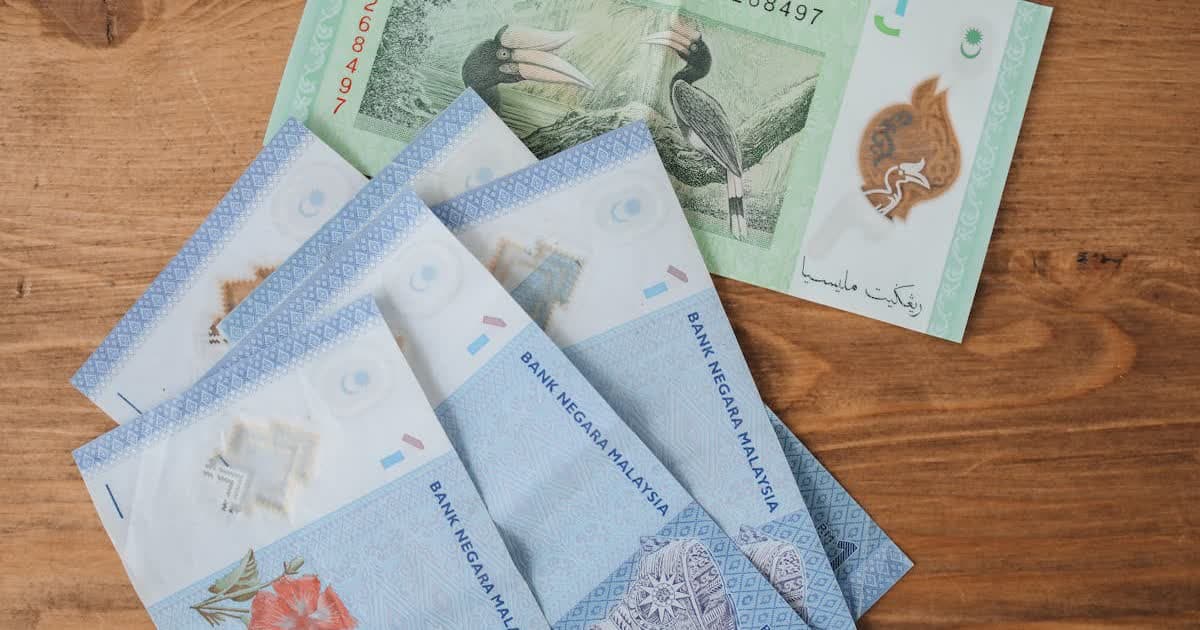
Banknotes in Circulation
| Note | Color | Common Use |
|---|---|---|
| RM1 | Blue | Tips, small purchases |
| RM5 | Green | Hawker food, drinks |
| RM10 | Red | Meals, transport |
| RM20 | Orange | Shopping, restaurants |
| RM50 | Blue-green | Larger purchases |
| RM100 | Purple | Hotels, big expenses |
Coins
- 5 sen, 10 sen, 20 sen, 50 sen
- 1 sen coins phased out (prices rounded)
- Coins rarely used except for exact change
Rounding Rules
Since 1 sen coins are discontinued, cash transactions round to nearest 5 sen:
- RM10.01-10.02 → RM10.00
- RM10.03-10.07 → RM10.05
- RM10.08-10.09 → RM10.10
Tip: Card payments charge exact amount, no rounding.
Recognizing Genuine Notes
- Watermark of first PM visible when held to light
- Security thread embedded in paper
- Color-shifting ink on higher denominations
- Raised printing you can feel
Currency Exchange
Best Places to Exchange Money
Licensed Money Changers (Best Rates)
Found in malls, tourist areas, and city centers.
- Rates 2-5% better than banks/airport
- No commission usually
- Bring passport for large amounts
- Compare 2-3 shops before exchanging
Top Money Changers in KL
- Sogo KL (Jalan TAR) - Consistently good rates
- Mid Valley Megamall - Multiple options to compare
- Pavilion KL - Convenient, decent rates
- Nu Sentral - Near KL Sentral station
Airport Exchange (Avoid if Possible)
- KLIA/KLIA2 rates 5-10% worse
- Only exchange small amount for taxi/transport
- Better rates in city
Banks
- Rates slightly worse than money changers
- More paperwork required
- Useful for large amounts (better security)
- Maybank, CIMB, Public Bank common
Hotels
- Worst rates (10-15% markup)
- Only for emergencies
- Convenient but expensive
Exchange Tips
- Check xe.com for current rates before exchanging
- Avoid exchanging at airports if possible
- Bring clean, undamaged notes (torn notes rejected)
- USD, EUR, GBP, SGD, AUD get best rates
- Smaller currencies may have poor rates
- Keep exchange receipts for departure
How Much to Exchange
| Trip Length | Suggested Cash |
|---|---|
| Weekend | RM300-500 |
| 1 week | RM500-1000 |
| 2 weeks | RM1000-2000 |
Most places accept cards, so don't carry too much cash.
ATMs & Bank Cards
Using ATMs in Malaysia
ATMs are everywhere, malls, convenience stores, banks, airports. Most accept international cards.
Major ATM Networks
- Maybank (yellow) - Most widespread
- CIMB (red) - Common in malls
- Public Bank (white/red) - Reliable
- RHB, Hong Leong, AmBank - Also common
ATM Fees
| Fee Type | Amount |
|---|---|
| Local bank fee | RM0-12 per withdrawal |
| Your bank's foreign fee | Varies (check before travel) |
| Currency conversion | 1-3% markup |
Minimizing ATM Fees
- Withdraw larger amounts less frequently
- Use Maybank ATMs (often lower fees)
- Get a travel card with no foreign fees
- Decline "conversion" option (DCC scam)
Dynamic Currency Conversion (DCC) Warning
ATMs may offer to convert to your home currency. ALWAYS DECLINE.
- Choose "without conversion" or "MYR"
- DCC rates are 3-7% worse
- Let your bank do the conversion
ATM Withdrawal Limits
- Typical limit: RM1,500-3,000 per transaction
- Daily limit: RM5,000-10,000
- Your bank may have lower limits
ATM Safety Tips
- Use ATMs inside banks or malls
- Cover PIN when entering
- Avoid ATMs with suspicious devices
- Keep receipts until you verify transaction
- Have backup card in case one is blocked
Card Acceptance
| Card Type | Acceptance |
|---|---|
| Visa | Excellent (95%+) |
| Mastercard | Excellent (95%+) |
| Amex | Good (70%) |
| UnionPay | Good (60%) |
| JCB | Limited (40%) |
| Discover | Poor (20%) |
Where Cards May Not Work
- Hawker stalls (cash only)
- Small shops
- Night markets
- Some taxis
- Rural areas
Digital Payments & E-Wallets
Malaysia is rapidly going cashless. E-wallets are widely accepted and often offer discounts.
Touch 'n Go eWallet
The most widely used e-wallet in Malaysia.
Setup:
- Download Touch 'n Go eWallet app
- Register with phone number
- Verify identity (passport for foreigners)
- Top up via card or bank transfer
Uses:
- Toll payments (highways)
- Public transport (MRT, LRT, buses)
- Retail payments (most shops)
- Parking
- Food delivery
Tourist Benefits:
- No need for exact change
- Faster than card payments
- Cashback promotions
- Works at hawker stalls
GrabPay
Integrated with Grab app (ride-hailing).
Setup:
- Already in Grab app
- Add payment method
- Top up wallet
Uses:
- Grab rides
- GrabFood delivery
- Retail payments
- Some restaurants
Other E-Wallets
- Boost - Cashback focused
- ShopeePay - For Shopee users
- BigPay - Good for foreigners, Mastercard included
- MAE by Maybank - Local bank wallet
BigPay (Recommended for Tourists)
Fintech app with physical Mastercard. Check our BigPay review for details on zero-fee international transfers and how it compares to other e-wallets.
Benefits:
- No foreign transaction fees
- Competitive exchange rates
- Physical card for ATM/shops
- Easy top-up from foreign cards
- Works like local payment
QR Payments
Most e-wallets use DuitNow QR, a unified QR system.
- One QR code works with multiple wallets
- Look for DuitNow QR signs
- Scan, enter amount, pay
E-Wallet Tips
- Download Touch 'n Go before arrival
- Top up RM100-200 to start
- Use for tolls and transport
- Check for cashback promotions
- Keep some cash backup
Send & Save Money Smarter
Tools Malaysians use to transfer money abroad and grow savings with competitive rates.

Send money internationally at the real exchange rate. Multi-currency debit card included.

Prepaid Visa card + app with near-market exchange rates for overseas spending and low-cost international transfers. Use code V4P78SB2PY for RM5 when you activate your card.

Save and invest from RM100. Earn up to 4% p.a. on cash, with zero fees on unit trust funds.
Daily Costs & Budgeting
Budget Breakdown by Travel Style
Backpacker (RM100-150/day)
| Category | Daily Cost |
|---|---|
| Hostel dorm | RM30-50 |
| Food (hawker) | RM30-45 |
| Transport | RM15-25 |
| Activities | RM20-30 |
| Total | RM95-150 |
Mid-Range (RM250-400/day)
| Category | Daily Cost |
|---|---|
| 3-star hotel | RM120-200 |
| Food (mixed) | RM60-100 |
| Transport | RM30-50 |
| Activities | RM50-100 |
| Total | RM260-450 |
Luxury (RM600+/day)
| Category | Daily Cost |
|---|---|
| 5-star hotel | RM400-800 |
| Fine dining | RM150-300 |
| Private transport | RM100-200 |
| Premium activities | RM200+ |
| Total | RM850+ |
Typical Prices
Food
| Item | Price |
|---|---|
| Nasi lemak (hawker) | RM5-8 |
| Roti canai | RM2-4 |
| Char kuey teow | RM8-12 |
| Restaurant meal | RM25-50 |
| Fine dining | RM150-400 |
| Coffee (kopitiam) | RM3-5 |
| Starbucks | RM15-22 |
| Beer (bar) | RM18-30 |
| Water (bottle) | RM1-3 |
Transport
| Type | Price |
|---|---|
| MRT/LRT single trip | RM1-6 |
| Grab (city) | RM8-25 |
| Grab (airport) | RM60-100 |
| Bus (city) | RM1-4 |
| Taxi (metered) | RM10-30 |
Accommodation
| Type | Price/Night |
|---|---|
| Hostel dorm | RM30-60 |
| Budget hotel | RM80-150 |
| Mid-range hotel | RM150-300 |
| Luxury hotel | RM400-1000 |
| Airbnb (room) | RM80-200 |
Activities
| Activity | Price |
|---|---|
| Petronas Towers | RM80 |
| Batu Caves | Free |
| Penang Hill | RM30 |
| Island hopping | RM100-200 |
| Cooking class | RM150-300 |
Tipping Culture
Tipping is NOT Expected in Malaysia
Unlike Western countries, tipping is not part of Malaysian culture. Service charge is usually included.
General Rule
- No tipping required anywhere
- Service staff paid regular wages
- 10% service charge added at restaurants
- Tipping won't offend but isn't expected
By Situation
Restaurants
- Service charge (10%) usually included
- Check bill for "Service Charge" line
- If no service charge, round up if you wish
- Fine dining: Optional 5-10% for exceptional service
Hotels
- Porters: RM2-5 per bag (optional)
- Housekeeping: RM5-10/day (optional, appreciated)
- Concierge: RM10-20 for special help
- Room service: Usually included in bill
Taxis/Grab
- No tipping expected
- Round up fare if you wish
- Grab has in-app tipping (rarely used)
Hawker Stalls
- Never tip at hawker centers
- Would be unusual and confusing
- Just pay the stated price
Spas/Salons
- Usually no tipping
- High-end spas: RM10-20 optional
- Included in service charge typically
Tour Guides
- Group tours: RM10-20/person
- Private guides: RM50-100/day
- Drivers: RM20-50/day
- Most appreciated form of tipping
When Tipping Makes Sense
- Exceptional service beyond expectations
- Tour guides who go above and beyond
- Hotel staff who help with special requests
- Porters handling heavy luggage
How to Tip
- Cash preferred
- Hand directly to person
- Small bills (RM5, RM10)
- Say "terima kasih" (thank you)
Bottom line: Don't stress about tipping. It's genuinely optional and not expected.
Taxes & Tourist Refunds
Understanding Malaysian Taxes
Sales and Service Tax (SST)
- Sales Tax: 5-10% on goods
- Service Tax: 6% on services
- Usually included in displayed prices
- Restaurants add 6% service tax
Tourism Tax
- RM10/room/night for foreign tourists
- Applies to all accommodation types
- Charged at checkout
- Cannot be refunded
What You'll See on Bills
| Item | Meaning |
|---|---|
| SST | Sales/Service Tax |
| Service Charge | 10% (restaurants) |
| Tourism Tax | RM10/night (hotels) |
| Rounding | Cash payment adjustment |
Tax-Free Shopping (GST Refund - Currently Suspended)
Malaysia previously had GST refund for tourists but this was suspended when GST was replaced with SST in 2018. Currently:
- No tourist tax refund scheme
- Prices include all applicable taxes
- What you see is what you pay
Duty-Free Shopping
Langkawi (Entire Island)
- Duty-free on alcohol, tobacco, chocolate
- Beer: RM5-8 (vs RM18-25 elsewhere)
- Spirits: 50-70% cheaper
- Chocolate: Significantly cheaper
- Electronics: Some savings
Tioman Island
- Similar duty-free status
- Smaller selection than Langkawi
Airport Duty-Free
- KLIA/KLIA2 departure halls
- Standard international duty-free
- Alcohol, tobacco, perfume, electronics
- Allowances apply for home country
Duty-Free Allowances (Entering Malaysia)
| Item | Allowance |
|---|---|
| Alcohol | 1 liter |
| Cigarettes | 200 sticks |
| Tobacco | 225g |
| Perfume | Reasonable quantity |
| Gifts | RM500 value |
Saving Money on Taxes
- Shop in Langkawi for alcohol/tobacco
- Buy at duty-free before departure
- Look for "price inclusive" signs
- No need to calculate tax separately
Banking for Long Stays
Opening a Bank Account
For digital nomads, expats, or long-term visitors, a Malaysian bank account can be useful.
Who Can Open an Account
- MM2H visa holders (easiest)
- Employment Pass holders
- Student Pass holders
- Long-term visitors (difficult, varies by bank)
Tourist/Short-term Visitors
Generally cannot open accounts. Use alternatives:
- BigPay (fintech, easy signup)
- Wise (international transfers)
- Touch 'n Go eWallet
- GrabPay
Requirements for Account Opening
- Valid passport
- Valid visa (work/student/MM2H)
- Proof of address in Malaysia
- Reference letter (sometimes)
- Minimum deposit (RM250-500)
Major Banks
| Bank | Notes |
|---|---|
| Maybank | Largest, most branches |
| CIMB | Good digital banking |
| Public Bank | Reliable, conservative |
| Hong Leong | Good for expats |
| RHB | Competitive rates |
Digital Banks (Easier for Foreigners)
- BigPay - Fintech, easy signup, Mastercard
- GXBank - Digital bank, newer
- Boost - E-wallet with banking features
BigPay (Recommended)
Best option for tourists and short-term visitors.
Features:
- Sign up with passport
- Physical Mastercard delivered
- No foreign transaction fees
- Competitive exchange rates
- Top up from foreign cards
- ATM withdrawals
Setup:
- Download BigPay app
- Register with passport
- Verify identity
- Order physical card (RM15)
- Top up and use
Wise (TransferWise)
For receiving/sending international transfers.
Features:
- Multi-currency account
- MYR account available
- Low transfer fees
- Debit card option
- Good for freelancers/remote workers
Money Transfer Options
| Service | Speed | Fees |
|---|---|---|
| Wise | 1-2 days | Low |
| Western Union | Same day | High |
| Bank wire | 3-5 days | Medium |
| PayPal | Instant | Medium-High |
Investing Your Ringgit
If you're staying long-term, consider putting idle funds to work. P2P lending platforms like Funding Societies let you earn returns on short-term notes. Read our Funding Societies review for a breakdown of how P2P lending works in Malaysia.
Money Scams to Avoid
Common Money Scams
Dynamic Currency Conversion (DCC)
The most common "legal" scam affecting tourists.
How it works:
- ATM/card machine offers to charge in your home currency
- Seems convenient but rate is terrible (3-7% worse)
- Always choose LOCAL CURRENCY (MYR)
Fake Money Changers
- Unlicensed changers with "too good" rates
- May shortchange you or give fake notes
- Only use licensed changers (look for license displayed)
ATM Skimming
- Devices attached to ATM card slots
- Cameras recording PIN entry
- Use ATMs inside banks/malls
- Cover PIN when entering
- Check for loose card slot
Taxi Overcharging
- "Meter broken" excuse
- Inflated flat rates
- Long routes
- Solution: Use Grab instead
Counterfeit Notes
- Rare but exists
- Check security features
- Refuse damaged/suspicious notes
- Get change from reputable places
Credit Card Fraud
- Card skimming at restaurants
- Keep card in sight during payment
- Check statements regularly
- Use contactless when possible
"Free Gift" Scams
- Offered free item, then pressured to buy
- Common at tourist spots
- Politely decline and walk away
Gem/Jewelry Scams
- "Special deal" on gems
- Fake or overpriced stones
- Only buy from reputable jewelers
- Get certification for expensive items
Safety Tips
- Count money before leaving exchanger
- Keep receipts
- Use ATMs in secure locations
- Don't flash large amounts of cash
- Split money between wallet and hidden pouch
- Use hotel safe for valuables
- Check card statements daily
- Have backup payment method
If You're Scammed
- Report to police (for insurance claims)
- Contact bank immediately for card fraud
- Keep all evidence
- Report to tourism hotline: 1-300-88-5050
Bargaining & Negotiation
Where Bargaining is Acceptable
Yes, Bargain Here:
- Night markets (pasar malam)
- Street vendors
- Small independent shops
- Tourist souvenir stalls
- Some electronics shops
- Taxi fares (if not using meter)
No, Don't Bargain:
- Malls and department stores
- Supermarkets
- Restaurants
- Hawker food stalls
- Convenience stores
- Branded shops
- Government services
Bargaining Etiquette
Do:
- Smile and be friendly
- Start at 50-60% of asking price
- Be prepared to walk away
- Show genuine interest
- Compliment the item
- Buy multiple items for better discount
Don't:
- Be aggressive or rude
- Bargain if you won't buy
- Insult the quality
- Get angry
- Bargain at food stalls
- Expect huge discounts at quality shops
Bargaining Phrases
| English | Malay |
|---|---|
| How much? | Berapa? |
| Too expensive | Mahal sangat |
| Can cheaper? | Boleh kurang? |
| Last price? | Harga terakhir? |
| I'll take it | Saya ambil |
| Thank you | Terima kasih |
Typical Discounts
| Location | Expected Discount |
|---|---|
| Night market | 20-40% |
| Tourist shops | 10-30% |
| Electronics | 5-15% |
| Jewelry | 10-20% |
Bargaining Strategy
- Ask price casually
- Show mild interest
- Offer 50-60% of asking
- Seller counters
- Meet somewhere in middle
- If no deal, start walking away
- Often called back with better price
- Shake hands when agreed
When Prices Are Fixed
- Price tags with barcodes
- "Fixed Price" signs
- Chain stores
- Malls
- Restaurants with menus
Remember: Bargaining should be fun, not stressful. A few ringgit difference isn't worth an argument.
Emergency Money Situations
Lost/Stolen Wallet
Immediate Steps:
- Cancel cards immediately (call bank)
- Report to police (for insurance)
- Contact embassy if passport also lost
- Use emergency cash (hidden backup)
Emergency Card Numbers
| Card | Emergency Number |
|---|---|
| Visa | +1-303-967-1096 |
| Mastercard | +1-636-722-7111 |
| Amex | +1-336-393-1111 |
Getting Emergency Cash
Western Union
- Receive money from abroad
- Multiple locations in malls
- Need ID (passport copy may work)
- Fees apply
MoneyGram
- Similar to Western Union
- Available at post offices
- Need ID
Embassy Assistance
- Emergency loans (repayable)
- Help contacting family
- Replacement travel documents
Wise/PayPal
- If you have account, transfer to local contact
- They withdraw and give you cash
Card Blocked Abroad
Why It Happens:
- Unusual foreign transactions
- Security algorithms triggered
- Didn't notify bank of travel
Prevention:
- Notify bank before travel
- Set travel notice in app
- Have backup card from different bank
- Know bank's international number
If Blocked:
- Call bank's international line
- Verify identity
- Request unblock
- May take 24-48 hours
Running Low on Money
Quick Solutions:
- ATM withdrawal (if cards work)
- Money transfer from home
- Sell unused items (phones, electronics)
- Contact embassy for emergency loan
Budget Survival Mode:
| Need | Cheapest Option |
|---|---|
| Food | Hawker centers (RM5-10/meal) |
| Sleep | Hostel dorm (RM30-50) |
| Transport | Public transport only |
| Water | Refill bottles |
Important Contacts
- Tourist Police: 03-2166 8322
- Tourism Hotline: 1-300-88-5050
- Your Embassy: (save number)
- Bank International Line: (save before travel)
Prevention Tips
- Carry backup card from different bank
- Keep emergency cash hidden separately
- Have digital copies of all documents
- Know embassy location
- Have travel insurance with emergency coverage
- Share itinerary with family
- Keep small amount in hotel safe
Regional Money Differences
Money Matters Vary Across Malaysia
Malaysia isn't uniform when it comes to money, what works in KL might not fly in rural Kelantan. Understanding regional differences helps you prepare appropriately and avoid awkward situations.
Kuala Lumpur & Selangor
The most developed payment ecosystem in Malaysia. You can go nearly cashless here.
- E-wallets accepted almost everywhere, including many hawker stalls
- Credit cards work at 95%+ of establishments
- ATMs on every corner, inside every mall
- Money changers offer best rates in the country
- Premium services and luxury options abundant
- Prices slightly higher than other states (10-20%)
Penang
Tourist-friendly with good payment infrastructure, but more traditional than KL.
- George Town heritage area: Mix of cash and card
- Hawker centers: Mostly cash, some e-wallets
- Hotels and restaurants: Cards widely accepted
- Money changers: Good rates in Komtar and tourist areas
- Prices: Moderate, good value for food
Langkawi (Duty-Free Island)
Unique status affects pricing and payments.
- Duty-free: Alcohol, tobacco, chocolate significantly cheaper
- Cash preferred at smaller shops
- Cards accepted at resorts and larger establishments
- ATMs available but fewer than mainland
- Prices: Lower for duty-free items, similar for others
- No sales tax on most goods
East Coast (Terengganu, Kelantan, Pahang)
More conservative and traditional, especially in Kelantan.
- Cash is king, many places don't accept cards
- E-wallet adoption slower than west coast
- Fewer ATMs in rural areas
- Money changers rare outside major towns
- Prices: Generally 20-30% lower than KL
- Kelantan: Some businesses close on Friday (prayer day)
Sabah & Sarawak (East Malaysia)
Different banking landscape with some unique considerations.
- Major towns (KK, Kuching): Good card acceptance
- Rural areas: Cash essential
- ATMs: Available in towns, scarce in remote areas
- Prices: Similar to Peninsular for most items
- Some local banks not found in Peninsular
- Island resorts: Often card-only or cash-only (check ahead)
Cameron Highlands & Hill Stations
Tourist areas with decent infrastructure but some gaps.
- Main towns: Cards accepted at hotels, restaurants
- Farms and small stalls: Cash only
- ATMs: Available in Tanah Rata, Brinchang
- Prices: Slightly inflated for tourists
- Weekend crowds mean ATM queues
Border Towns (Johor Bahru, Padang Besar)
Unique dynamics due to cross-border trade.
- JB: Singapore dollars sometimes accepted
- Multiple currencies in circulation
- Money changers: Competitive rates for SGD
- Prices: Can be quoted in SGD or MYR
- Weekend influx affects availability
Rural Malaysia
Anywhere outside major towns requires preparation.
- Cash only in most situations
- Nearest ATM might be 30+ minutes away
- No money changers
- Prices: Often cheaper but no negotiation expected
- Mobile signal may be weak (no e-wallet)
Practical Tips by Region
| Region | Cash Needed | Card Acceptance | E-Wallet |
|---|---|---|---|
| KL/Selangor | Low | Excellent | Excellent |
| Penang | Medium | Good | Good |
| Langkawi | Medium | Good | Moderate |
| East Coast | High | Limited | Limited |
| Sabah/Sarawak | Medium-High | Moderate | Moderate |
| Rural Areas | Very High | Poor | Poor |
Before Leaving Major Cities:
- Withdraw enough cash for your rural itinerary
- Don't rely on finding ATMs
- Carry smaller denominations (RM10, RM20)
- Inform your bank of travel to remote areas
- Have backup payment method ready
Money FAQ
Frequently Asked Questions About Money in Malaysia
Q: Should I exchange money before arriving in Malaysia?
A: Exchange a small amount (USD 50-100 equivalent) for immediate needs like transport from airport. Malaysian money changers offer much better rates than your home country. Airport rates in Malaysia are reasonable for small amounts.
Q: What's the best currency to bring?
A: US Dollars, Singapore Dollars, Euros, British Pounds, and Australian Dollars get the best rates. Bring clean, undamaged notes, torn or marked bills may be rejected. Newer series notes are preferred.
Q: Can I use US Dollars directly in Malaysia?
A: No, Malaysian Ringgit is the only accepted currency. Some tourist areas might accept USD at poor rates, but it's not standard practice. Always exchange to MYR.
Q: How much cash should I carry daily?
A: For cities: RM100-200 is sufficient with card backup. For rural areas: RM300-500 depending on planned expenses. Never carry more than you need for the day.
Q: Are there fake notes in circulation?
A: Counterfeits exist but are rare. Check security features on larger notes (RM50, RM100). Avoid exchanging money with individuals on the street. Use licensed money changers only.
Q: What if an ATM eats my card?
A: Contact the bank immediately (number on ATM). If it's your bank's ATM, they may retrieve it. Foreign cards usually require your home bank to issue a replacement. This is why backup cards are essential.
Q: Can I open a bank account as a tourist?
A: Generally no. Bank accounts require valid long-term visa (work permit, student visa, MM2H). Tourists should use BigPay or Wise for local payment options.
Q: Is it safe to use ATMs at night?
A: Use ATMs inside banks, malls, or well-lit convenience stores. Avoid standalone ATMs in isolated areas. 24-hour ATM lobbies at banks are generally safe.
Q: Do I need to declare cash when entering Malaysia?
A: Yes, if carrying more than RM30,000 (or equivalent in foreign currency). Declare at customs to avoid confiscation. Keep receipts for large amounts.
Q: What's the deal with the RM100 note?
A: It's the largest denomination and can be hard to break at small shops. Many hawkers and small vendors can't provide change. Try to use RM100 notes at supermarkets, hotels, or larger restaurants.
Q: How do I avoid card fraud?
A: Use contactless payments when possible. Never let your card out of sight. Check statements daily. Use cards with fraud protection. Set up transaction alerts on your banking app.
Q: Can I get a tax refund as a tourist?
A: Currently no tourist tax refund scheme exists in Malaysia. The GST refund program was suspended in 2018. Prices include all applicable taxes.
Q: What's the best way to split bills with travel companions?
A: Use Wise or similar apps to track and settle expenses. Touch 'n Go allows transfers between users. Cash splitting works but keep a running tally.
Q: Are there any hidden fees I should know about?
A: Tourism tax (RM10/night) at hotels. Service charge (10%) at restaurants. Some ATMs charge RM12+ per withdrawal. Dynamic Currency Conversion adds 3-7% if you accept it.
Q: How do I handle money for a multi-week trip?
A: Mix of strategies: Bring some cash to exchange, use ATM withdrawals as needed, have 2-3 cards from different banks, set up Touch 'n Go and GrabPay for daily expenses.
Q: What if I'm overcharged?
A: Politely question the charge. Ask for itemized receipt. For serious issues, contact Tourism Malaysia hotline (1-300-88-5050). Keep receipts for disputes.
Payment Troubleshooting
Common Payment Problems & Solutions
Card Declined at POS Terminal
Possible Causes:
- Bank blocked international transaction
- Insufficient funds
- Card not activated for overseas use
- Chip/magnetic stripe damaged
- Terminal malfunction
Solutions:
- Try contactless/tap payment instead
- Request manual card entry
- Try a different terminal
- Call bank to authorize transaction
- Use backup card or cash
Prevention:
- Notify bank of travel dates and destinations
- Enable international transactions in banking app
- Test card at ATM first upon arrival
- Carry cards from multiple banks
E-Wallet Won't Work
Touch 'n Go Issues:
- Insufficient balance: Top up via app or at convenience stores
- App not updated: Download latest version
- Phone NFC not working: Restart phone, check NFC settings
- QR code not scanning: Ensure good lighting, clean camera lens
- Account suspended: Contact TnG support
GrabPay Issues:
- Payment method expired: Update card details
- Verification required: Complete in-app verification
- Region restrictions: Some features limited for foreign accounts
ATM Problems
Card Not Accepted:
- Try different ATM brand (Maybank, CIMB, Public Bank)
- Check if card has international withdrawal enabled
- Ensure card isn't expired
- Try magnetic stripe if chip fails
Wrong Amount Dispensed:
- Do not leave ATM
- Take receipt
- Contact bank immediately
- File dispute with your bank
- Report to ATM owner bank
Transaction Failed But Money Deducted:
- Keep receipt/transaction record
- Wait 24 hours (often auto-reverses)
- Contact your bank with details
- File dispute if not resolved
Money Changer Issues
Rate Changed After Agreeing:
- Confirm rate before handing over money
- Get rate in writing if large amount
- Walk away if they change terms
- Report to authorities if fraudulent
Received Wrong Amount:
- Count money before leaving counter
- Recount in front of staff if discrepancy
- Don't leave until resolved
- Licensed changers have CCTV
Notes Rejected:
- Bring clean, undamaged notes
- Newer series preferred
- Small tears may be accepted at lower rate
- Try different money changer
Restaurant/Shop Payment Issues
Bill Seems Wrong:
- Request itemized receipt
- Check for service charge (10%) and SST (6%)
- Verify prices match menu
- Question any unclear charges politely
Card Machine "Not Working":
- Common excuse to get cash payment
- Ask to try again or use different machine
- Offer exact cash if available
- Large establishments should have working machines
Online Payment Problems
Malaysian Sites Rejecting Foreign Cards:
- Some sites only accept Malaysian cards
- Try PayPal if available
- Use Wise virtual card
- Ask hotel to book on your behalf
3D Secure/OTP Not Received:
- Check international roaming for SMS
- Use authenticator app if set up
- Contact bank for alternative verification
- Have backup payment ready
Emergency Workarounds
No Cash, No Working Cards:
- GrabPay can link to some international cards
- Ask hotel to charge room and pay later
- Western Union/MoneyGram from family
- Embassy emergency assistance
Phone Dead (No E-Wallet Access):
- Always carry some physical cash
- Physical Touch 'n Go card works without phone
- Credit cards don't need phone
- Charge phone at any mall/cafe
Reporting Issues
For Card Fraud:
- Your bank's fraud hotline (save number)
- Malaysian police report for insurance
- Card network (Visa/Mastercard) if bank unresponsive
For Scams/Overcharging:
- Tourism Malaysia: 1-300-88-5050
- Consumer complaints: 1-800-886-800
- Police report for significant amounts
For Lost Items:
- Police report within 24 hours
- Keep report number for insurance
- Cancel cards immediately
- Contact embassy if passport involved
Essential Money Apps
Must-Have Apps for Managing Money in Malaysia
Payment & E-Wallet Apps
Touch 'n Go eWallet (Essential)
The most widely accepted e-wallet in Malaysia.
- Download: iOS and Android
- Setup: Register with phone number, verify ID
- Top-up: Credit card, bank transfer, convenience stores
- Uses: Transit, tolls, parking, retail, hawkers
- Tourist tip: Works with foreign phone numbers but some features limited
GrabPay
Integrated with Southeast Asia's super app.
- Download: Part of Grab app
- Setup: Link credit card or top up wallet
- Uses: Rides, food delivery, retail payments
- Tourist tip: Your existing Grab account works in Malaysia
BigPay (Highly Recommended for Tourists)
Fintech solution designed for travelers.
- Download: iOS and Android
- Setup: Register with passport, order physical card
- Features: No foreign transaction fees, competitive rates
- Card: Physical Mastercard for ATM and retail
- Top-up: International credit cards accepted
- Tourist tip: Best option for tourists wanting local payment capability
Banking & Transfer Apps
Wise (Formerly TransferWise)
Best for international transfers and multi-currency.
- Features: Real exchange rate, low fees, multi-currency account
- MYR Account: Available for receiving payments
- Card: Debit card with great rates
- Use case: Digital nomads, receiving payments, transfers home
Revolut
Alternative to Wise with similar features.
- Features: Multi-currency, budgeting tools, crypto
- Exchange: Good rates for major currencies
- Card: Virtual and physical options
- Use case: Budget tracking, multiple currency needs
Your Home Bank App
Don't forget your existing banking app.
- Enable: International transactions, travel notifications
- Set up: Transaction alerts, spending limits
- Save: International support numbers
- Check: Daily for unauthorized transactions
Currency & Budgeting Apps
XE Currency
Real-time exchange rates.
- Features: Rate alerts, historical charts, offline mode
- Use: Check rates before exchanging money
- Tip: Set alerts for favorable rates
Trail Wallet
Travel budget tracking.
- Features: Daily budgets, expense categories, trip summaries
- Use: Track spending against daily budget
- Tip: Log expenses immediately to stay accurate
Splitwise
Split expenses with travel companions.
- Features: Group expenses, multiple currencies, settle up
- Use: Track who owes what
- Tip: Settle in local currency to avoid conversion confusion
Booking & Deals Apps
Fave
Restaurant and service deals.
- Features: Up to 50% off dining, spa, activities
- Payment: In-app payment with cashback
- Tip: Check before dining out for deals
ShopBack
Cashback on online purchases.
- Features: Cashback at partner stores, price comparison
- Use: Book hotels, shop online through app
- Tip: Combine with credit card rewards
Practical App Setup Checklist
Before arriving:
- [ ] Download Touch 'n Go eWallet
- [ ] Ensure Grab is installed and payment method added
- [ ] Download BigPay and order card (if time allows)
- [ ] Set up Wise account for transfers
- [ ] Download XE Currency for rate checking
- [ ] Enable international transactions on bank app
- [ ] Save bank's international support number
Upon arrival:
- [ ] Register Touch 'n Go with local SIM
- [ ] Top up e-wallets with initial amount
- [ ] Test payment at convenience store
- [ ] Verify ATM card works
App Storage Tip
These apps don't take much space. Download all before travel, you never know which you'll need. Better to have and not need than need and not have (especially with spotty rural internet).
The Future of Money in Malaysia: Smarter, Faster, Cheaper
These are forward-looking predictions, not guarantees, but Malaysia's money landscape is evolving fast, and almost every trend points toward a cheaper, smoother experience for both travelers and residents.
Malaysia goes effectively cashless nationwide. By 2028, expect DuitNow QR to be accepted at the overwhelming majority of hawker stalls, night markets and even rural warungs, turning the country into one of Southeast Asia's most seamless tap-and-go destinations.
Cross-border payments get nearly instant and nearly free. The expanding ASEAN QR linkages (already connecting Malaysia, Singapore, Thailand and Indonesia) should make paying across borders with your home e-wallet routine by 2027, no money changer required.
Currency exchange margins keep shrinking. As fintech competition intensifies, mid-market-rate transfers become the norm. Tools like Wise will keep pushing fees lower, so moving money into ringgit gets cheaper every year.
Idle ringgit will work harder for you. Easy-access digital cash-management platforms such as Versa are making it effortless for long-stayers to earn competitive returns on savings that used to sit dead in a current account.
Foreigners will find banking far easier. Expect digital banks and onboarding rules to keep opening up, so tourists and digital nomads can hold a genuine local account within minutes by 2029.
Smarter fraud protection and fewer scams. AI-driven transaction monitoring and national QR standardisation should steadily squeeze out the DCC traps and fake-changer scams that catch visitors today.
The direction is unmistakable: managing money in Malaysia is only getting easier, and the next few years promise the most traveler-friendly money scene the country has ever had.
Malaysian Money Glossary + the Localised 50/30/20 Budget
Living or working in Malaysia means decoding a payslip full of acronyms and a few uniquely local income brackets. This is the cheat sheet locals wish they had on day one, plus a budget worked at the real national median salary.
All figures dated: DOSM Household Income Survey 2024 and Salaries & Wages Survey 2024 (both released 2025); OPR as of the 7 May 2026 BNM meeting.
The terms you'll see on every payslip and news headline
| Term | What it means |
|---|---|
| KWSP / EPF | Employees Provident Fund (Kumpulan Wang Simpanan Pekerja), compulsory retirement savings. Employee pays 11% of wages; employer pays 13% (wages ≤ RM5,000) or 12% (above). |
| SOCSO / PERKESO | Social Security, covers workplace injury and invalidity. Employee pays ~0.5% of wages (capped at the RM6,000 wage ceiling, raised from RM5,000 on 1 Oct 2024). |
| EIS / SIP | Employment Insurance System, pays a temporary allowance if you're retrenched. Employee pays 0.2% (same RM6,000 ceiling). |
| PCB / MTD | Potongan Cukai Berjadual (Monthly Tax Deduction), income tax withheld from salary each month, credited against your annual LHDN bill. |
| Take-home vs Gross | Gross = total salary before deductions. Take-home (net) = what hits your bank after EPF + SOCSO + EIS + PCB. Budget off take-home, not gross. |
| ASB / ASNB | Amanah Saham Bumiputera, a fixed-price (RM1.00/unit) unit trust managed by ASNB. A default savings vehicle for eligible Bumiputera. |
| OPR | Overnight Policy Rate, Bank Negara's benchmark interest rate that moves loan and FD rates. Currently 2.75% (cut from 3.00% in July 2025, held since). |
| DSR | Debt Service Ratio, your monthly debt commitments ÷ net income. Banks typically approve loans up to a 60-70% DSR. |
| B40 / M40 / T20 | DOSM income tiers by household income (see thresholds below). Used for subsidies (e.g. SARA / STR aid). |
| PIDM | Perbadanan Insurans Deposit Malaysia, insures your bank deposits up to RM250,000 per depositor, per bank, free and automatic. |
| SST | Sales & Service Tax. Service Tax is 8% standard (6% for F&B, telco, parking and logistics); Sales Tax is 5-10% on goods. |
| e-Invoice / MyInvois | LHDN's mandatory digital invoicing. From 1 Jan 2026 it reaches businesses with RM1m-RM5m turnover; firms under RM1m turnover are exempt (threshold raised from RM500k). |
Where you sit: B40 / M40 / T20 (DOSM HIS 2024)
These tiers are based on monthly gross household income (everyone in the home combined), not your individual salary.
| Tier | Monthly household income |
|---|---|
| B40 (bottom 40%) | Up to RM5,249 |
| M40 (middle 40%) | RM5,250 - RM11,819 |
| T20 (top 20%) | RM11,820 and above |
National median household income was RM7,017/month in 2024, growing 5.1% a year since 2022 (up from RM6,338); the median individual salary was RM2,793/month (up 7.3% from RM2,602 in 2023).
The localised 50/30/20 budget, worked at the median salary
The 50/30/20 rule splits your take-home pay into 50% Needs, 30% Wants, 20% Savings. We work it at the RM2,793 median monthly salary for a single person under 55.
Starting from RM2,793 gross, a single earner keeps roughly RM2,466 take-home after the 11% EPF, SOCSO and EIS (PCB is effectively RM0 at this income after tax reliefs and the RM400 rebate).
| Bucket | Share | Amount | Malaysian examples |
|---|---|---|---|
| Needs | 50% | RM1,233 | Room/rent, groceries + economy rice, RapidKL/Touch 'n Go/petrol, TNB + water + Unifi, phone plan, Takaful/insurance, minimum PTPTN & car payments |
| Wants | 30% | RM740 | Mamak & kopitiam, Netflix/Spotify, shopping, balik kampung trips, gym |
| Save & settle | 20% | RM493 | Emergency fund (aim 3-6 months), ASB/ASNB, PRS, EPF voluntary top-up (i-Saraan), extra debt repayment |
The local twist most guides miss: your 11% EPF is already withheld before take-home, so the 20% savings bucket sits on top of EPF, your true savings rate is closer to 28%. That's a feature, not a rounding error: EPF is locked for retirement, while the 20% builds the liquid emergency fund and goals you can actually reach.
If rent in KL eats more than 50% on a single median salary, that's the signal to get a housemate or look outside the city centre, not to raid the savings bucket.
Methodology: Take-home is derived from the DOSM 2024 median individual salary of RM2,793/month for a single Malaysian citizen under 55: gross minus EPF employee share (11% = RM307), SOCSO (~RM14) and EIS (~RM6); PCB is RM0 at this income after the RM9,000 personal relief, EPF relief and the RM400 tax rebate for chargeable income ≤ RM35,000, giving ≈RM2,466 net. The 50/30/20 split is applied to that net figure (Needs RM1,233 / Wants RM740 / Save RM493). B40/M40/T20 thresholds and median household income (RM7,017, +5.1% annually since 2022) are taken from DOSM's Household Income Survey 2024; the median salary (RM2,793, +7.3% vs RM2,602 in 2023) from DOSM's Salaries & Wages Survey 2024. EPF, SOCSO/EIS, SST, OPR, PIDM and e-Invoice figures verified against KWSP, PERKESO, MOF/RMCD, BNM (7 May 2026 OPR hold at 2.75%), PIDM and LHDN as of June 2026.
Disclaimer: Exchange rates and prices fluctuate. Information is for general guidance. Verify current rates before transactions.
Sources & References
This guide is cross-referenced against primary official sources, regulatory references, and locally relevant materials.
- Bank Negara Malaysia (BNM) Central bank, exchange rates, remittance regulations
- Wise International money transfer comparison and mid-market rates
- KPDN Consumer protection, money changer licensing
- DOSM, Household Income Survey Report (Malaysia & States) 2024
- DOSM, Salaries and Wages Survey Report 2024
- Bank Negara Malaysia, Monetary Policy Statement (OPR held at 2.75%, 7 May 2026)
- KWSP / EPF, Employer Mandatory Contribution rates
- PERKESO / SOCSO, Rate of Contribution (RM6,000 ceiling from 1 Oct 2024)
- PIDM, Coverage for Deposit Insurance System (RM250,000)
- LHDN, e-Invoice Implementation Timeline
- OpenDOSM, Household Income & Expenditure dashboard