
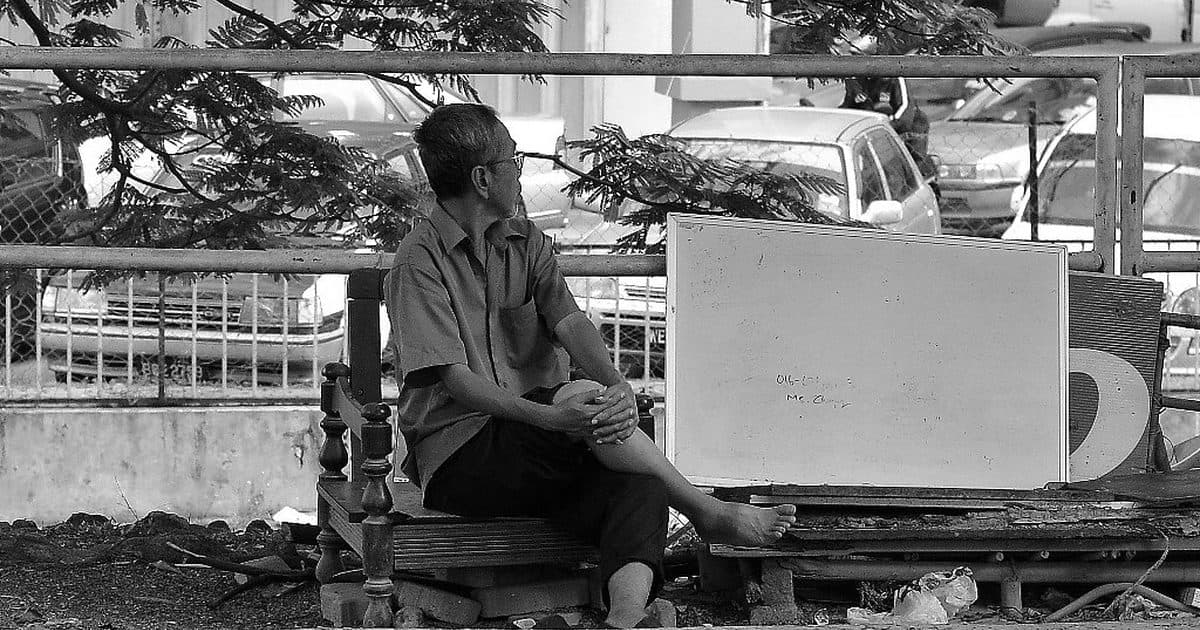
 John Ragai / CC BY 2.0
In This Guide
Aged Care in Malaysia: What You Need to Know
If you are reading this, you are probably weighing a hard decision — a parent who can no longer live safely alone, a stroke or fall that changed everything, or simply planning ahead before a crisis forces a rushed choice. This guide is about care facilities and services for the elderly in Malaysia: nursing homes, residential care centres, assisted living, retirement villages, day care, and home caregivers.
> Not the same as "retiring in Malaysia." If you are an expat looking at the MM2H visa, cost of living, and lifestyle, read our Retirement Guide instead. For senior citizen benefits, the Kad Warga Emas, and discounts, see the Warga Emas Guide. This guide is specifically about arranging care for an ageing person.
Why this matters now:
Malaysia is ageing fast. The country officially became an "ageing society" in 2020 (7%+ of the population aged 65 and over) and is on track to become an "aged nation" within the next decade or two. Families are smaller, more adult children work abroad or in other states, and the traditional model of multi-generational care at home is under strain. Demand for paid elderly care is rising far faster than supply.
The four things every family gets wrong:
- They wait for a crisis. The best homes have waiting lists; the rushed choice is rarely the best one. Start looking before you urgently need a bed.
- They confuse "registered" with "licensed for medical care." A centre can be legally registered to provide basic living care but not allowed to provide nursing or medical care. Putting a bedridden, tube-fed parent in a non-medical centre is both unsafe and, often, illegal.
- They underestimate the true monthly cost. The advertised rate is a base. Diapers, milk feeds, physiotherapy, transport to hospital, and special diets are usually extra — budget another RM300–1,500/month on top.
- They assume the government will provide a free bed. Free government homes exist, but they are reserved for the destitute — citizens with no income, no property, and no living family able to care for them. For most middle-class families, paid care is the only realistic option.
The full spectrum of options (cheapest to priciest):
| Option | Typical Cost/Month | Best For |
|---|---|---|
| Government home (Rumah Seri Kenangan) | Free | Destitute citizens, 60+, no heirs/income |
| NGO / charity home | Free–RM1,500 (donation-based) | Low-income, often faith-linked |
| Day care centre (PAWE / private) | Free–RM2,000 | Seniors who live with family but need daytime supervision |
| Home caregiver (live-in maid) | RM1,800–3,500 + agency fees | Families wanting a parent to stay at home |
| Budget care / nursing centre | RM1,500–3,000 | Stable seniors needing basic assistance |
| Mid-range nursing home | RM3,000–5,000 | Higher dependency, some nursing needs |
| Premium / dementia / medical nursing home | RM5,000–12,000+ | Complex medical, dementia, palliative care |
| Retirement village (buy-in) | RM310k+ lease deposit + monthly fees | Independent, affluent seniors planning ahead |
The rest of this guide breaks down each option, the law you must check, the real costs, and exactly what to inspect before you commit.
Why Singaporeans & Foreign Families Choose Malaysia for Aged Care
A fast-growing share of residents in Malaysian nursing homes — especially in Johor Bahru (JB) — are the elderly parents of Singaporean families, alongside retirees and families from Hong Kong, the UK, Australia, Japan, and Brunei. In a 2024 survey, roughly one in three Singaporeans said they may eventually retire in Johor Bahru, and retirement operators across the region report a "Singaporean tsunami" of enquiries. The reasons are compelling, and for many cross-border families the maths is impossible to ignore.
The cost gap is enormous (Singapore vs Malaysia):
The Singapore Dollar buys roughly RM3.30–3.50 (mid-2026). That currency strength, layered on Malaysia's already-lower prices, means a Singaporean family pays a fraction of home costs for comparable — sometimes better-staffed — care.
| Care level | Malaysia (RM/mo) | ≈ Singapore Dollars | Equivalent in Singapore |
|---|---|---|---|
| Budget care centre | RM1,500–3,000 | ~S$430–880 | S$2,000–3,500 (subsidised) |
| Mid-range nursing home | RM3,000–5,000 | ~S$880–1,470 | S$3,500–5,000 |
| Premium / dementia care | RM5,000–12,000 | ~S$1,470–3,530 | S$5,000–8,000+ |
In short: premium care in Malaysia often costs less than basic care in Singapore. A family can give a parent a private room, better staffing ratios, and dedicated nursing in JB for what a shared subsidised bed costs back home.
Why Malaysia specifically — not Thailand or elsewhere:
- Proximity — you can visit constantly. Johor Bahru is right across the Causeway and Second Link from Singapore. The new Johor Bahru–Singapore RTS Link (targeted to open around end-2026/2027) will connect Woodlands North to Bukit Chagar in about 5 minutes, making weekend — even daily — visits realistic. Closeness matters enormously: families don't want a parent "far away," and JB is closer than the other side of Singapore for many.
- Language & cultural comfort. English is widely spoken, and Malaysia's large Chinese community means Mandarin and dialects (Cantonese, Hokkien, Teochew, Hakka) are common among staff and residents — a huge comfort for elderly Singaporean Chinese parents. Malay and Tamil-speaking carers serve Malay and Indian families equally.
- Familiar food. The cuisine is nearly identical — the same kopitiam breakfasts, rice dishes, and dialect comfort foods — with halal, vegetarian, and dietary options widely catered. Food is one of the biggest day-to-day quality-of-life factors for an elderly resident.
- Same time zone, same region, easy logistics. No jet lag, short drive, easy phone contact, and medication/supplies are familiar brands.
- Quality private healthcare nearby. JB and the Klang Valley have excellent JCI-accredited private hospitals (Gleneagles, KPJ, Columbia Asia, Sunway) for when a resident needs a hospital — at a fraction of Singapore or Western prices. See the Healthcare Guide and Medical Tourism Guide.
- Space and a gentler pace. Larger rooms, gardens, and a less pressured environment than dense, high-cost cities.
Practical points for Singaporean & foreign families:
- Visa/stay: A foreign parent residing long-term in a Malaysian home is typically on a social visit pass (Singaporeans get 30 days visa-free per entry; many other nationals 90 days). For genuinely long-term residence, families look at MM2H (see the Retirement Guide) — though many simply manage stays within social-pass rules with periodic renewals. Confirm the parent's immigration status and the home's experience with foreign residents before committing.
- Foreigners are welcome: Private nursing homes accept foreign residents freely. (Only the free government homes — Rumah Seri Kenangan — are restricted to destitute Malaysian citizens.)
- Cross-border operators exist: Some Singapore-linked eldercare brands (e.g. Econ Healthcare) operate facilities in Malaysia, and many JB homes specifically market to Singaporean families and understand their needs.
- SGD costs go further on extras too — physiotherapy, private nursing, and home modifications are all far cheaper, so a higher tier of care is genuinely affordable.
- Payment & money: Use a low-fee cross-border transfer service to pay fees in MYR and avoid bad bank exchange rates (see the Money Guide).
A new wave of community-style retirement living:
JB's eldercare scene is shifting from the old "old folks' home" image toward community-focused retirement villages built with Singaporean demand in mind — green, resort-like settings with 24/7 care, day care, rehab, and social activity rather than rows of beds. Reported examples include FCC Family Care Centre, billed as JB's first retirement village, and City Heart Care in Taman Johor, where about 20 of its ~190 residents are Singaporean. Operators like Homage (home care) and wellness villages such as Millennia Village (Seremban) extend the choice beyond JB. At the premium end, assisted-living suites in repurposed five-star hotels in central KL run around RM9,900/month — still well below comparable Singapore or Western pricing. (As always, verify each operator's JKM registration and, for medical care, MOH licence yourself — see the inspection checklist below.)
The honest trade-offs:
- You won't be in the same country, so you rely on the home and on visits — choose a home you can reach easily and often, and visit unannounced.
- Sort out the parent's immigration status, insurance, and medical records properly rather than improvising.
- The very best, most specialised tertiary medical care may still be in Singapore — fine for routine and long-term care, but factor in how a serious acute event would be handled.
For most cross-border families, the verdict is simple: Malaysia offers comparable or better day-to-day care, at a third of the cost, close enough to visit often, in a language and food culture the parent already knows. That combination is why JB's eldercare sector is increasingly built around Singaporean demand.
Types of Aged Care: Knowing the Difference
"Old folks home" is a catch-all phrase that hides very different things. Putting a parent in the wrong type of facility is the single most common — and most dangerous — mistake. Here is what each one actually is.
1. Residential Care Centre (Pusat Jagaan)
The most common paid option. These provide assistance with daily living — bathing, dressing, feeding, medication reminders, supervision — but are not medical facilities. Staff are typically caregivers, not registered nurses. Suitable for seniors who are frail or have mild dependency but are medically stable. Regulated by JKM under the Care Centres Act 1993.
2. Nursing Home (Aged Healthcare Facility)
Provides actual nursing and medical care — wound care, tube feeding (Ryle's/PEG), catheter care, post-stroke rehab, diabetic management, oxygen, and monitoring of unstable conditions. Should have registered/qualified nurses on staff and a visiting or on-call doctor. This is what you need for a bedridden, post-surgical, or medically complex parent. These are the facilities meant to be licensed by the Ministry of Health (MOH), not just registered with JKM.
> ⚠️ The critical distinction: Many places marketed as "nursing homes" are legally only care centres. If your parent needs genuine nursing care, ask directly: "Are you licensed by the Ministry of Health under the Private Aged Healthcare Act, and do you have registered nurses on every shift?" Get it in writing.
3. Assisted Living
A middle tier popular overseas, still emerging in Malaysia. Residents have their own room or apartment and live independently, but with on-site help available, communal meals, housekeeping, and emergency call systems. Less "institutional" than a nursing home. Good for seniors who are mostly independent but want safety and company.
4. Retirement Village
Purpose-built, master-planned communities where you buy or lease a unit (villa/apartment) and pay ongoing service charges. Residents live independently, with facilities, activities, and a care continuum that can scale up as they age. These are a long-term lifestyle and property decision made while still healthy — not a crisis response. GreenAcres in Ipoh is the best-known purpose-built example, selling lifetime leases.
5. Day Care Centre
Non-residential. The senior lives at home (usually with family) and attends during the day for activities, meals, supervision, and social interaction, then goes home in the evening. Ideal when an adult child works but doesn't want a parent home alone all day. Includes free government PAWE centres and private day centres.
6. Home Care / Home Nursing
Care delivered in the parent's own home — ranging from a live-in caregiver (often a foreign domestic helper) to scheduled visits by a trained nurse or physiotherapist. Lets the senior stay in familiar surroundings. Covered in detail in its own section below.
Match the care to the need — a quick guide:
| Parent's situation | Right option |
|---|---|
| Independent, wants company & safety net | Assisted living / retirement village |
| Lives with you, needs daytime supervision | Day care / PAWE |
| Frail but stable, needs daily help | Residential care centre or live-in caregiver |
| Bedridden, tube-fed, post-stroke, unstable | MOH-licensed nursing home |
| Dementia / wandering / aggression | Specialised dementia care unit |
| End-of-life comfort | Palliative care home / hospice |
The Law: Registration, Licensing & How to Spot a Legal Home
Aged care in Malaysia sits under an awkward, overlapping legal framework. Understanding it is not academic — it is how you tell a safe, legal facility from a dangerous one operating outside the law.
The three relevant laws:
1. Care Centres Act 1993 (Act 506) — administered by JKM
JKM (Jabatan Kebajikan Masyarakat — the Department of Social Welfare, under the Ministry of Women, Family and Community Development) registers care centres that provide non-medical, basic-living care. Requirements cover building safety, staffing, and hygiene, but the bar is lower than the medical regime. This is where the vast majority of homes sit — roughly 489 JKM-registered centres nationwide.
2. Private Healthcare Facilities and Services Act 1998 (Act 586) — administered by MOH
The Ministry of Health's regime for facilities providing medical and nursing care. Stricter: qualified medical personnel, infection control, clinical governance.
3. Private Aged Healthcare Facilities and Services Act 2018 (Act 802 / PAHFAS)
Gazetted on 29 March 2018, this Act was designed to consolidate and replace the patchwork above for aged care specifically — requiring facilities that provide aged healthcare to hold a proper MOH licence. The catch: enforcement has been slow. Only a small number of facilities — on the order of ~19 nationwide — are fully MOH-licensed, versus hundreds of JKM-registered centres. So in practice, most "nursing homes" you tour are operating under the lighter JKM registration.
What this means for you, practically:
- A JKM registration number means the centre is legally registered to provide basic care. Always ask to see it. An unregistered centre is operating illegally — walk away.
- An MOH licence is the higher bar and is what you want if your parent needs real nursing/medical care.
- Plenty of decent, caring homes operate under JKM registration alone and are perfectly appropriate for stable, low-dependency residents. The problem is when such a centre accepts a high-medical-need resident it isn't equipped or licensed to handle.
How to verify a facility is legitimate:
- Ask for the JKM registration certificate and note the number. You can cross-check via JKM (eJKM / Pengurusan Institusi Warga Emas) or by calling your state JKM office.
- Ask whether it is MOH-licensed if medical care is needed — and ask to see the licence.
- Check fire department (Bomba) certification and visible fire exits, extinguishers, and an evacuation plan. Fires in unlicensed homes have killed residents — this is not a formality.
- Look for registered nurses on the roster, not just caregivers, if nursing care is promised.
A note on the 8% Service Tax (SST):
Because MOH-licensed nursing homes are classed differently from welfare care centres, families using a fully licensed medical nursing home can face an 8% SST on fees that an unlicensed/JKM-only centre does not charge — meaning the most properly regulated option can cost more. This anomaly has been flagged for fixing in the Budget 2026 discussions. Ask whether SST applies before you sign.
What It Really Costs
Aged care costs in Malaysia vary enormously by care level, location, and facility quality. Below are realistic 2026 figures. Treat the headline rate as a base — extras add up fast.
Monthly fees by tier (residential):
| Tier | Monthly Cost | What you get |
|---|---|---|
| Budget / basic care centre | RM1,500–3,000 | Shared room, meals, basic assistance, caregivers |
| Mid-range nursing home | RM3,000–5,000 | More staff, some nursing, better facilities |
| Premium / medical / dementia | RM5,000–12,000+ | Registered nurses, single/twin rooms, specialised care |
Location matters. A bed in central Kuala Lumpur or PJ commands a premium over the same care in Ipoh, Seremban, or a smaller town — driven by land cost and proximity to hospitals. Many KL families deliberately place parents in lower-cost towns with good homes.
The extras nobody quotes upfront (budget RM300–1,500/month more):
- Adult diapers — often the single biggest add-on
- Milk feeds / nutritional supplements (Ensure, Nutren, etc.)
- Physiotherapy / rehab sessions
- Doctor visits, medication, and dressings
- Transport and escort to hospital appointments
- Special diets (diabetic, renal, pureed)
- One-time registration / deposit (often 1 month's fee)
Retirement villages — a different model entirely:
Rather than a monthly rental, retirement villages typically sell a lifetime lease plus ongoing charges. For example, GreenAcres (Ipoh) markets villa-concept units with a lease deposit starting around RM310,000, plus monthly maintenance and sinking-fund charges from roughly RM368 depending on unit size. This is a capital commitment made while healthy — closer to a property decision than a care fee.
Home caregiver costs:
- Live-in foreign domestic helper (maid): RM1,800–3,500/month salary, plus agency placement fees (often RM12,000–18,000 one-time), levy, insurance, and medical. See the Maid Guide for the full hiring process.
- Trained home nurse (visits): RM80–250 per visit depending on tasks.
- Day care: Free (government PAWE) up to ~RM2,000/month (private).
A realistic annual budget:
A mid-range nursing home at RM4,000/month plus ~RM800/month of extras is roughly RM57,600 a year. Premium dementia care can exceed RM120,000 a year. This is why funding — tax relief, EPF, insurance, and splitting costs among siblings — matters, and is covered in its own section below.
Free & Subsidised Options: Government and NGO Homes
Malaysia does provide free residential care for the elderly — but it is a safety net for the destitute, not a universal benefit. Knowing exactly who qualifies saves a lot of false hope.
Rumah Seri Kenangan (RSK) — the main government homes
JKM operates 11 Rumah Seri Kenangan across the country. They provide free accommodation, three meals a day, clothing, and daily activities.
Eligibility (strict):
- Malaysian citizen aged 60 and above - Able to care for themselves (RSK is not a nursing facility for the bedridden) - No heirs / no family able to provide care - No income and no permanent residence - Free from infectious diseases and serious psychiatric disorders
Rumah Ehsan — for the chronically ill destitute
For elderly who are frail, bedridden, chronically ill, poor, and without heirs, certified by a government medical officer. There is currently only one Rumah Ehsan, in Seremban, Negeri Sembilan — so capacity is extremely limited.
> The takeaway: government residential homes are designed for citizens with genuinely no other option — no money, no property, no family. A middle-class family with savings or a home will not qualify, and shouldn't plan around these.
PAWE — Pusat Aktiviti Warga Emas (free day centres)
A much more accessible government offering. PAWE are day activity centres run in collaboration with NGOs, giving seniors a place to gather, do activities, eat, and socialise during the day — combating isolation — while family members work. The senior still lives at home. These are widely available and a genuinely useful, low-cost resource. Ask your local JKM office for the nearest PAWE.
Bantuan Penjagaan Warga Emas (BWE) — care allowance
JKM also offers financial assistance schemes that can help low-income families with the cost of caring for an elderly person. Eligibility is means-tested. Apply through your district JKM office or eJKM online.
NGO and charity homes
A large share of Malaysia's elderly care is delivered by NGOs and faith-based charities — Buddhist, Christian, Hindu, and community organisations running homes that charge little or nothing, funded by donations. Quality varies widely, from excellent to overstretched. Well-known examples include homes run by groups such as the Little Sisters of the Poor and numerous temple-, church-, and community-linked homes in every state. These often serve low-income seniors who don't meet the strict government-home criteria. Visit in person and apply the same inspection checklist you'd use for a paid home.
How to apply for government / JKM help:
1. Visit your nearest JKM district office (Pejabat Kebajikan Masyarakat Daerah) or use eJKM online. 2. Bring the senior's MyKad, proof of income (or lack of), and medical reports. 3. A welfare officer assesses eligibility and need. 4. Placement depends on availability — there can be waiting lists.
How to Choose: The Inspection Checklist
Brochures and websites lie. The only way to judge a home is to visit — ideally twice, once unannounced — and use your eyes, nose, and a checklist. Here is what separates a good home from one to avoid.
Before you visit — verify on paper:
- [ ] JKM registration certificate (and number) - [ ] MOH licence if nursing/medical care is needed - [ ] Bomba (fire department) safety certification - [ ] Written fee schedule — base rate and every extra charge - [ ] Clear admission and discharge policy
On the visit — what to look, smell, and listen for:
Smell and cleanliness. Walk in and breathe. A persistent smell of urine is a red flag for understaffing and infrequent changing. Look at the residents' cleanliness, not just the lobby — trimmed nails, clean clothes, dry bedding.
Staffing ratio. Ask directly: how many caregivers per resident, on day and night shifts? Count the staff you actually see versus the number of residents. A home that's quiet because everyone is sedated or left in bed is a bad sign.
The residents themselves. Are they up, dressed, engaged, talked to? Or parked in a row in front of a TV, slumped and ignored? Watch how staff speak to residents — with patience or with irritation.
Medical capability. Who handles a fall at 3am? Is there a nurse on the night shift? Which hospital do they send to, and how? For tube-fed/wound-care needs, confirm staff are actually trained for it.
Food. Ask to see the day's menu and, ideally, a meal being served. Can they cater to diabetic, renal, halal, or pureed diets? Taste it if you can.
Safety. Grab bars in bathrooms, non-slip floors, wheelchair access, clear fire exits, secured exits for dementia residents who wander, and a working call-bell system.
Space and dignity. Room size, ventilation, natural light, privacy, personal belongings allowed. Is there outdoor or communal space?
Questions every family should ask:
1. What is your caregiver-to-resident ratio, day and night? 2. Are there registered nurses, and on which shifts? 3. What exactly is included in the monthly fee, and what is extra? 4. What is your policy when a resident's health deteriorates — do you keep them or discharge them? 5. Can family visit anytime, or only fixed hours? (Restrictive visiting is a warning sign.) 6. How do you handle medical emergencies, and which hospital? 7. May I speak with families of current residents?
Red flags — walk away if you see:
- No JKM registration, or reluctance to show paperwork - Strong urine/faeces smell - Residents who look unwashed, oversedated, or fearful - Locked away from family view; restricted, supervised-only visiting - Pressure to pay large sums in cash upfront with no proper receipt - Overcrowded rooms, blocked fire exits, no call bells - Staff who can't answer the staffing-ratio or emergency questions
Practical tips:
- Visit unannounced on a weekday afternoon and again on a weekend or evening (staffing thins out off-peak). - Choose location for visit frequency — a home you can drop into often, unannounced, keeps standards honest. Proximity to a good hospital matters too. - Start a trial period (1 month) before committing long-term, if the home allows it.
Keeping a Parent at Home: Caregivers & Day Care
Many Malaysian families prefer to keep an ageing parent at home for as long as possible — it preserves dignity, familiarity, and family closeness. Several models make this workable.
1. Live-in foreign domestic helper (the "maid" route)
The most common arrangement. A foreign domestic helper (typically from Indonesia, the Philippines, or other source countries) lives in and provides daily care, cooking, and companionship.
- Cost: RM1,800–3,500/month salary, plus substantial one-time agency and processing fees (commonly RM12,000–18,000), levy, insurance, and medical checks.
- Reality check: A general domestic helper is not a trained nurse. For a parent needing wound care, tube feeding, or post-stroke handling, you need a caregiver with elder-care training — or to pair the helper with visiting nurse support.
- See the Maid Guide for the full legal hiring process, agencies, and costs.
2. Trained home caregivers / home nursing agencies
A growing industry. Agencies supply trained elder-care assistants or registered nurses for live-in care or scheduled visits — for medication management, wound dressing, physiotherapy, bathing, and post-discharge recovery. More expensive than a domestic helper but appropriate for genuine medical needs. Useful when you want professional care without moving the parent into a facility.
3. Day care centres
The senior stays home but spends the day at a centre — supervised activities, meals, social interaction, sometimes physiotherapy — and returns in the evening. Ideal for working children who don't want a parent alone all day. - Government PAWE centres: free or very low cost. - Private day care: roughly up to RM2,000/month.
4. Respite care
Short-term facility stays (a week or a month) that give family caregivers a break — for a holiday, a hospital stay of their own, or simply to avoid burnout. Many nursing homes offer respite packages. Caregiver burnout is real and underestimated; using respite care is sensible, not selfish.
Making home work — practical steps:
- Home modifications: grab bars in the bathroom, a shower chair, ramps, removing trip hazards, better lighting, a medical alert/call device. Cheaper than people expect and hugely reduces fall risk.
- Medical equipment: hospital bed, wheelchair, commode, oxygen — available for purchase or rental. Equipment for a JKM-registered disabled person may also qualify for tax relief (see funding section).
- Telehealth and home doctor visits are increasingly available for routine reviews without a hospital trip.
- Combine models: e.g., a live-in helper for daily living + a weekly visiting nurse for medical tasks + day care twice a week for socialisation.
When home care stops being enough:
Be honest about the tipping point. If the parent is wandering, falling repeatedly, needs 24/7 skilled nursing, or has become unsafe for a lone caregiver to handle, a proper nursing home is often the safer and kinder choice — for both the parent and the exhausted family.
Dementia & Specialised Care
Dementia (including Alzheimer's) changes everything about elder care, and demand for dementia-capable facilities in Malaysia is rising sharply. A standard care centre is usually not equipped for it.
Why dementia care is different:
- Wandering and exit-seeking — residents may try to leave and get lost. Facilities need secured premises and discreet monitoring, not locked-away confinement.
- Sundowning — agitation and confusion that worsen in the late afternoon/evening, demanding patient, trained staff.
- Aggression and resistance — to bathing, eating, or medication, requiring de-escalation skills, not force or oversedation.
- Routine and familiarity — consistent staff, predictable structure, and memory aids reduce distress.
- Higher staffing ratios — dementia care is labour-intensive; thin staffing shows up as neglect or chemical restraint.
What to look for in a dementia unit:
- Staff specifically trained in dementia care (ask what training, not just "yes") - A secured but non-prison-like environment — safe to wander within - Structured daily activities and cognitive engagement, not a TV in a corner - A clear, written policy on managing aggression without routine sedation - Single or small-group rooms to reduce overstimulation
Cost: Specialised dementia care sits at the premium end — typically RM5,000–12,000+/month — because of the staffing and security required.
Palliative and end-of-life care:
For terminal illness, palliative care focuses on comfort and dignity rather than cure. Options include hospice organisations (such as Hospis Malaysia and state hospice bodies), palliative units in some hospitals, and nursing homes offering end-of-life care. Many hospices provide home palliative support free or at low cost through donations — allowing a person to spend their final period at home with pain managed and family present. Plan this conversation earlier than feels comfortable; decisions made in calm are kinder than those made in a crisis.
Support for family caregivers:
Caring for a parent with dementia is emotionally and physically draining. The Alzheimer's Disease Foundation Malaysia (ADFM) runs day care centres, caregiver training, and support groups. Connecting with other caregivers — and using respite care — is essential to avoid burnout.
Funding the Cost: Tax Relief, EPF & Insurance
Elderly care is expensive and usually open-ended. Spreading and offsetting the cost — across tax relief, savings, insurance, and siblings — makes it sustainable.
1. Income tax relief for caring for parents (LHDN)
If you pay for a parent's care, you can claim meaningful tax relief:
- Up to RM8,000 for medical treatment, special needs, and carer expenses for parents/grandparents — provided their condition is certified by a registered medical practitioner and they reside and are treated in Malaysia. Carer/nursing-home fees can fall under this.
- Within that RM8,000, up to RM1,000 for a full medical check-up for parents/grandparents.
- Supporting equipment (wheelchair, hearing aids, etc.) relief where the disabled person is registered with JKM.
Keep receipts, invoices, and the medical certification for at least 7 years — LHDN can ask for proof. See the Tax Guide for the full relief list and how to claim.
2. EPF / KWSP withdrawals
A parent's own EPF savings can fund their care — full withdrawal is available from age 55/60, and there are health-related withdrawal facilities. For the adult children, EPF Account 3 (Akaun Fleksibel) allows more flexible withdrawals that some families tap for urgent care costs. See the EPF Guide for current rules.
3. Insurance
- Medical / hospitalisation insurance the parent already holds can cover hospital stays and some treatment — check what it covers before paying out of pocket.
- Dedicated elder/long-term-care insurance is still a thin market in Malaysia, and pre-existing conditions are usually excluded — which is why buying cover early, before health declines, matters. See the Insurance Guide and Life Insurance Guide.
4. Government assistance
Bantuan Penjagaan Warga Emas (BWE) and other JKM means-tested schemes can subsidise care for low-income families. Apply at your district JKM office.
5. Plan as a family
- Split costs among siblings — agree a fair share (by income, not equally) and put it in writing to avoid resentment later.
- Pool the parent's own assets — pension, EPF, rental income, and savings should generally fund their care first.
- Sort out legal authority early. If a parent may lose mental capacity, arrange the right authority while they still have capacity — Malaysia's enduring power of attorney and guardianship mechanisms are limited and slow to invoke after the fact. See the Wills & Estate Guide and Trust Guide.
6. Build a dedicated care fund
Because care costs are recurring and can run for years, many families set aside a ring-fenced fund and keep it in low-risk, liquid instruments — cash-management/money-market funds for stability, or income-generating platforms for yield — drawing down monthly. The widgets below show options for parking and growing a care fund.
Build a Care Fund
Elderly care costs run for years. Park a ring-fenced fund in low-risk, liquid instruments and draw down monthly — cash-management funds for stability or income platforms for yield.


Resources, Directories & Contacts
Government & regulators:
- JKM (Jabatan Kebajikan Masyarakat / Dept of Social Welfare) — jkm.gov.my — care centre registration, RSK, Rumah Ehsan, PAWE, BWE assistance. Talian Kasih helpline: 15999.
- eJKM online — online.jkm.gov.my — check institutions, apply for assistance.
- Ministry of Health (MOH / KKM) — moh.gov.my — licensing of aged healthcare facilities under Act 802.
- Ministry of Women, Family & Community Development (KPWKM) — kpwkm.gov.my — overarching senior-citizen policy.
Finding & comparing homes:
- Online directories and listing sites for nursing homes and care centres (search by state and care type) — verify every listing's JKM registration yourself; a listing is not a vetting.
- Ask the discharge planner / medical social worker at any government or private hospital — they deal with placements constantly and know which local homes are reliable.
- Word of mouth from other families, your GP, and religious/community networks is often the most honest source.
Dementia & palliative support:
- Alzheimer's Disease Foundation Malaysia (ADFM) — adfm.org.my — day care, caregiver training, support groups.
- Hospis Malaysia — hospismalaysia.org — free home palliative care (Klang Valley) and resources.
- State and hospital-based hospice/palliative services.
Home care & equipment:
- Home-nursing agencies (live-in and visiting nurses) — verify staff qualifications.
- Medical equipment suppliers (hospital beds, wheelchairs, oxygen) — buy or rent.
- For hiring a live-in helper, see the Maid Guide.
Related Malaysia4U guides:
- Warga Emas Guide — senior benefits, Kad Warga Emas, discounts
- Healthcare Guide — hospitals and the medical system
- Retirement Guide — retiring in Malaysia (incl. expats/MM2H)
- Tax Guide — claiming parent-care tax relief
- EPF Guide · Insurance Guide · Wills & Estate Guide
A final word:
There is no perfect answer to caring for an ageing parent — only the best choice your family can make with the information and resources you have. The two things that matter most: start before the crisis, and visit in person, more than once. Paperwork tells you a home is legal; your own eyes and nose tell you whether your parent will actually be cared for. Trust both.
Sources & References
Data in this guide is cross-referenced against the following official sources.
- JKM — Department of Social Welfare Care centre registration, Rumah Seri Kenangan, Rumah Ehsan, PAWE, BWE assistance
- Ministry of Health Malaysia (KKM) Licensing of private aged healthcare facilities under Act 802
- Private Aged Healthcare Facilities and Services Act 2018 (Act 802) Legal framework for licensing aged-care nursing facilities (gazetted 29 Mar 2018)
- LHDN (Inland Revenue Board) Tax relief for parental medical, carer and special-equipment expenses
- malaysia.gov.my — Elderly Care Institutions Government eldercare institutions, eligibility and senior-citizen services
- CNA / TODAY — Retiring abroad & retirement villages Singaporean interest in retiring in Johor Bahru and regional retirement villages