
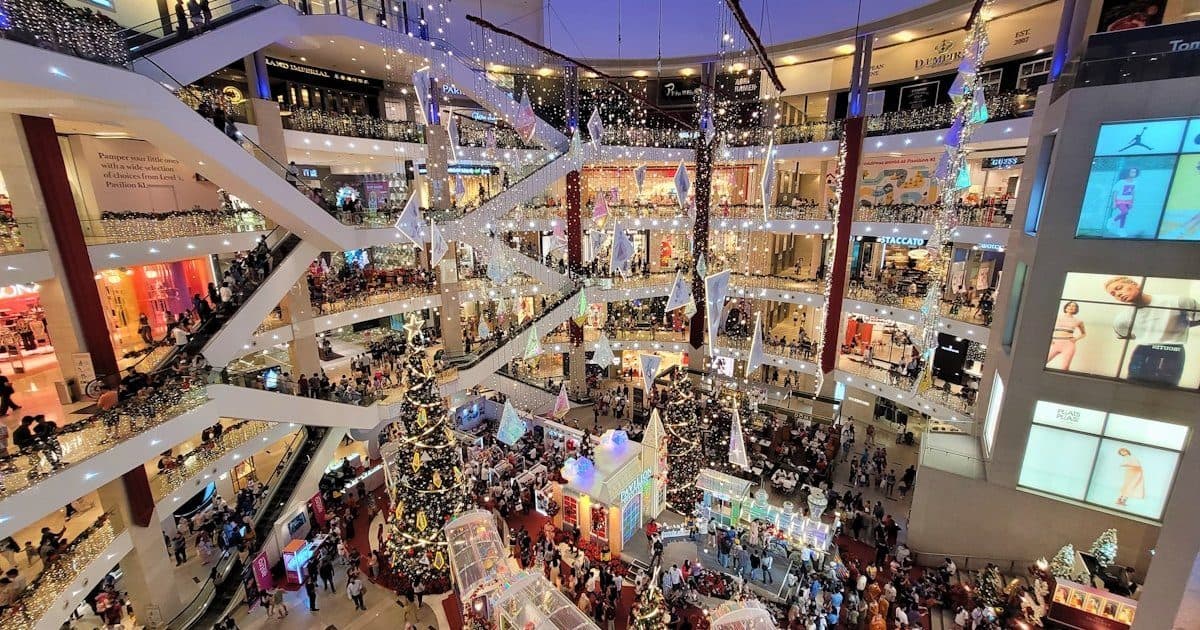
Malaysia Mall Industry Overview
Malaysia has one of the highest shopping mall densities in the world, with over 1,000 malls serving a population of 34 million. The Klang Valley alone contains 170+ malls within a 50km radius, making it one of the most competitive retail markets globally. This density reflects Malaysia's unique mall culture, where shopping centers serve as air-conditioned social hubs, family entertainment destinations, and community gathering spaces rather than purely retail venues.
Key Statistics (2026)
- Total retail space: 190+ million square feet nationwide
- Average mall size: 500,000 - 2 million sq ft
- Occupancy rates: 78-96% for prime malls, 45-65% for secondary malls
- Annual footfall: Top malls see 35-55 million visitors yearly
- E-commerce penetration: 15% of retail sales (growing 18% annually)
- Average Malaysian visits malls 3-4 times per week
Market Segmentation
Malaysian malls fall into distinct categories: luxury (Pavilion KL, The Exchange TRX, Starhill Gallery), mass market (Mid Valley, 1 Utama, Sunway Pyramid), neighborhood (AEON, Mydin, NSK), outlet malls (JPO, Mitsui, Genting Premium Outlets), and lifestyle centers (The Starling, Tropicana Gardens). Each serves different demographics and price points, with successful malls increasingly blending categories.
Economic Impact
The retail sector contributes approximately 7.2% to Malaysia's GDP, with shopping malls generating RM180+ billion in annual sales. Malls employ over 550,000 people directly and support 2+ million jobs in supply chains, logistics, F&B, and services. The sector attracts RM8-12 billion in annual investment, with new developments increasingly focused on mixed-use integrated projects.
Why Malaysians Love Malls
The tropical climate (30°C+ year-round with high humidity) makes air-conditioned malls essential escapes. Unlike Western markets where malls face decline, Malaysian malls thrive because they offer: climate refuge, family entertainment, dining variety, social gathering spaces, and increasingly, work-from-mall options with co-working facilities. The average Malaysian spends 4-6 hours per mall visit, compared to 1-2 hours in Western markets.
Top 20 Shopping Malls in Malaysia (2026 Ranking)
Tier 1: Flagship Destinations (National Icons)
- Pavilion Kuala Lumpur - The undisputed luxury leader since 2007. 1.37 million sq ft of premium retail anchored by Louis Vuitton, Gucci, Prada, Dior, and every major luxury brand. Connected to Pavilion Elite (ultra-luxury) and the newer Pavilion Bukit Jalil. Average rental: RM45-80 psf. Annual footfall: 35+ million. The Christmas decorations (Nov-Jan) are a national attraction, drawing 500,000+ visitors on peak weekends. Directly connected to Bukit Bintang MRT.
- Mid Valley Megamall + The Gardens - Southeast Asia's largest mall complex at 4.5 million sq ft combined. Mid Valley (1999) serves mass market with 430+ stores; The Gardens (2007) targets premium shoppers. Combined footfall: 3.5 million monthly. The benchmark for mega-mall operations with 95%+ occupancy for 20+ years. Anchored by AEON, Metrojaya, and Isetan. Connected to Mid Valley MRT station.
- 1 Utama Shopping Centre - At 5.6 million sq ft, consistently ranked among world's 10 largest malls. Features Malaysia's only rooftop rainforest (Rainforest Walk), 700+ stores, and extensive entertainment including ice skating. Strong family positioning with dedicated kids' zones. Anchored by AEON, Parkson, and Isetan. Connected to Bandar Utama MRT. Annual footfall: 40+ million.
- Sunway Pyramid - Iconic Egyptian-themed mall (1997) with 4.3 million sq ft. The sphinx entrance is Malaysia's most photographed mall feature. Integrated with Sunway Lagoon theme park, Sunway Medical Centre, Sunway University, and multiple hotels. Pioneer of the integrated township concept. Connected to Sunway-Setia Jaya BRT. Anchored by AEON, Parkson.
- The Exchange TRX - Malaysia's newest mega-development (opened 2023). 1.3 million sq ft anchored by Seibu (Japan's first Malaysian store) and featuring 400+ retailers. The 10-acre rooftop park is Southeast Asia's largest elevated park. Connected to TRX MRT interchange. Targeting premium-to-luxury positioning with brands like Apple, Lululemon, and Sephora flagship stores.
Tier 2: Regional Champions (State Leaders)
- IOI City Mall - Putrajaya's retail anchor at 2.5 million sq ft (Phase 1+2). Southeast Asia's largest indoor theme park (District 21). Strong suburban positioning serving Putrajaya, Cyberjaya, and southern KL. Anchored by AEON, Parkson. Connected to IOI City MRT.
- Gurney Plaza - Penang's premier shopping destination since 2001. 1.1 million sq ft with strong tourist traffic from George Town heritage zone. Anchored by Parkson, GSC. The go-to mall for Penang's middle-to-upper class.
- Queensbay Mall - Penang's largest mall at 2.1 million sq ft. Waterfront location with convention facilities. Anchored by AEON, Parkson. Strong family positioning with extensive F&B.
- Paradigm Mall PJ - 1.3 million sq ft with Malaysia's strongest F&B concentration (150+ outlets). Connected to Kelana Jaya LRT. Popular with young professionals and families. Anchored by AEON, Jaya Grocer.
- MyTOWN Shopping Centre - 1.8 million sq ft anchored by IKEA (Southeast Asia's largest). Strong home and lifestyle positioning. Connected to Cochrane MRT. The IKEA integration drives consistent traffic.
Tier 3: Established Performers (Strong Regional)
- Tropicana Gardens Mall - Premium lifestyle mall in Kota Damansara. Strong F&B and wellness focus. Connected to Surian MRT.
- Central i-City - Shah Alam's premier mall with SOGO anchor. Part of i-City integrated development with theme park.
- Setia City Mall - Shah Alam's family-focused mall. Strong community positioning with extensive kids' facilities.
- Johor Premium Outlets - Malaysia's first and largest premium outlet. 130+ brands at 25-65% discounts. Popular with Singaporean shoppers.
- Mid Valley Southkey - JB's newest mega-mall (2019). Bringing Mid Valley's successful formula to Johor.
- Imago KK - Kota Kinabalu's premier mall. Strong tourist positioning serving Sabah visitors.
- Vivacity Megamall - Kuching's largest mall. Anchored by H&M, Uniqlo. Sarawak's retail leader.
- The Starling - Damansara Uptown's lifestyle mall. Strong F&B and boutique retail focus.
- Eko Cheras Mall - Cheras community mall with strong local positioning.
- Melawati Mall - Wangsa Maju's community anchor with family focus.
State-by-State Mall Directory
Kuala Lumpur (40+ malls)
Prime/Luxury: Pavilion KL (Bukit Bintang), Suria KLCC (KLCC), The Exchange TRX (TRX), Lot 10 (Bukit Bintang), Starhill Gallery (Bukit Bintang)
Mass Market: Berjaya Times Square (Imbi), Fahrenheit88 (Bukit Bintang), Sungei Wang Plaza (Bukit Bintang), Nu Sentral (KL Sentral), Quill City Mall (KLCC area)
Heritage/Budget: Pertama Complex (Jalan TAR), Kota Raya (Chinatown), Campbell Complex (Jalan Dang Wangi), MARA Building (Jalan TAR)
Emerging: Pavilion Bukit Jalil (2022), LaLaport BBCC (2022), Merdeka 118 retail podium (2024)
Key insight: KL malls cluster around MRT/LRT stations. Bukit Bintang has highest mall density in Malaysia.
Selangor (55+ malls)
Petaling Jaya: 1 Utama (Bandar Utama), Paradigm Mall (Kelana Jaya), The Starling (Damansara Uptown), Tropicana Gardens (Kota Damansara), Atria (Damansara Jaya), 3 Damansara (Petaling Jaya), Empire Shopping Gallery (Subang)
Shah Alam: Central i-City (i-City), SACC Mall (Section 13), Plaza Shah Alam (Section 9), Kompleks PKNS (Section 14)
Subang: Sunway Pyramid (Bandar Sunway), Subang Parade (SS16), Empire Shopping Gallery (SS16), Main Place (USJ)
Klang: AEON Bukit Tinggi, GM Klang, Centro Mall
Putrajaya/Cyberjaya: IOI City Mall, Alamanda, D'Pulze
Key insight: Selangor has Malaysia's highest mall concentration. PJ alone has 15+ malls within 10km radius.
Penang (18+ malls)
George Town: Gurney Plaza, Gurney Paragon, 1st Avenue, Prangin Mall, Komtar, Penang Times Square
Bayan Lepas: Queensbay Mall, AEON Bukit Jambul, Design Village (outlet)
Seberang Perai: Sunway Carnival, AEON Seberang Perai, AEON Bukit Mertajam
Key insight: Gurney Drive area is Penang's premium retail corridor. Queensbay dominates south island.
Johor (25+ malls)
Johor Bahru: Mid Valley Southkey, AEON Tebrau City, KSL City, City Square, Johor Bahru City Square, Komtar JBCC, Paradigm Mall JB
Iskandar: Johor Premium Outlets (Kulai), AEON Bukit Indah, Sutera Mall, Perling Mall
Other: AEON Mall Kulaijaya, Angsana Johor Bahru Mall
Key insight: JB malls benefit from Singaporean weekend shoppers. JPO is Malaysia's busiest outlet mall.
Sabah (12+ malls)
Kota Kinabalu: Imago KK, Suria Sabah, Centre Point, Oceanus Waterfront, Warisan Square, KK Times Square, City Mall
Other: Harbour Mall Sandakan, Bintang Megamall Miri
Key insight: Imago KK transformed Sabah retail when it opened in 2015. Strong tourist positioning.
Sarawak (10+ malls)
Kuching: Vivacity Megamall, The Spring, CityONE, Boulevard Shopping Mall, Hock Lee Centre
Miri: Bintang Megamall, Imperial Mall
Key insight: Vivacity is Sarawak's largest and most modern mall. Strong local brand presence.
Other States
Perak: Ipoh Parade, AEON Kinta City, AEON Manjung, Greentown Mall
Melaka: Dataran Pahlawan, AEON Bandaraya, Mahkota Parade, The Shore
Pahang: East Coast Mall (Kuantan), Kuantan City Mall, Berjaya Megamall
Negeri Sembilan: Palm Mall (Seremban), AEON Seremban 2, Mydin Seremban
Kedah: Aman Central (Alor Setar), AEON Sungai Petani
Terengganu: KTCC Mall, Mesra Mall
Kelantan: KB Mall, AEON Kota Bharu
Abandoned and Declining Malls: Analysis
Confirmed Closures (2015-2025)
Ampang Park (Closed 2018)
Malaysia's first shopping mall, opened 1973. Demolished for MRT Putrajaya Line construction. Historical significance as the pioneer of Malaysian mall culture—it introduced the concept of air-conditioned shopping to Malaysia. The site is now integrated into MRT infrastructure with potential for future redevelopment. Lesson: Even historic malls aren't immune to infrastructure needs.
Pudu Plaza (Closed 2019)
Former electronics hub that couldn't compete with online retail and Low Yat Plaza's dominance. 400,000 sq ft now awaiting redevelopment. At its peak, Pudu Plaza was the go-to destination for computer parts and electronics. The rise of Lazada, Shopee, and specialized e-commerce killed its value proposition. Lesson: Commodity retail is most vulnerable to e-commerce disruption.
Maju Junction Mall (Closed 2020)
Prime KL location at Jalan Sultan Ismail but suffered from poor tenant mix, weak management, and competition from nearby Pavilion. Demonstrates that location alone doesn't guarantee success—execution matters. The building remains standing, with various redevelopment proposals under consideration.
Plaza Rakyat (Never Completed)
Infamous abandoned project in Chinatown, construction halted in 1997 during Asian Financial Crisis. The concrete skeleton stood for 25+ years as a symbol of failed development. Finally demolished in 2023 for new mixed-use development. Lesson: Economic cycles can kill projects mid-construction.
Malls Facing Challenges (Reported High Vacancy)
Note: Occupancy figures are estimates from industry reports and may not reflect current conditions.
Pertama Complex & Kota Raya
Heritage malls on Jalan TAR with 45-65% vacancy. Struggling against modern competition but retain niche appeal for budget shoppers, specific ethnic communities, and wholesale buyers. The buildings have heritage value but retail formats are outdated. Potential for adaptive reuse as creative spaces or budget hotels.
Sungei Wang Plaza
Once KL's trendiest mall (1970s-1990s), now facing 30-40% vacancy in upper floors. Ground floors remain active with budget fashion and accessories. The mall's aging infrastructure and competition from Pavilion have eroded its position. Undergoing gradual repositioning toward budget/youth market.
Plaza Low Yat (Partial Decline)
Once Malaysia's undisputed IT hub, now facing pressure from online retail. Adapting by focusing on services (repairs, custom builds) rather than product sales. Mobile phone section remains strong. Occupancy stable but tenant mix shifting from retail to services.
Campbell Complex
Heritage building with declining retail relevance. Some floors converted to budget hotels and offices. Retail sections have 50%+ vacancy. Location near Chow Kit limits appeal for mainstream shoppers.
Factors Contributing to Mall Decline
- Oversupply - Malaysia has 5x more retail space per capita than regional average. New supply continues despite existing vacancy.
- E-commerce growth - Online retail growing 18-22% annually, taking share from commodity categories (electronics, books, basic fashion).
- Changing demographics - Younger consumers prefer experiences over shopping; older malls designed for pure retail struggle.
- Poor accessibility - Malls without MRT/LRT connections face 20-30% lower footfall than connected competitors.
- Failure to reinvent - Static tenant mix leads to declining relevance. Successful malls refresh 15-20% of tenants annually.
- Economic pressures - Rising operating costs (electricity, labor) squeeze margins for both malls and tenants.
- Anchor tenant failures - Department store closures (Metrojaya, Parkson branches) leave large vacant spaces difficult to fill.
Redevelopment Opportunities
Failed malls are being converted to:
- Mixed-use developments - Adding residential towers, offices, hotels above retail podiums
- Co-working spaces - WeWork, Common Ground taking former retail floors
- Logistics hubs - Last-mile delivery centers for e-commerce
- Healthcare facilities - Medical centers, wellness clinics
- Educational institutions - Private colleges, training centers
- Data centers - Particularly in industrial areas with good power infrastructure
Warning Signs of Mall Decline
- Anchor tenant departure without replacement within 6 months
- More than 20% vacancy sustained for 12+ months
- Declining foot traffic year-over-year
- Shift from branded tenants to "pop-up" or temporary tenants
- Reduced operating hours or closed floors
- Deferred maintenance visible in common areas
Mall Investment and REIT Analysis
Publicly Listed Mall REITs on Bursa Malaysia
Pavilion REIT (PAVREIT) - 5212.KL
Assets: Pavilion KL, Pavilion Bukit Jalil, Elite Pavilion Mall, Intermark Mall, Da Men Mall
Market Cap: ~RM5.2 billion
Dividend Yield: 5.2-6.0%
Occupancy: 95-98% (Pavilion KL), 85-92% (others)
Strategy: Premium positioning, luxury retail focus, tourist-dependent
Key Metrics: NPI yield 5.5%, gearing 35%, P/NAV 0.85x
Outlook: Strong recovery post-pandemic. Pavilion KL remains Malaysia's top luxury destination. Bukit Jalil adds suburban exposure.
IGB REIT (IGBREIT) - 5227.KL
Assets: Mid Valley Megamall, The Gardens Mall
Market Cap: ~RM6.3 billion
Dividend Yield: 4.5-5.2%
Occupancy: 96-99% (consistently Malaysia's highest)
Strategy: Mega-mall dominance, integrated development, mass-to-premium positioning
Key Metrics: NPI yield 5.8%, gearing 28%, P/NAV 1.05x
Outlook: Most defensive Malaysian mall REIT. Mid Valley's 25-year track record of 95%+ occupancy is unmatched. Limited growth but stable income.
Sunway REIT (SUNREIT) - 5176.KL
Assets: Sunway Pyramid, Sunway Carnival, Sunway Putra Mall, plus hotels and offices
Market Cap: ~RM4.5 billion
Dividend Yield: 5.0-5.8%
Occupancy: 92-96% (retail assets)
Strategy: Integrated townships, diversified portfolio (retail 55%, hotel 25%, office 20%)
Key Metrics: NPI yield 5.2%, gearing 38%, P/NAV 0.78x
Outlook: Diversification provides stability. Sunway Pyramid benefits from BRT connectivity and theme park integration.
CapitaLand Malaysia Mall Trust (CMMT) - 5180.KL
Assets: Gurney Plaza, Queensbay Mall, East Coast Mall, The Mines, Sungei Wang Plaza
Market Cap: ~RM2.8 billion
Dividend Yield: 5.5-6.5%
Occupancy: 80-95% (varies by asset)
Strategy: Regional diversification, asset enhancement initiatives
Key Metrics: NPI yield 5.0%, gearing 32%, P/NAV 0.65x
Outlook: Mixed portfolio quality. Gurney Plaza and Queensbay are strong; Sungei Wang and The Mines face challenges.
Investment Considerations
Positive Factors
- Malaysia's young population (median age 30) supports retail consumption
- Growing middle class with rising disposable income
- Tourism recovery driving luxury and tourist-oriented malls
- Mall culture deeply embedded in Malaysian lifestyle—not declining like Western markets
- Air-conditioned escape from tropical climate ensures consistent traffic
- MRT expansion improving accessibility to connected malls
- E-commerce integration (click-and-collect, showrooming) rather than pure competition
Risk Factors
- E-commerce disruption in commodity categories (electronics, books, basic fashion)
- Oversupply in certain submarkets (Shah Alam, Cheras, JB)
- Rising operating costs (electricity up 20% since 2022, minimum wage increases)
- Changing consumer preferences toward experiences over products
- Economic sensitivity—retail spending correlates with GDP growth
- Currency weakness affecting luxury goods pricing
- Anchor tenant concentration risk (department store sector struggling)
Rental Trends (2024-2026)
Prime malls (Pavilion, Mid Valley, 1 Utama): RM30-80 psf (stable to +3% annually)
Secondary malls (regional leaders): RM15-30 psf (flat to -2% annually)
Neighborhood malls: RM8-20 psf (stable)
Outlet malls: RM12-25 psf (growing +5% annually)
Occupancy Benchmarks
- Healthy: >92% (sustainable operations, tenant demand exceeds supply)
- Acceptable: 85-92% (manageable but requires active leasing)
- Concerning: 75-85% (negative momentum, potential rental pressure)
- Critical: <75% (structural issues, may require repositioning or redevelopment)
Valuation Metrics Comparison
| REIT | P/NAV | Yield | Gearing | Quality |
|---|---|---|---|---|
| IGBREIT | 1.05x | 4.8% | 28% | Highest |
| PAVREIT | 0.85x | 5.5% | 35% | High |
| SUNREIT | 0.78x | 5.4% | 38% | Medium-High |
| CMMT | 0.65x | 6.0% | 32% | Medium |
Private Equity Activity
Significant PE interest in Malaysian retail:
- Blackstone, Brookfield exploring opportunities
- Local players (Pavilion Group, IGB) consolidating
- Focus on prime assets with MRT connectivity
- Typical holding period: 5-7 years
- Target IRR: 12-15% for core assets, 18-22% for value-add
Mall Features and Amenities Guide
Entertainment Facilities
Cinemas - Major Chains
- GSC (Golden Screen Cinemas): Largest chain with 40+ locations. Premium formats: IMAX, Dolby Atmos, 4DX, ScreenX, D-BOX, Maxx. Flagship: GSC Mid Valley (16 screens), GSC IOI City Mall (IMAX). Loyalty: GSC Club card for points and discounts.
- TGV Cinemas: Premium positioning with IMAX, Beanie, Indulge (luxury), and ALIVE formats. Flagship: TGV 1 Utama, TGV Pavilion. Known for better seat comfort than GSC.
- MBO Cinemas: Value-focused chain with competitive pricing. Strong in suburban malls. Kecil halls for families with young children.
- Dadi Cinema: Chinese-language focus with Mandarin/Cantonese films. Locations in Chinese-majority areas.
- mmCineplexes: Budget chain in smaller towns and suburban areas.
Pro tip: Wednesday is discount day at most chains. Book via apps for seat selection and avoid queues.
Ice Skating Rinks
- Sunway Pyramid: Olympic-sized rink (60m x 30m), Malaysia's largest. Public sessions RM28-38. Lessons available.
- 1 Utama: Recreational rink, smaller but less crowded. RM25-35 per session.
- Paradigm Mall JB: Newest facility in Johor. RM25-30 per session.
- IOI City Mall: Family-focused rink with gentle sessions for beginners.
- IPC Shopping Centre: Smaller rink, good for beginners.
Theme Parks & Indoor Attractions
- Berjaya Times Square Theme Park: Malaysia's largest indoor theme park. 14 rides including Supersonic Odyssey roller coaster. RM75 adult, RM65 child.
- District 21 (IOI City Mall): Adventure park with 11 attractions including zip lines, climbing walls, and tube slides. RM65-85.
- SuperPark Malaysia (Avenue K): Finnish-origin activity park with trampolines, adventure areas. RM55-75.
- Kidzania (Curve): Educational role-play city for children. RM65-110 depending on age.
- The Rift (Mid Valley): VR entertainment center with multiplayer experiences.
Bowling Alleys
- Ampang Superbowl: Multiple locations including 1 Utama, Mid Valley. RM8-15 per game.
- Cosmic Bowl: Locations in Sunway Pyramid, IOI City. Glow bowling available.
- U-Bowl: Budget option in suburban malls.
Essential Amenities
Prayer Rooms (Surau)
All major malls provide prayer facilities, typically on multiple floors. Features:
- Separate facilities for men and women
- Ablution (wudhu) areas with proper drainage
- Prayer mats and telekung (women's prayer garments) often available
- Qibla direction clearly marked
- Air-conditioned in modern malls
Location tip: Usually near restrooms or service areas. Ask customer service if not clearly signed.
Parking Facilities
- Free parking: Increasingly rare. Some malls offer first 1-2 hours free with purchase validation.
- Typical rates: RM2-4 per hour in KL/Selangor, RM1-2 in other states
- Daily maximum: RM15-30 in prime malls, RM8-15 in suburban malls
- Valet parking: Available at premium malls (Pavilion, KLCC, TRX). RM15-30.
- EV charging: Expanding rapidly. 60+ malls now equipped with DC fast chargers. ChargEV, JomCharge networks.
- Motorcycle parking: Usually free or RM1-2 flat rate. Covered parking in most malls.
Parking hacks:
- Arrive before 11am for best spots near entrances
- Use mall apps (Pavilion, 1 Utama) for real-time availability
- Park at connected buildings during peak times
- Validate parking at anchor stores for discounts
Family Facilities
- Nursing rooms: Standard in all major malls. Private rooms with changing tables, nursing chairs, bottle warmers, and sometimes microwaves. Cleanliness varies—Pavilion, Mid Valley, 1 Utama have best facilities.
- Stroller rental: Available at customer service counters. RM10-20 deposit. Limited availability on weekends.
- Kids play areas: Free play zones in most family malls. Paid options (Kidzania, Timezone) for extended entertainment.
- Family parking: Designated spots near entrances for families with young children. Look for pink/family signage.
- Baby care rooms: Separate from nursing rooms in premium malls. Include bathing facilities.
Accessibility Features
- Wheelchair access: Universal in modern malls. Ramps, wide corridors, accessible toilets on all floors.
- Disabled parking: Mandated by law. Located near entrances with wider spaces.
- Accessible toilets: All floors in malls built after 2000. Older malls may have limited facilities.
- Hearing loops: Limited availability. Pavilion, KLCC have some equipped areas.
- Wheelchair rental: Available at customer service. Free in most malls with ID deposit.
- Guide assistance: Customer service can arrange staff assistance for visually impaired visitors.
Other Amenities
- Luggage storage: Available at tourist-heavy malls (KLCC, Pavilion). RM10-20 per item.
- Currency exchange: Multiple outlets in major malls. Rates competitive with street changers.
- ATMs: All major banks represented. International cards accepted at Maybank, CIMB, Public Bank.
- WiFi: Free WiFi in all major malls. Quality varies—best at newer malls (TRX, Pavilion BJ).
- Phone charging: Charging stations and power banks for rent (ChargeSPOT) in most malls.
- Lost and found: Customer service counters. Items held for 30-90 days depending on mall policy.
Insider Shopping Tips
Best Times to Visit
Weekdays 10am-12pm
Lowest crowds, best parking (spots near entrances available), full staff attention for personalized service. Ideal for serious shopping, trying on clothes, or mall walking exercise. Many retirees and work-from-home professionals use this window.
Weekday Evenings 7-9pm
After-work crowd but manageable. Good for dining and casual browsing. Restaurants less crowded than weekends. Some shops offer end-of-day discounts on perishables (bakeries, food courts).
Saturday 10am-12pm
Sweet spot for weekend shopping. Crowds build after lunch. Parking still available. Good balance of atmosphere and accessibility.
Avoid These Times
- Weekends 2-6pm: Peak family time. Parking nightmares, long queues, crowded food courts.
- Public holidays: Extreme crowds, especially during long weekends. Some shops run out of popular items.
- Month-end weekends: Payday shopping creates 30-50% higher traffic than normal weekends.
- School holidays (March, June, November): Family crowds throughout the day.
- Festive periods: Hari Raya, Chinese New Year, Deepavali weeks see 2-3x normal traffic.
Money-Saving Strategies
Credit Card Promotions
- Maybank: Strongest mall partnerships. Extra points at Pavilion, 1 Utama. Maybank Treats app for exclusive deals.
- CIMB: Frequent dining promotions (up to 50% off). CIMB Deals app.
- Public Bank: Cashback on weekends at selected malls. Quantum card for young shoppers.
- HSBC: Premium mall benefits. Exclusive lounges at Pavilion.
- UOB: Lady's Card with beauty and fashion discounts.
- Amex: Accepted at premium stores. Strong dining rewards.
Pro tip: Stack credit card discounts with mall promotions and store sales for maximum savings. Some combinations yield 40-60% off.
Loyalty Programs Worth Joining
- Pavilion Elite: Points on spending, free parking (3 hours), exclusive events, birthday rewards. Worth it for regular Pavilion shoppers.
- 1 Utama ONE Card: Rebates, birthday rewards, member prices at selected stores. Free to join.
- Sunway Pals: Cross-property benefits (mall, hotel, theme park, medical). Good for Sunway ecosystem users.
- Mid Valley Megamall Card: Parking discounts, member promotions. Basic but useful.
- AEON Member Card: Points across all AEON properties. 5% discount days monthly.
Sale Seasons (Mark Your Calendar)
- January (1-31): Post-holiday clearance. Best for fashion, home goods. Discounts 30-70%.
- March-April: Pre-Raya sales. Strong fashion, home, and gift categories.
- June-July: Mid-year mega sales. Coordinated across malls. Malaysia's biggest sale period.
- September: Merdeka/Malaysia Day sales. Patriotic themes, good electronics deals.
- November 11 (11.11): Singles' Day. Originally online but malls now participate. Flash deals.
- November (Black Friday week): Growing in popularity. Electronics, fashion focus.
- December: Year-end sales. Christmas promotions. Tourist-heavy malls have best deals.
Parking Hacks
- Arrive before 11am for best spots near entrances and elevators
- Use mall apps for real-time parking availability (Pavilion, 1 Utama, IOI City have this)
- Park at connected buildings for overflow (e.g., Menara IGB for Mid Valley)
- Validate parking at anchor stores—many offer 1-2 hours free with minimum purchase
- Consider valet on busy days—RM15-30 saves 20-30 minutes of circling
- Motorcycle parking is usually free and always available
- EV charging spots are often in prime locations with shorter walks
Bargaining Guide
- Fixed price stores: No bargaining at branded stores, department stores, chain retailers
- Negotiable: Independent boutiques, phone accessory shops, some electronics stores
- Always negotiate: Petaling Street, Sungei Wang upper floors, wholesale areas
- Technique: Ask for "best price" or "any discount?" Start at 30% below asking, settle at 10-20% off
- Cash advantage: Some stores offer 3-5% discount for cash payment (avoiding card fees)
Tourist Benefits
- Tax refund (GST): Available for purchases over RM300 at participating stores. Look for "Tax Free Shopping" signs. Claim at airport before departure.
- Tourist cards: Some malls offer visitor privilege cards with discounts. Ask at customer service with passport.
- Currency exchange: Mall money changers often have better rates than hotels. Compare 2-3 before exchanging.
- Shopping assistance: Premium malls (Pavilion, KLCC) offer personal shopping services for tourists.
Future of Malaysian Malls (2026-2030)
Emerging Trends Reshaping Retail
Experiential Retail Revolution
Malls are shifting from pure retail to experience destinations. The most successful malls now allocate 30-40% of space to non-retail uses. Expect more:
- Interactive brand experiences: Nike, Apple, Samsung creating destination stores with try-before-buy focus
- Pop-up concepts: Rotating tenants keeping malls fresh. 3-6 month leases for emerging brands.
- Event spaces: Concerts, exhibitions, product launches. Mid Valley's exhibition hall hosts 200+ events annually.
- Community areas: Co-working spaces, community halls, maker spaces
- Wellness integration: Gyms, yoga studios, meditation rooms, health clinics becoming standard
- F&B dominance: Food now 25-35% of mall space (up from 15% a decade ago)
Technology Integration
- AI-powered customer service: Chatbots, virtual assistants, smart directories
- Augmented reality wayfinding: AR navigation through mall apps
- Cashless and frictionless payments: QR codes, e-wallets, facial recognition payments
- Smart parking systems: License plate recognition, automated payment, space guidance
- Personalized promotions: Location-based offers via mall apps
- Virtual try-on: AR mirrors for fashion, cosmetics, eyewear
- Inventory visibility: Real-time stock checking across stores via apps
Sustainability Focus
- Green building certifications: GBI (Green Building Index), LEED becoming standard for new developments
- Solar panel installations: Rooftop solar on 20+ malls, targeting 30% energy from renewables by 2030
- EV charging infrastructure: Mandatory in new developments. Target: 500+ charging points per major mall by 2028
- Waste reduction programs: Food waste composting, recycling stations, plastic bag charges
- Sustainable tenant requirements: ESG criteria in lease agreements
- Water recycling: Rainwater harvesting, greywater systems in newer malls
- Green spaces: Rooftop gardens, indoor plants, biophilic design elements
Mixed-Use Evolution
Future malls will integrate multiple uses in single developments:
- Residential towers: Living above shopping. Examples: Pavilion Suites, The Residences at TRX
- Office spaces: Work-shop-live concept. Grade A offices integrated with retail podiums.
- Hotels: Seamless connection between accommodation and shopping. 15+ malls now have integrated hotels.
- Healthcare facilities: Medical centers, specialist clinics, wellness centers
- Educational institutions: International schools, training centers, enrichment classes
- Transit hubs: MRT/LRT stations as mall anchors. TRX, IOI City, Pavilion BJ examples.
Predictions for 2026-2030
Winners (Characteristics of Successful Malls)
- Transit-connected (MRT/LRT within 200m)
- Integrated developments with residential/office components
- Experience-focused with strong F&B and entertainment
- Premium or clearly differentiated positioning
- Strong digital presence and omnichannel integration
- Sustainable operations and green certifications
- Active tenant curation with regular refreshes
Losers (At-Risk Mall Profiles)
- Standalone retail-only malls without transit
- Poor accessibility locations (no public transport, traffic congestion)
- Undifferentiated offerings (same tenants as competitors)
- Aging infrastructure without renovation investment
- Weak anchor tenants or anchor departures
- Over-reliance on single customer segment
- No digital/omnichannel strategy
New Developments (2025-2030)
- Pavilion Damansara Heights: Ultra-luxury positioning for Damansara Heights enclave
- The Exchange TRX Phase 2: Expanding the financial district retail offering
- Merdeka 118 Retail Podium: Premium retail at world's second-tallest building
- KL Wellness City: Health-focused mixed development
- Multiple MRT-integrated developments: Along Putrajaya Line and future Circle Line
- Penang Gurney Wharf: Waterfront mixed development
- JB-Singapore RTS Link developments: Transit-oriented retail at border crossing
E-commerce Integration (Not Competition)
Smart malls are embracing e-commerce rather than fighting it:
- Click-and-collect: Order online, pick up in-store. 40% of online orders now collected at malls.
- Showrooming support: Try in-store, buy online with store credit
- Returns processing: Mall stores as return points for online purchases
- Live commerce studios: Dedicated spaces for livestream selling
- Last-mile fulfillment: Mall-based micro-warehouses for same-day delivery
- Omnichannel inventory: Single inventory view across online and offline
The 2030 Mall
The successful mall of 2030 will be:
- A community hub first, retail destination second
- Transit-integrated with seamless public transport access
- Digitally native with app-based services throughout
- Sustainability-focused with net-zero carbon targets
- Experience-rich with 40%+ non-retail space
- Mixed-use combining living, working, shopping, and entertainment
- Locally relevant with tenant mix reflecting community needs
- Constantly evolving with 20%+ tenant turnover annually to stay fresh
Practical Information
Operating Hours
Standard Hours
- Most malls: 10am - 10pm daily (365 days)
- Anchor stores (AEON, Parkson): May open 30 minutes earlier or close 30 minutes later
- F&B outlets: Often extend to 11pm-12am, especially on weekends
- Supermarkets: Some open 8am-11pm (AEON, Jaya Grocer, Village Grocer)
- Cinemas: Last shows typically start 10-11pm, ending after midnight
Special Hours
- Ramadan: Some malls extend to 11pm-12am for Ramadan bazaars
- Chinese New Year Eve: Early closure (6-8pm) for reunion dinners
- Public holidays: Normal hours, but expect crowds
- Friday prayers (12:30-2:30pm): Some Muslim-owned shops may close briefly
Public Transport Access
MRT Connected Malls (Best Accessibility)
- Pavilion KL → Bukit Bintang MRT (direct underground connection)
- Suria KLCC → KLCC MRT (direct connection via concourse)
- The Exchange TRX → TRX MRT (integrated station)
- Mid Valley Megamall → Mid Valley MRT (covered walkway)
- 1 Utama → Bandar Utama MRT (direct connection)
- Sunway Pyramid → Sunway-Setia Jaya BRT (covered walkway)
- IOI City Mall → IOI City MRT (direct connection)
- MyTOWN → Cochrane MRT (direct connection)
- Pavilion Bukit Jalil → Sri Petaling LRT (shuttle/walk)
LRT Connected Malls
- Sungei Wang Plaza → Bukit Bintang Monorail (5 min walk)
- Berjaya Times Square → Imbi Monorail (direct connection)
- Nu Sentral → KL Sentral (all lines)
- Paradigm Mall PJ → Kelana Jaya LRT (covered walkway)
- Quill City Mall → PWTC LRT (10 min walk)
Bus Connections
- Most malls accessible via RapidKL bus network
- Sunway Pyramid: BRT Sunway Line direct connection
- Free shuttle buses: Some malls operate shuttles from MRT/LRT stations
Payment Methods
Cash
- Universally accepted
- ATMs available in all malls (Maybank, CIMB, Public Bank, RHB most common)
- Money changers in major malls (rates competitive with street changers)
Cards
- Visa/Mastercard: Accepted everywhere
- American Express: Accepted at most stores, some smaller shops decline
- UnionPay: Widely accepted, especially in tourist areas
- JCB: Limited acceptance, mainly in Japanese stores
E-Wallets (Widely Accepted)
- Touch 'n Go eWallet: Most widely accepted, works almost everywhere
- GrabPay: Strong acceptance, especially F&B
- Boost: Good coverage in malls
- ShopeePay: Growing acceptance
- MAE (Maybank): Accepted at Maybank merchant network
QR Payments
- DuitNow QR: Universal QR standard, works with all Malaysian bank apps
- Cross-border QR: Singapore PayNow, Thailand PromptPay accepted at some merchants
Tourist Information
Tax Refund (GST)
- Available for purchases over RM300 at participating stores
- Look for "Tax Free Shopping" or "Global Blue" signs
- Keep receipts and tax refund forms
- Claim at KLIA/KLIA2 before departure (allow 1 hour)
- Refund: 6% of purchase value minus processing fee
Tourist Privilege Cards
- Pavilion: Tourist Privilege Card with discounts at 100+ stores
- KLCC: Suria KLCC Tourist Card
- 1 Utama: Tourist discount booklet
- Obtain at customer service with passport
Currency Exchange
- Mall money changers often have better rates than hotels and airports
- Best rates: Mid Valley, Sungei Wang, Pavilion
- Compare 2-3 changers before exchanging large amounts
- Avoid airport exchange if possible (worst rates)
Tourist Police
- Present in KLCC, Pavilion, Bukit Bintang areas
- Identifiable by "Tourist Police" badges
- Can assist with directions, safety concerns, lost items
Luggage Storage
- Available at tourist-heavy malls (KLCC, Pavilion, KL Sentral)
- Rates: RM10-20 per item per day
- Also available at major MRT stations
Emergency Contacts
- Police: 999
- Ambulance: 999
- Fire: 994
- Tourist Police Hotline: 03-2166 8322
- Malaysian Tourism Helpline: 1-300-88-5050
Useful Apps
- Grab: Transport, food delivery, payments
- Touch 'n Go: Parking, tolls, payments
- Google Maps: Navigation, mall directories
- Mall-specific apps: Pavilion, 1 Utama, IOI City for parking, promotions
- Fave: Deals and cashback at mall merchants
- ShopBack: Cashback for online-to-offline purchases
WiFi Access
- Free WiFi available in all major malls
- Quality varies: Best at newer malls (TRX, Pavilion BJ, IOI City)
- Connection: Usually requires phone number or social media login
- Speed: Adequate for browsing, may struggle with video streaming
Accessibility Services
- Wheelchair rental: Free at customer service (ID deposit required)
- Accessible parking: Near entrances, wider spaces
- Accessible toilets: All floors in modern malls
- Assistance: Customer service can arrange staff support
- Guide dogs: Permitted in all malls
Food Court & Dining Guide
Best Food Courts by Mall
Premium Food Courts
Food Republic (Multiple Locations)
- Locations: Pavilion KL, 1 Utama, Mid Valley, IOI City
- Style: Hawker-inspired with air-conditioned comfort
- Price range: RM12-25 per meal
- Highlights: Curated local and regional cuisines, consistent quality
- Best for: Tourists wanting authentic Malaysian food in comfortable setting
Lot 10 Hutong (Lot 10, Bukit Bintang)
- Style: Heritage hawker concept in basement
- Price range: RM10-20 per meal
- Highlights: Famous stalls relocated from across Malaysia—Kim Lian Kee Hokkien Mee, Soong Kee Beef Noodles, Ah Weng Koh Hainan Tea
- Best for: Serious food lovers, heritage cuisine seekers
- Must-try: Hokkien Mee, Hainanese coffee, curry mee
Signature Food Court (The Gardens, Mid Valley)
- Style: Premium food court with table service
- Price range: RM15-35 per meal
- Highlights: Higher-end local and international options
- Best for: Business lunches, family dining
Value Food Courts
AEON Food Courts
- Locations: All AEON malls nationwide
- Price range: RM8-15 per meal
- Highlights: Consistent quality, family-friendly, halal options
- Best for: Budget-conscious families, everyday dining
Food Junction (Multiple Locations)
- Locations: Sunway Pyramid, Paradigm Mall, others
- Price range: RM10-18 per meal
- Highlights: Wide variety, quick service
- Best for: Quick meals, variety seekers
Jaya Grocer Food Hall
- Locations: 1 Utama, The Starling, Tropicana Gardens
- Style: Gourmet food hall attached to premium supermarket
- Price range: RM15-30 per meal
- Highlights: Fresh ingredients, international cuisines, healthy options
- Best for: Health-conscious diners, foodies
Specialty Dining Zones
Jalan Alor Recreations
Several malls have recreated the famous Jalan Alor street food experience:
- Pavilion KL: Tokyo Street (Japanese) + Malaysian food court
- 1 Utama: Rainforest area with local food stalls
- IOI City Mall: Street food zone
Korean Food Streets
- Pavilion KL: Korean food cluster on Level 6
- 1 Utama: Korean restaurants in new wing
- MyTOWN: Korean BBQ concentration
Japanese Dining
- Isetan The Japan Store (Lot 10): Authentic Japanese food hall
- Pavilion KL: Tokyo Street with multiple Japanese concepts
- 1 Utama: Japanese restaurant cluster
Food Court Tips
Peak Hours to Avoid
- Weekday lunch: 12:30pm - 1:30pm (office crowd)
- Weekend lunch: 12pm - 2pm (family crowd)
- Weekend dinner: 6pm - 8pm (busiest period)
Best Times
- Weekday 11am - 12pm: Fresh food, no queues
- Weekday 2pm - 5pm: Quiet, some stalls may close
- Weekend 10am - 11am: Early bird, best selection
Money-Saving Tips
- Set lunch specials: Many stalls offer 10-20% off before 12pm
- Combo meals: Better value than à la carte
- Loyalty apps: Fave, Grab often have food court deals
- Credit card days: Specific cards offer discounts on certain days
Halal Considerations
- Most mall food courts are fully halal-certified
- Non-halal sections clearly separated in mixed food courts
- Look for JAKIM halal certification logos
- When in doubt, ask staff or check signage
Food Court Etiquette
- Return trays to designated areas (some malls have tray return incentives)
- Don't "chope" (reserve) tables for too long during peak hours
- Tipping not expected but appreciated for exceptional service
- Most food courts are self-service—order at counter, collect when ready
Seasonal Events & Decorations
Annual Mall Events Calendar
Chinese New Year (January-February)
Duration: Decorations up 3-4 weeks before CNY, down 2 weeks after
Best malls for CNY: Pavilion KL (most elaborate), 1 Utama, Mid Valley, Sunway Pyramid
What to expect:
- Massive decorations (Pavilion spends RM3-5 million annually)
- Lion dance performances daily
- Ang pow (red packet) giveaways with purchase
- CNY bazaars with festive goods
- Extended hours on CNY eve
- Celebrity appearances and concerts
Pavilion KL CNY: The gold standard. Themes change yearly—past themes include zodiac animals, traditional villages, modern interpretations. Draws 500,000+ visitors on peak weekends.
Hari Raya Aidilfitri (March-April)
Duration: Decorations up during Ramadan, peak during Raya week
Best malls: Pavilion KL, KLCC, Mid Valley, Sunway Pyramid
What to expect:
- Traditional Malay kampung (village) setups
- Ramadan bazaars in mall grounds
- Buka puasa (breaking fast) buffets at mall restaurants
- Raya fashion shows
- Traditional music and performances
- Ketupat and pelita (oil lamp) decorations
Deepavali (October-November)
Duration: 2-3 weeks before Deepavali
Best malls: Mid Valley, 1 Utama, Berjaya Times Square
What to expect:
- Kolam (rangoli) displays
- Oil lamp decorations
- Indian classical dance performances
- Deepavali bazaars with traditional items
- Saree and jewelry promotions
Christmas (November-December)
Duration: Decorations up from mid-November, down after New Year
Best malls: Pavilion KL (spectacular), 1 Utama, Mid Valley, Sunway Pyramid
What to expect:
- Giant Christmas trees (Pavilion's is 30+ meters)
- Snow/winter themes (artificial snow machines)
- Santa meet-and-greet
- Carol performances
- Christmas markets
- Extended shopping hours
- Year-end mega sales
Pavilion KL Christmas: Internationally recognized. Past themes have included Frozen wonderlands, traditional European villages, and futuristic displays. The main atrium tree is a must-see.
Mid-Year Sales (June-July)
Duration: 4-6 weeks
What to expect:
- Coordinated sales across all malls
- Discounts 30-70% off
- Lucky draws and giveaways
- Extended hours on weekends
- Credit card promotions
Merdeka/Malaysia Day (August-September)
Duration: 2-3 weeks around Aug 31 and Sep 16
What to expect:
- Patriotic decorations (flags, Jalur Gemilang)
- "31" and "69" themed discounts
- Malaysian food festivals
- Cultural performances
- National Day countdown events
11.11 Singles Day (November)
Duration: Week of November 11
What to expect:
- Flash sales (online and offline)
- Midnight openings on Nov 10
- Exclusive mall promotions
- Live commerce events
- Collaboration with e-commerce platforms
Year-End Sales (December)
Duration: December 26 - January 31
What to expect:
- Deepest discounts of the year (up to 80% off)
- Clearance of seasonal stock
- Boxing Day specials
- New Year countdown events
Photography Tips for Mall Events
Best Times for Photos
- Weekday mornings (10am-12pm): Fewer crowds, better lighting
- Weekday evenings (7pm-9pm): Decorations lit up, manageable crowds
- Avoid: Weekend afternoons (too crowded for good shots)
Equipment Recommendations
- Wide-angle lens for large decorations
- Fast lens (f/1.8-2.8) for low-light indoor shots
- Tripod for night shots (check mall policy—some restrict)
- Smartphone with night mode works well for casual shots
Popular Photo Spots
- Pavilion KL: Main entrance, center court atrium
- 1 Utama: Rainforest area, main atrium
- Mid Valley: Center court, The Gardens link bridge
- Sunway Pyramid: Sphinx entrance, ice skating rink area
- KLCC: KLCC Park view from Suria, fountain area
Instagram-Worthy Mall Spots
Most Photogenic Malls
Pavilion Kuala Lumpur
Best spots:
- Main entrance fountain (day or night)
- Center court atrium (especially during festivals)
- Tokyo Street Japanese-themed area
- Rooftop garden (lesser known, great city views)
- Luxury wing escalators (architectural shots)
Best time: Weekday evenings for lit decorations without crowds
Instagram hashtag: #PavilionKL (500K+ posts)
The Exchange TRX
Best spots:
- Rooftop park (10 acres, Southeast Asia's largest elevated park)
- Main atrium with natural light
- Exterior architecture (futuristic design)
- Water features and landscaping
- Sunset views from rooftop
Best time: Golden hour (5-7pm) for rooftop shots
Instagram hashtag: #TheTRX #ExchangeTRX
Suria KLCC
Best spots:
- KLCC Park view from mall windows
- Petronas Towers framing from various angles
- Fountain show viewing area (8pm, 9pm, 10pm shows)
- Esplanade area with towers backdrop
Best time: Evening for lit towers, fountain shows
Instagram hashtag: #SuriaKLCC #KLCC
Sunway Pyramid
Best spots:
- Sphinx entrance (iconic, best at sunset)
- Egyptian-themed corridors
- Ice skating rink area
- Lion statue at main entrance
- Sunway Lagoon connection bridge
Best time: Late afternoon for sphinx golden hour
Instagram hashtag: #SunwayPyramid
1 Utama
Best spots:
- Rainforest Walk (rooftop garden with real trees)
- Secret Garden outdoor area
- Main atrium during festivals
- Architectural ceiling shots
Best time: Morning for rainforest natural light
Instagram hashtag: #1Utama
Mid Valley Megamall
Best spots:
- The Gardens link bridge
- Center court during major events
- Exterior shot from MRT station
- Japanese restaurant cluster aesthetics
Best time: Festival seasons for decorations
Instagram hashtag: #MidValley
Hidden Gems for Photography
The Starling (Damansara Uptown)
- Rooftop garden with city views
- Modern architectural lines
- Lifestyle cafe aesthetics
Tropicana Gardens Mall
- Japanese-inspired design elements
- Rooftop dining area
- Clean, minimalist aesthetics
LaLaport BBCC
- Japanese mall design
- Unique retail concepts
- Modern architecture
Mitsui Outlet Park KLIA
- Japanese village aesthetic
- Outdoor shopping street
- Mount Fuji-inspired design
Photography Etiquette
Do's
- Ask permission before photographing people
- Use natural light when possible
- Respect other shoppers' space
- Share location tags to help others find spots
- Credit the mall in posts
Don'ts
- Block walkways or escalators for shots
- Use flash in stores without permission
- Photograph inside stores without asking
- Set up elaborate equipment during peak hours
- Climb on decorations or furniture
Mall Photography Policies
- Personal photography: Generally allowed in common areas
- Professional shoots: Require prior approval from mall management
- Tripods: Some malls restrict; check with security
- Drones: Not permitted inside malls
- Commercial use: Requires licensing agreement
Best Apps for Mall Photography
- VSCO: Film-like filters perfect for mall aesthetics
- Lightroom Mobile: Professional editing on the go
- Snapseed: Quick fixes and selective adjustments
- Instagram: Built-in filters and direct posting
- Google Photos: Auto-enhance and easy backup